Access to Cathedral Lakes Provincial Park near Keremeos, BC, our favourite place to hike in the alpine, has been impossible since the devastating 2023 forest fire. This fire covered thousands of hectares on the mountain slopes in and around the park. The fire destroyed the access bridge across the Ashnola River and much of the infrastructure involved with the shuttle from the Ashnola base camp to the Cathedral Lakes Lodge. Amazingly, the lodge and the adjacent BC Parks ranger cabin and campsite survived the fire. The summer of 2026 was the first opportunity to access the core park area, with a new bridge and restored road access. So Andrea and I went up in mid-July 2026 for a two-night camp and lots of hiking.
All photos copyright Alan Burger
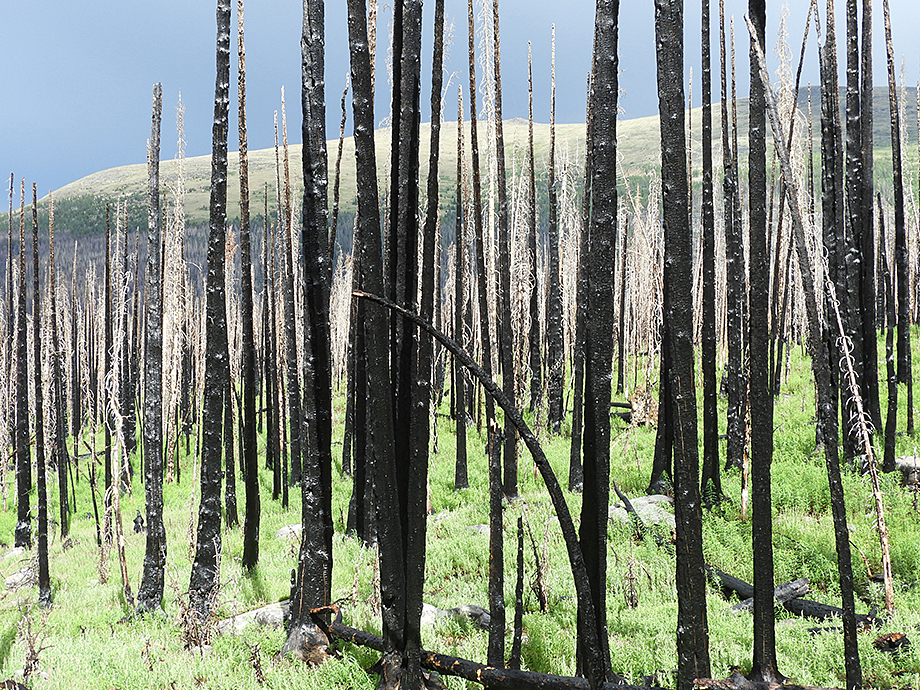
Forest burnt by the 2023 fire, with Lakeview Mountain in the background.
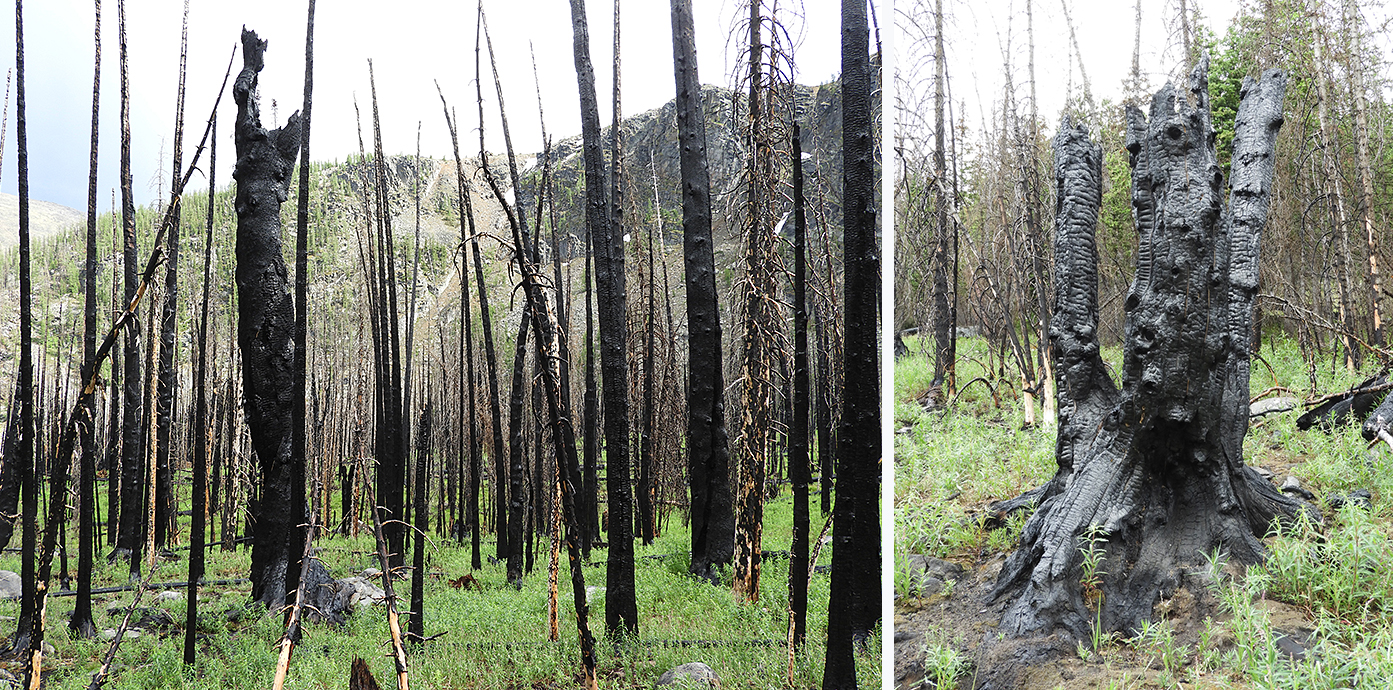
Blackened skeletons of trees attest to the extreme heat of this 2023 fire.
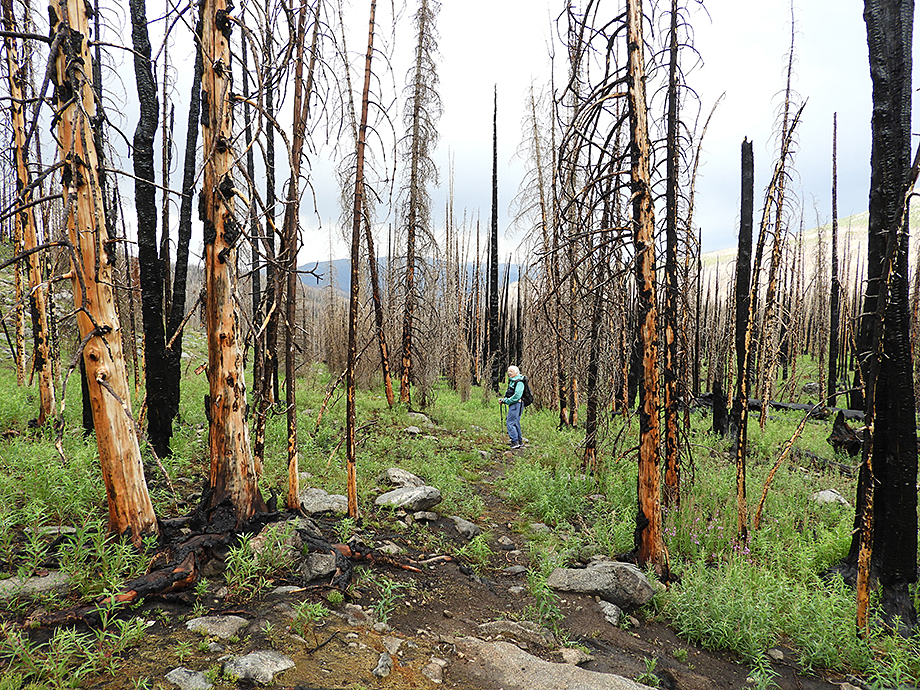
Hiking through the burnt forest near Quiniscoe Lake, 15 July 2026.
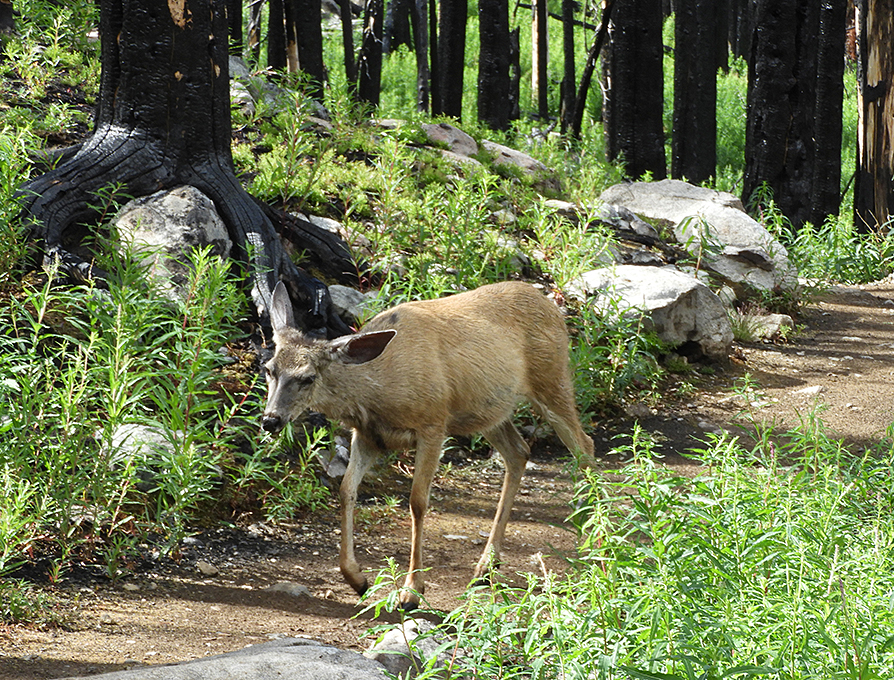
This Mule Deer doe has plenty of fireweed (Epilobium angustifolium) to eat. This plant is prolific in all the burnt areas.
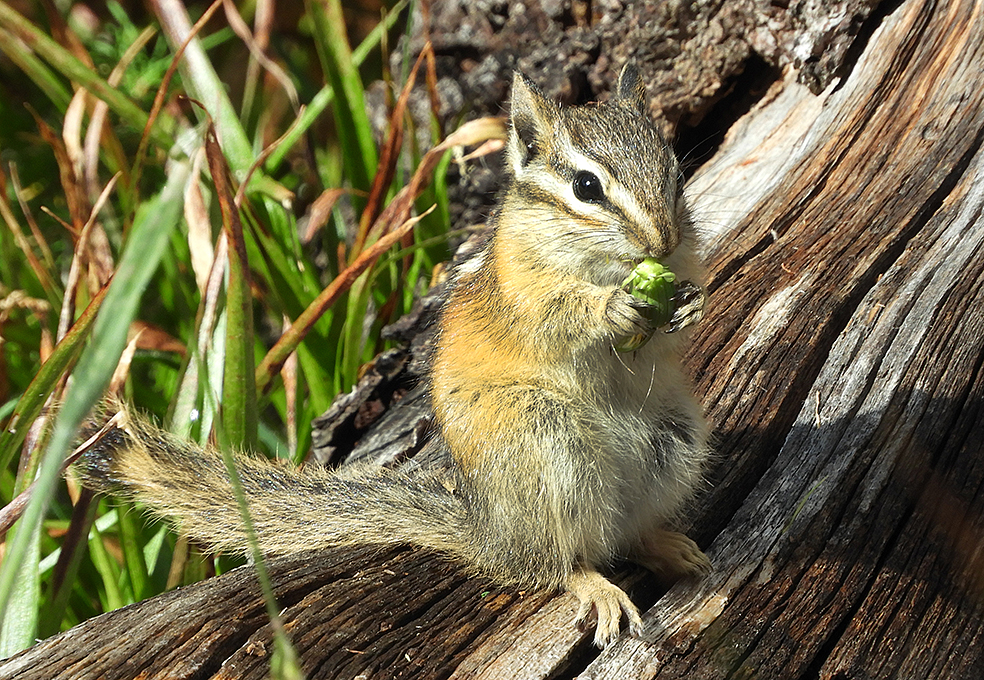
Yellow Pine Chipmunks are a constant presence in Quiniscoe campsite. Fortunately this lovely area escaped the fire.
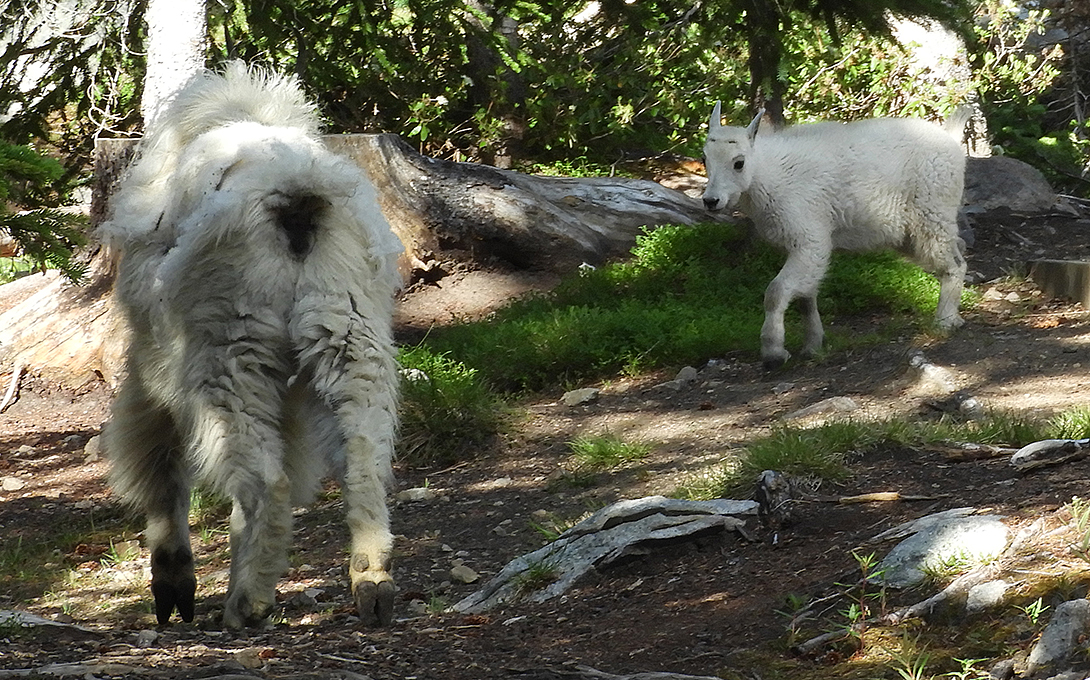
As a symbol of nature’s resilience, Mountain Goats still wander through the Quiniscoe campsite.
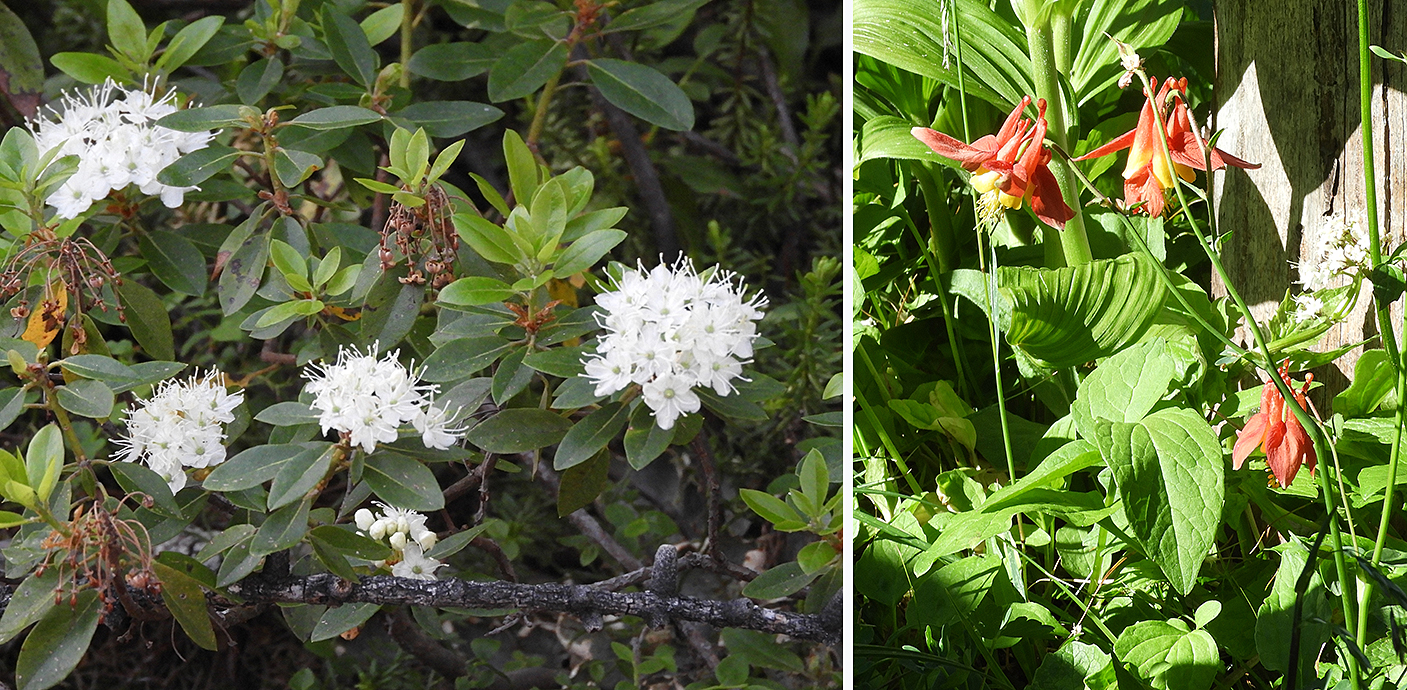
In the unburnt forest there are still many lovely wildflowers – Mountain Labrador Tea (Rhododendron neoglandulosum) on the left and Western Columbine (Aquilegia formosa) on the right.
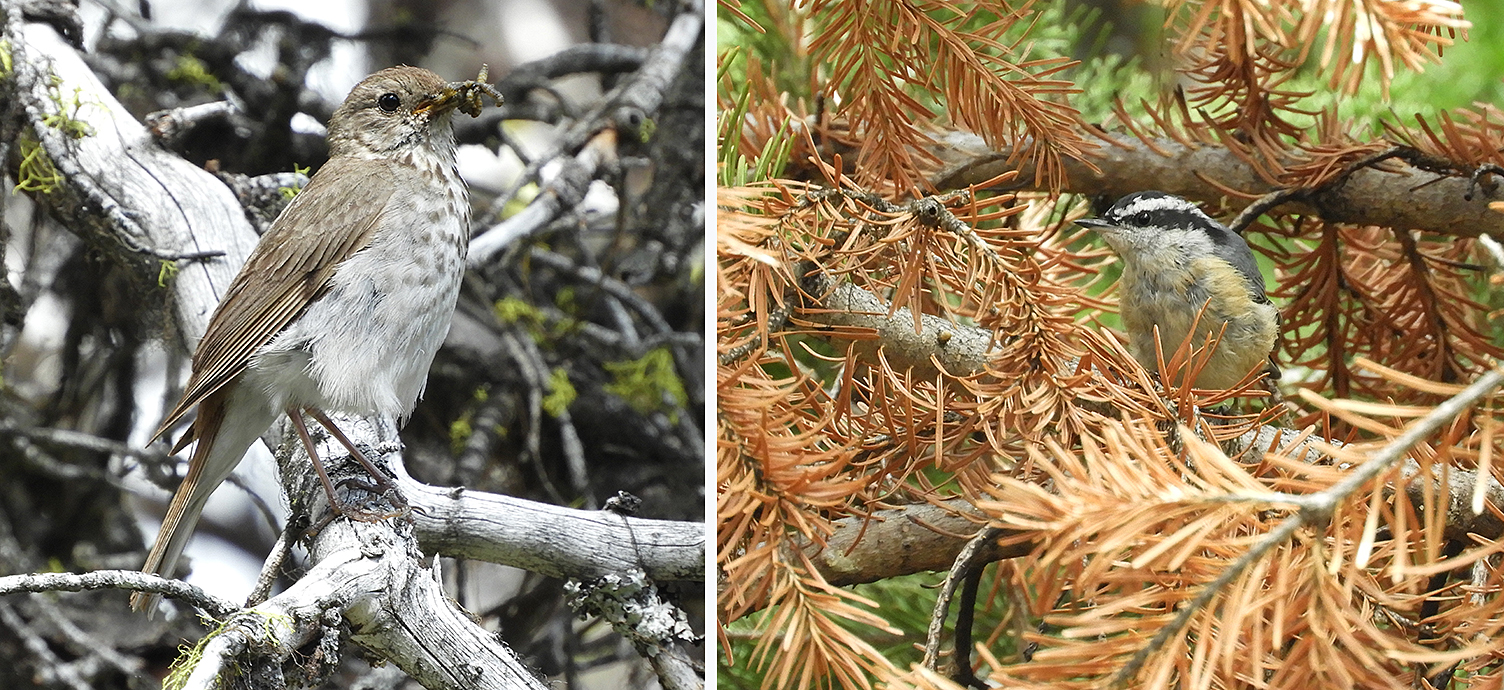
And plenty of birds in the unburnt forest. The lovely songs of Hermit Thrush (on the left, carrying food for nestlings) and the cheerful calls of Red-breasted Nuthatches (right) are a delight around the campsite.
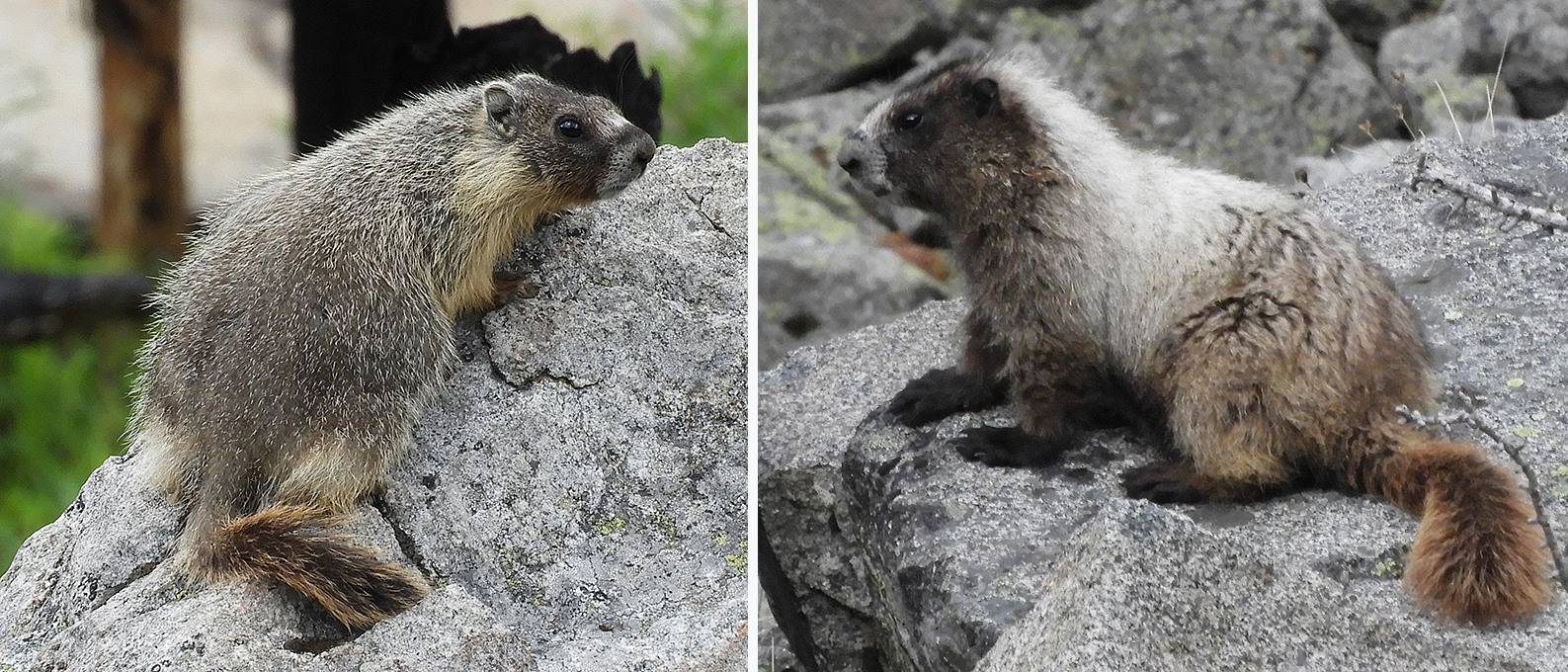
Two species of marmots now occur in the upper Cathedral Lakes Park. Yellow-bellied Marmots (left) were not evident above the Ashnola River area before the fire but are now in the mid-elevation areas. Hoary Marmots (right) are the typical high-elevation species. We saw far fewer Hoary Marmots in 2026 than in our previous visits over the past 20 years.
Our first hike was the loop around Glacier Lake, featuring lovely alpine meadows. But on the way we had to endure a terrific thunderstorm, including being pelted with hail.
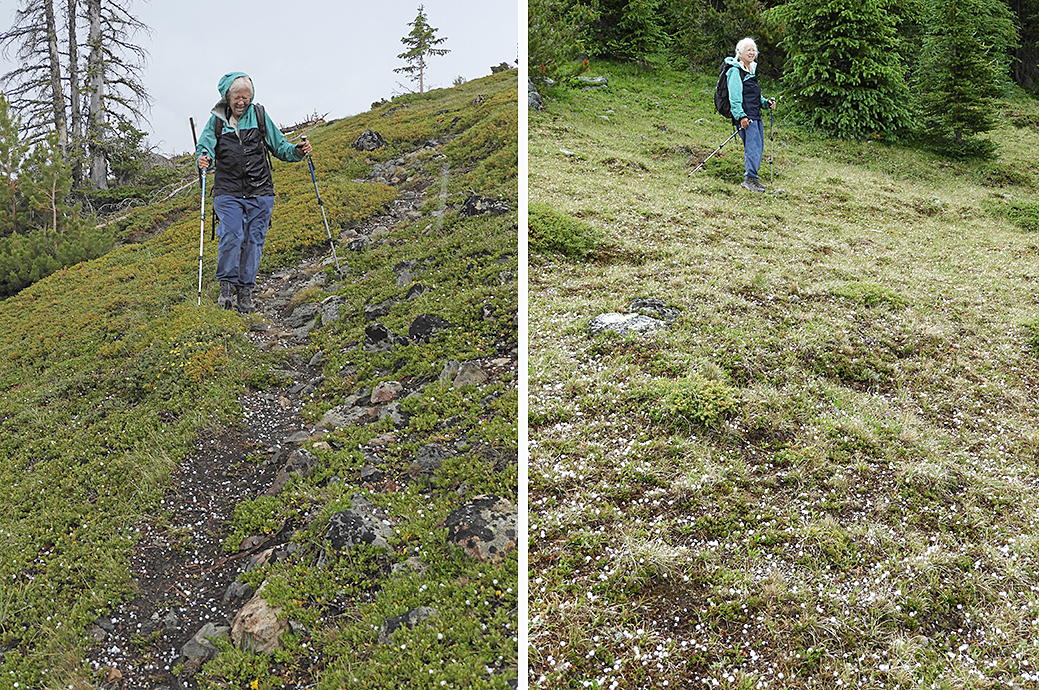
Aftermath of the thunderstorm – hailstones litter the ground near Glacier Lake.
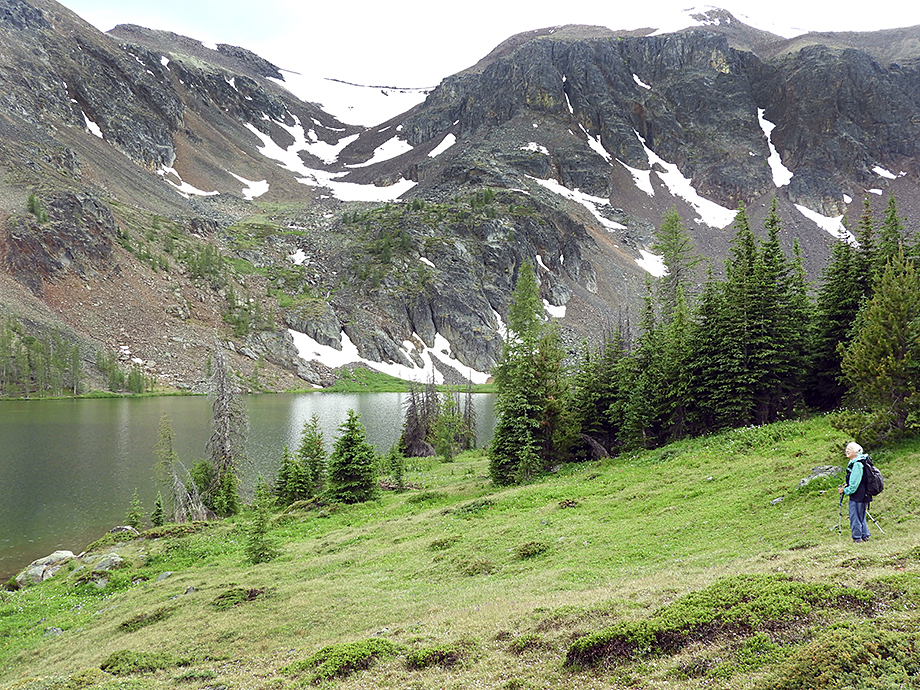
This is why we come here! Lovely mountain scenery at Glacier Lake.
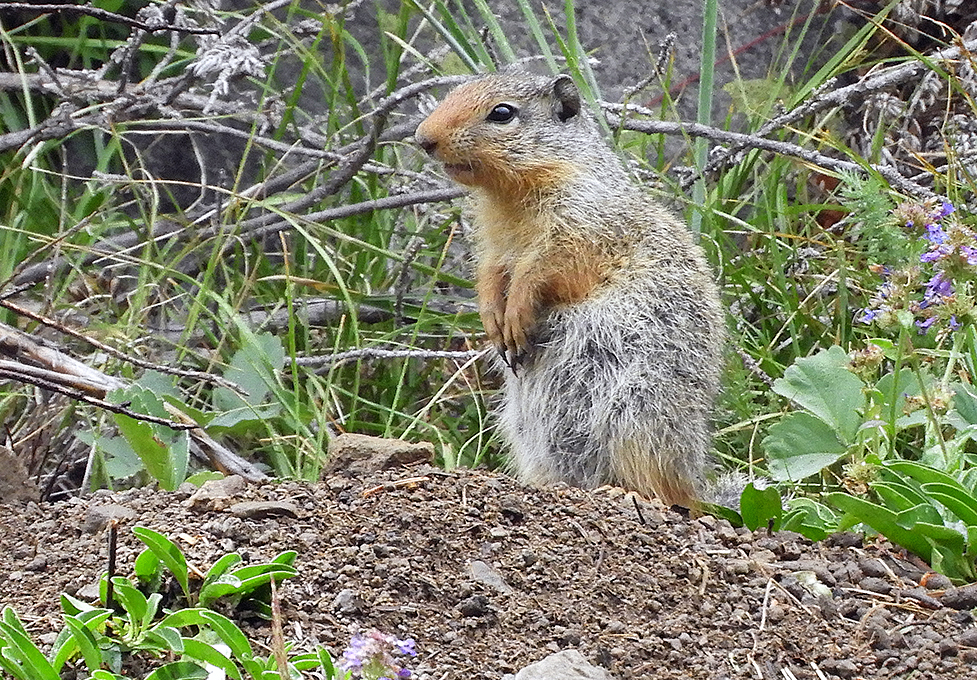
Columbian Ground Squirrels are common in the grassy meadows.
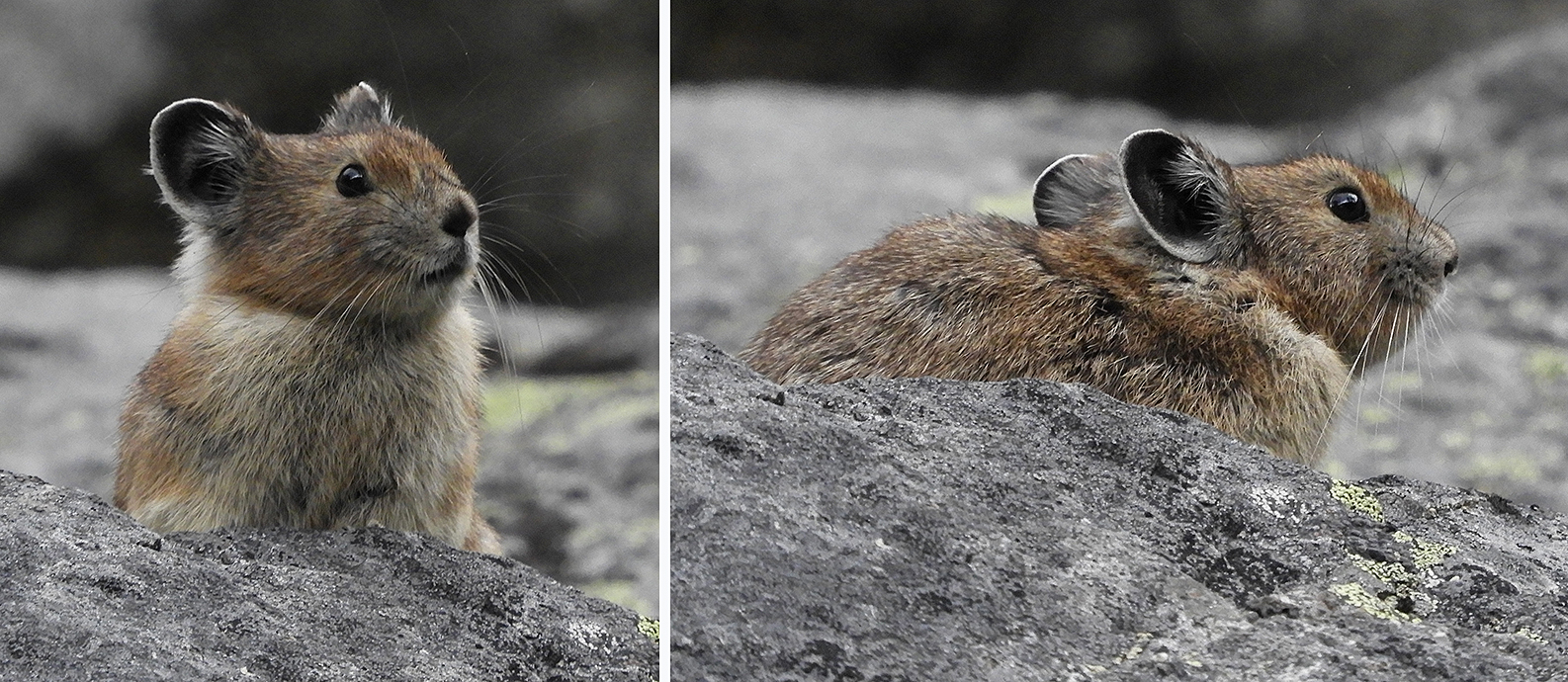
Pikas live in the rocky scree slopes, venturing out to harvest herbs and grass for their haystacks. They dry the plants on the rocks and stash them in their nesting cavities. Related to rabbits and hares, Pikas do not hibernate in winter, but feed on their accumulated hay, deep under the alpine winter snow.
On day two Andrea hiked in the Quiniscoe Lake area while I did the 14 km Rim Trail starting at Quiniscoe Mountain pass. A stiff climb taking almost 2 hours got me to the high alpine ridge with spectacular views and fascinating alpine plants and wildlife.
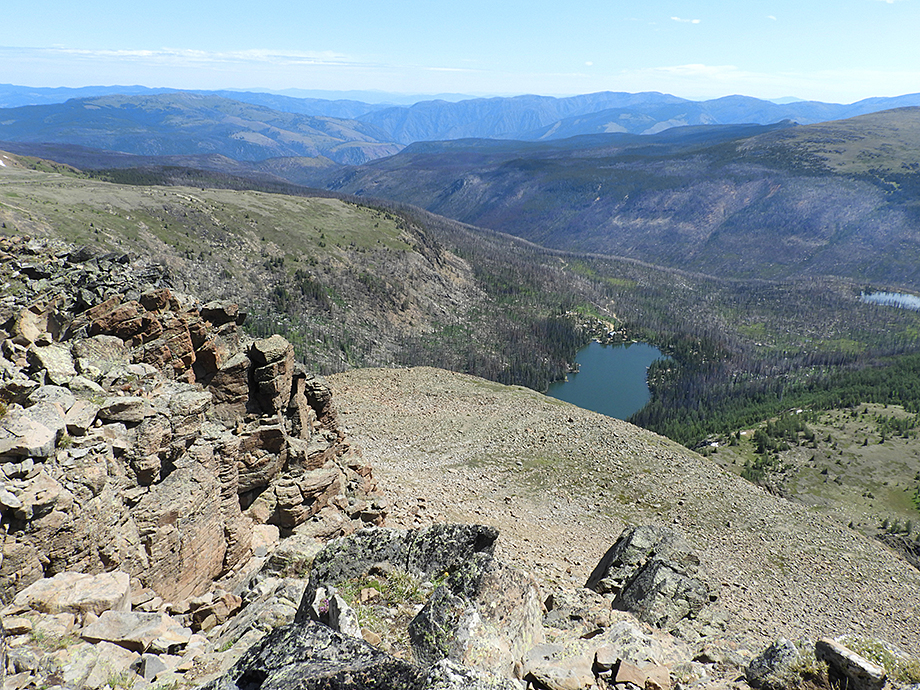
The view from Quiniscoe Peak looking down at Quiniscoe Lake with the lodge on the far side and the campsite on the right. The grey areas in the valley are burnt forest from the 2023 fire.
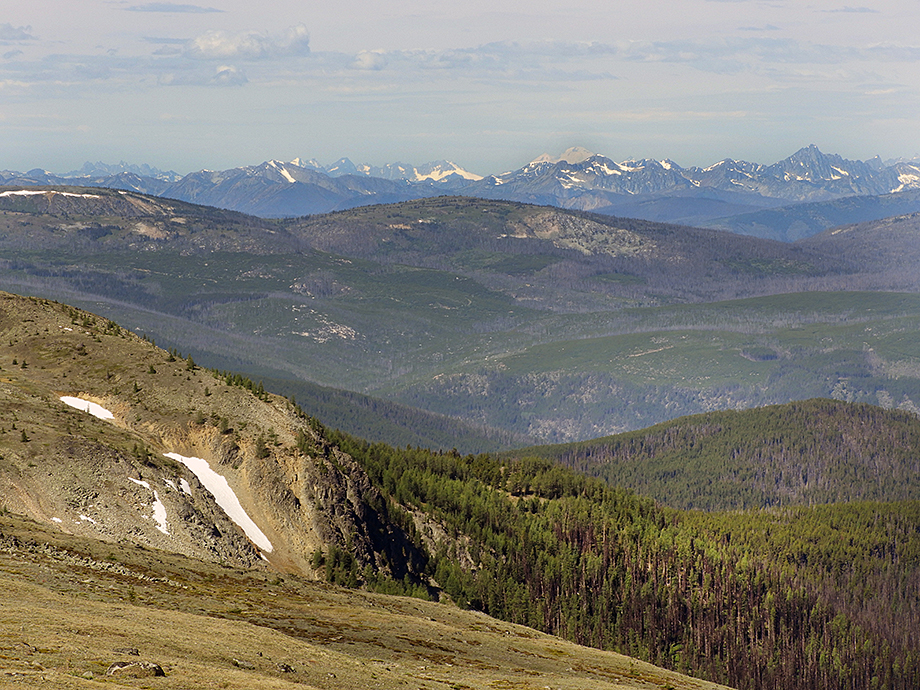
Looking west from the ridge trail with the Coast Mountains in the distance and the snowy dome of Mount Baker just visible on the far horizon.
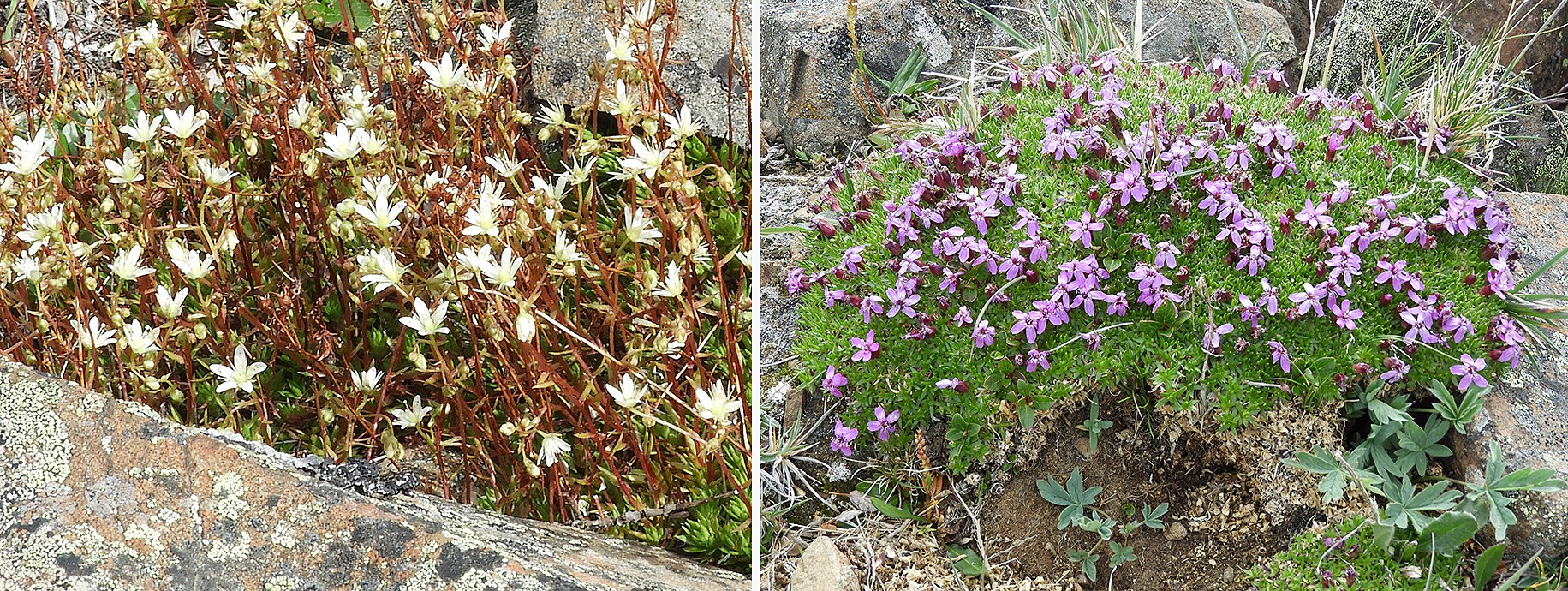
Some of the high alpine specialties: Mat Saxifrage (Saxifraga bronchialis) on the left and Moss Campion (Silene acaulis) on the right.
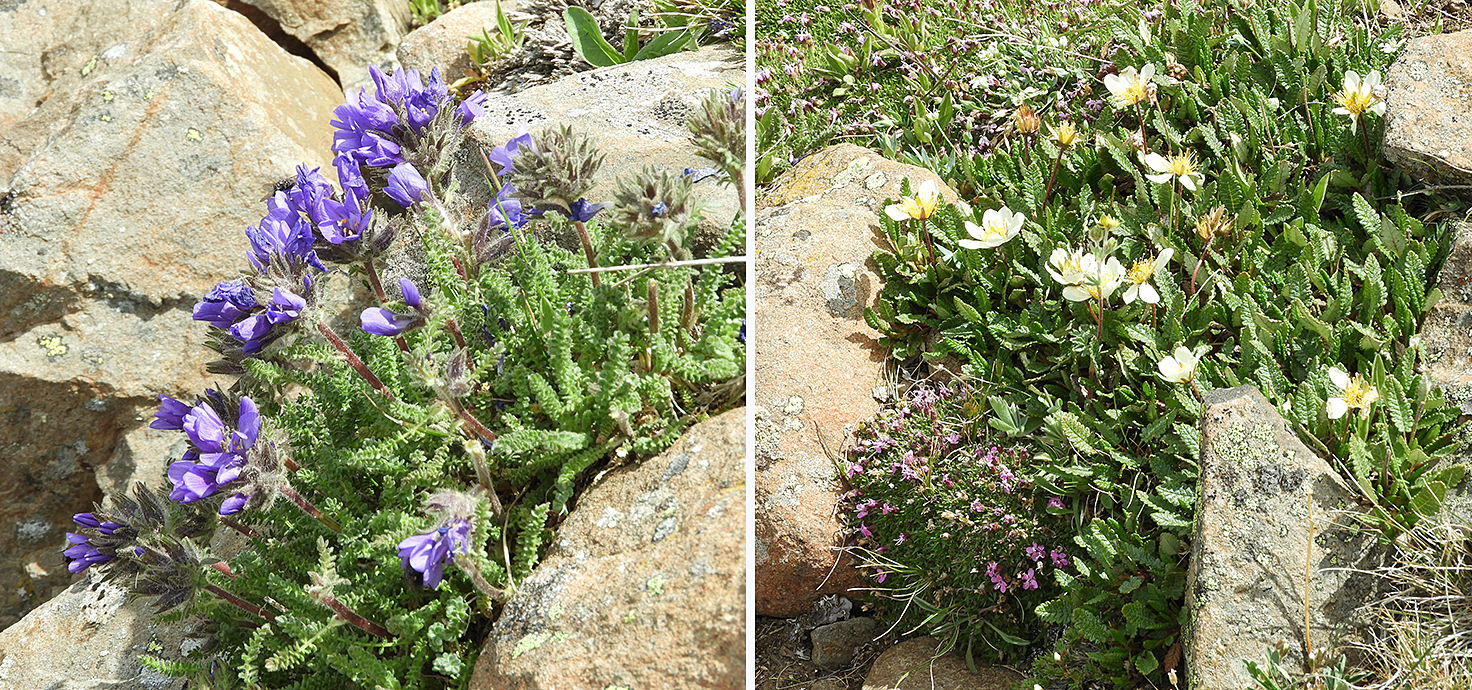
More alpine specialties: Sky Pilot (Polemonium viscosum; left) and Hooker’s Mountain-Avens (Dryas hookeriana; right) along with a small clump of Moss Campion.
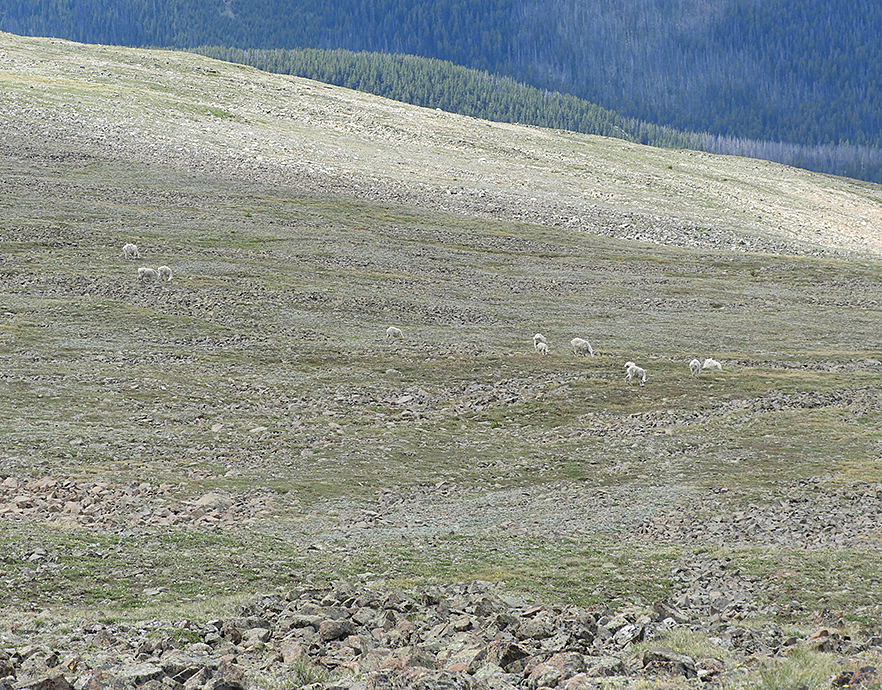
A herd of Mountain Goats on the slopes west of the ridge trail. It is unusual to see the goats out in the open so far from the safety of steep slopes, but predators are apparently uncommon here.
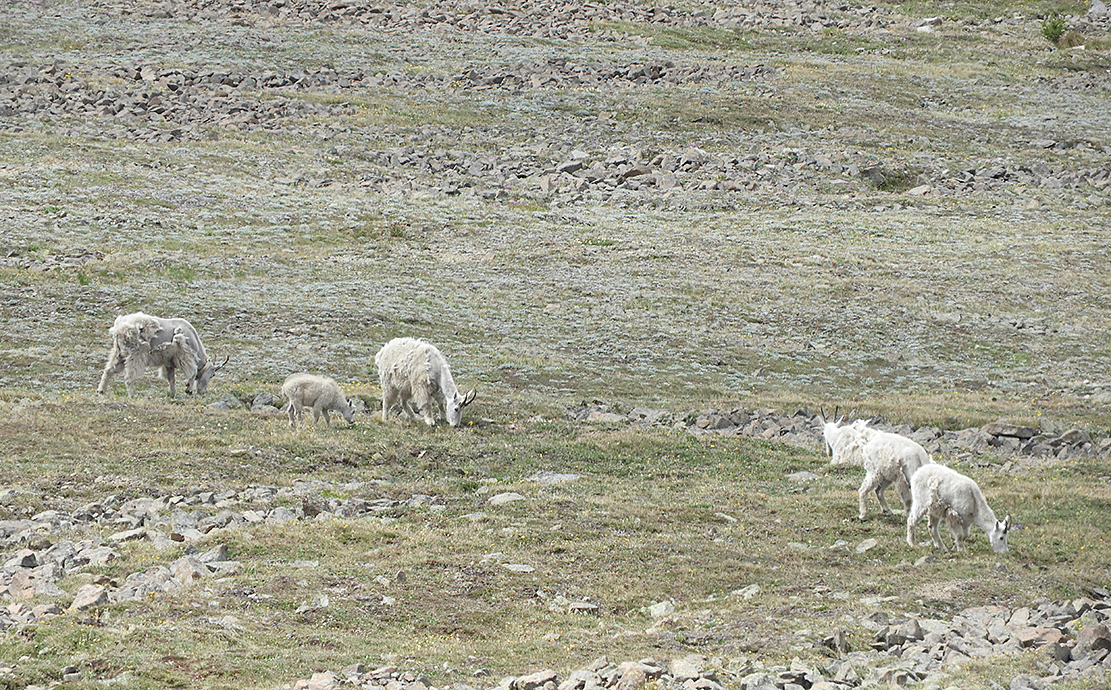
A closer look at the Mountain Goats. The adults and subadults are still shedding their thick winter coats.
I was particularly keen to find some White-tailed Ptarmigan. These grouse are found only in high alpine areas and it always takes a hefty foot slog up to where they live.
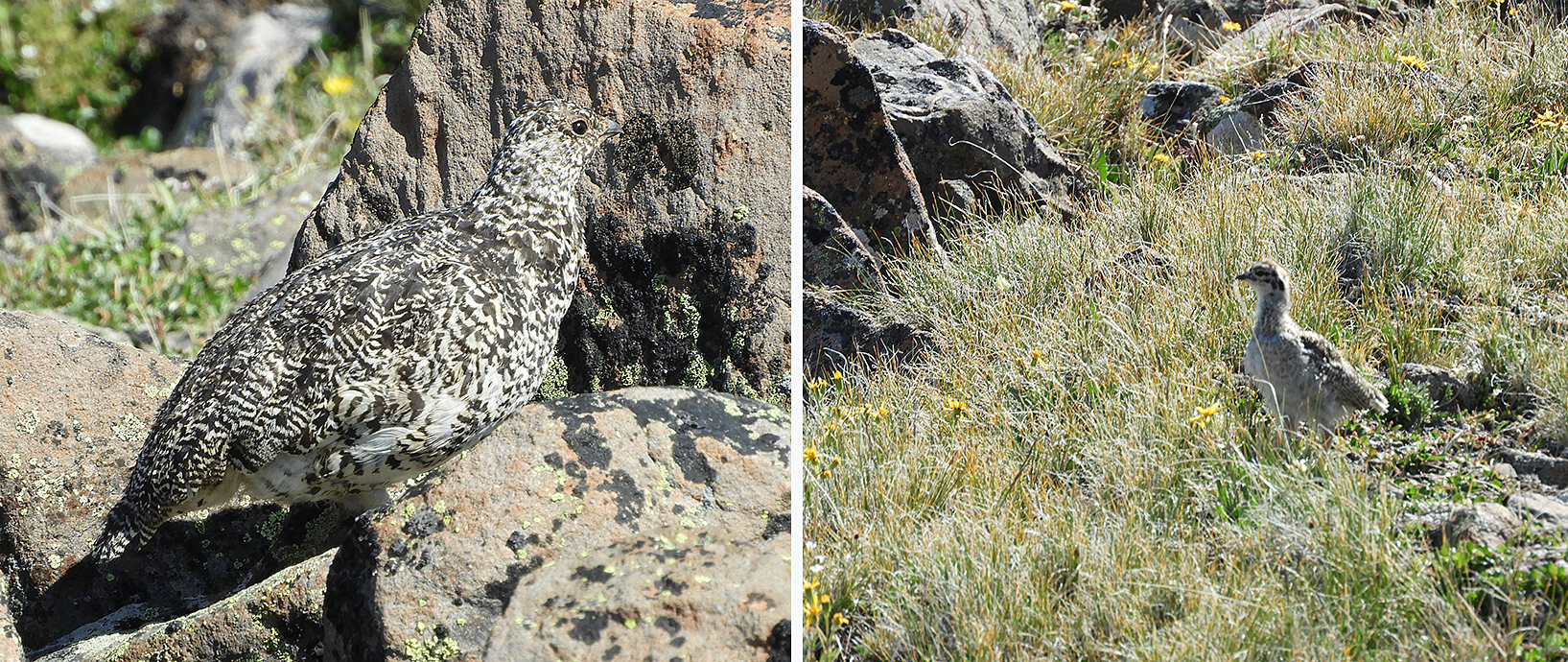
I was excited to find a female White-tailed Ptarmigan with 4 downy chicks. Even at this young age, the chicks are extremely bold and active, wandering tens of metres from their mom.
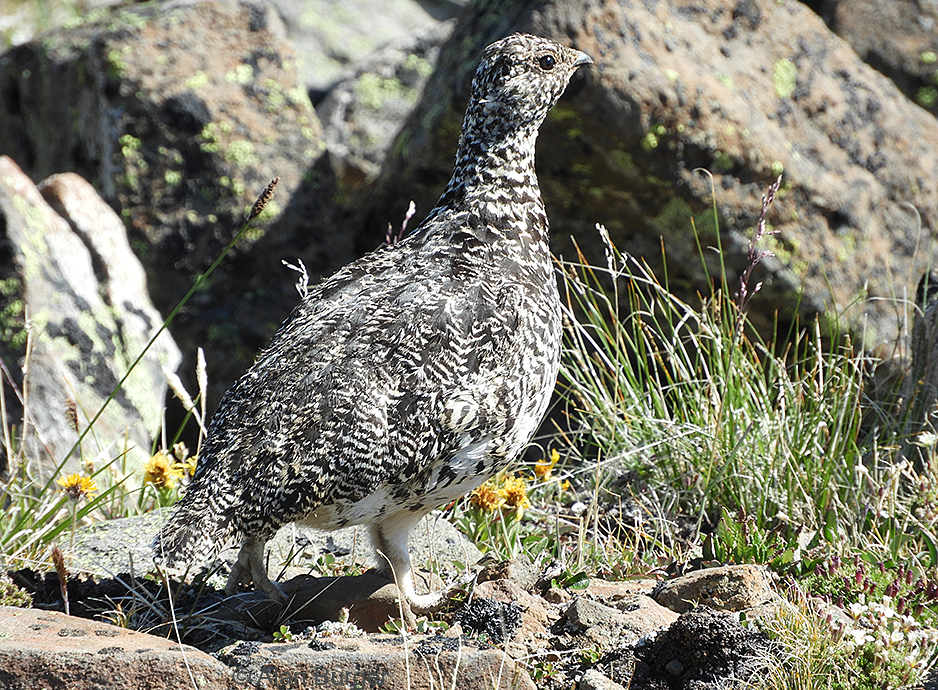
And a short distance further, another female ptarmigan, this time with 5 chicks.
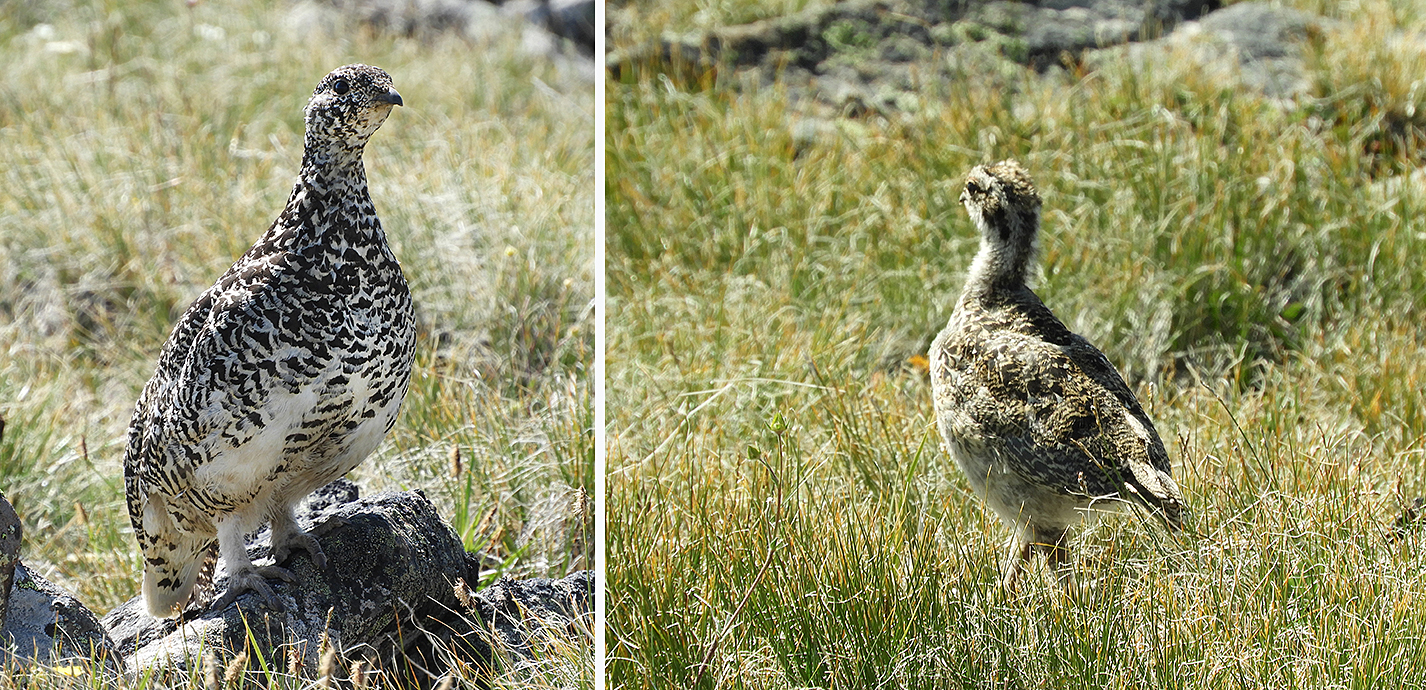
And not too far further, yet another female with 6 larger chicks. There was also a male ptarmigan nearby but it disappeared before I could get a photo.
In total I came across four females with 21 chicks and one male, for a total of 26 White-tailed Ptarmigan. They evidently had a good breeding season this year.
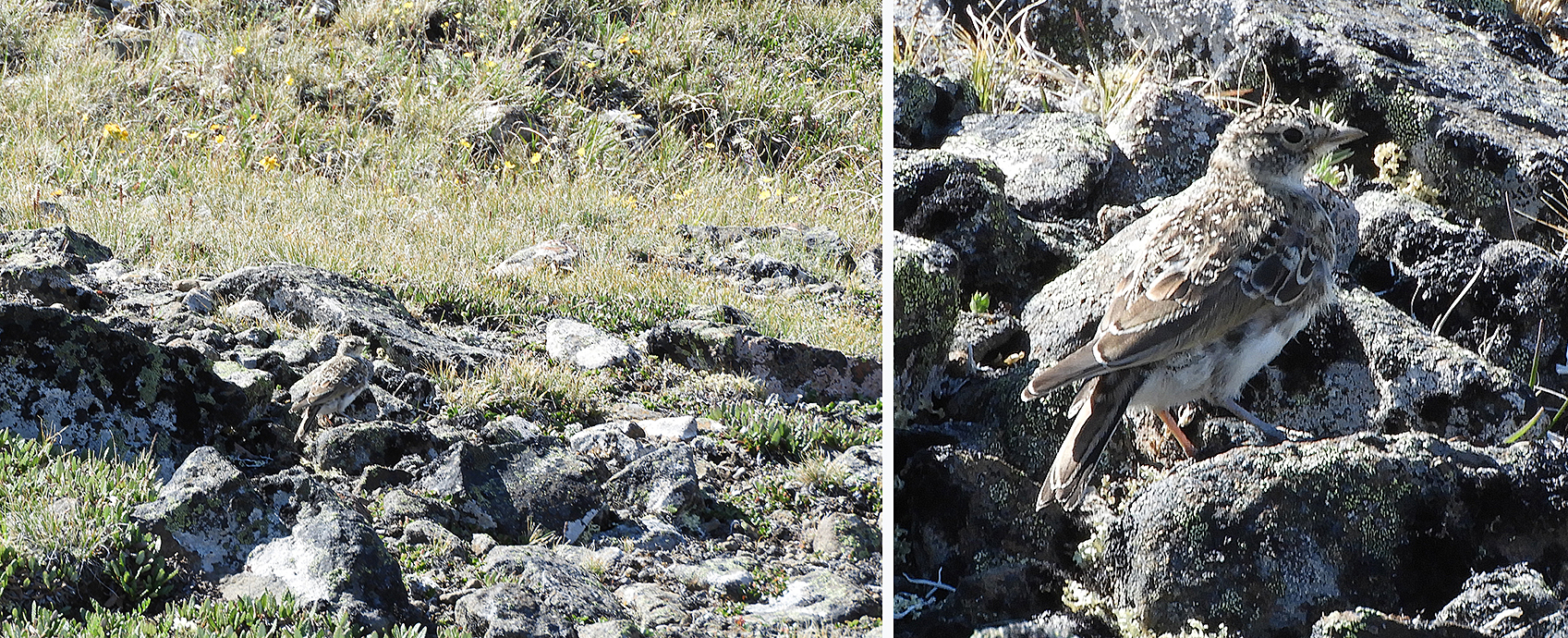
Horned Larks are another high alpine breeder. Along the Rim Trail I found several pairs, some carrying food for nestlings. This juvenile Horned Lark has obviously left the nest fairly recently and is still growing its outer feathers.
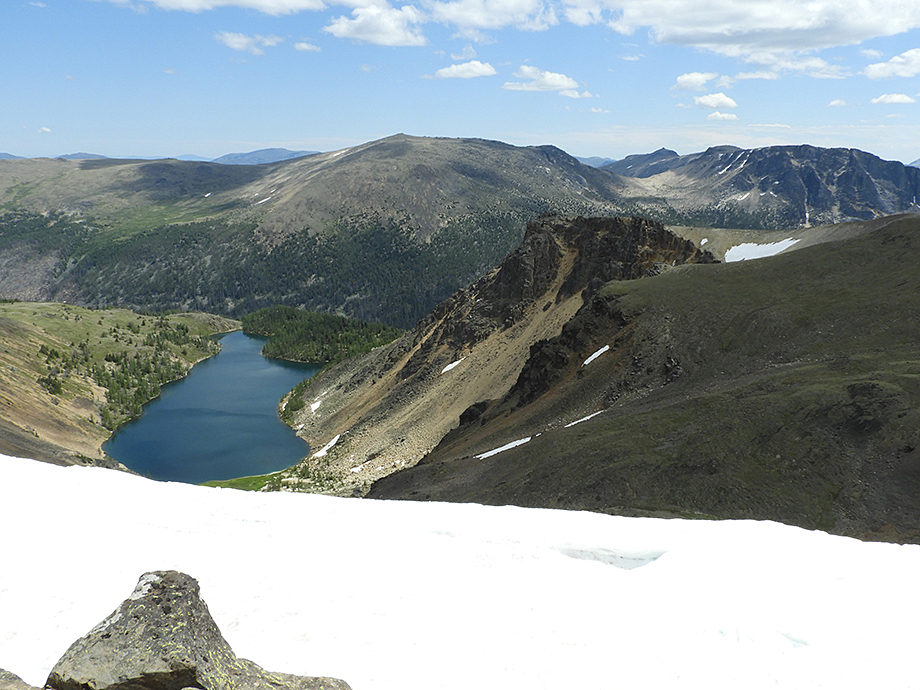
Looking down from the Rim Trail across a big snow bank at Ladyslipper Lake, with Lakeview Mountain (centre) and Box Car (right) across the valley.
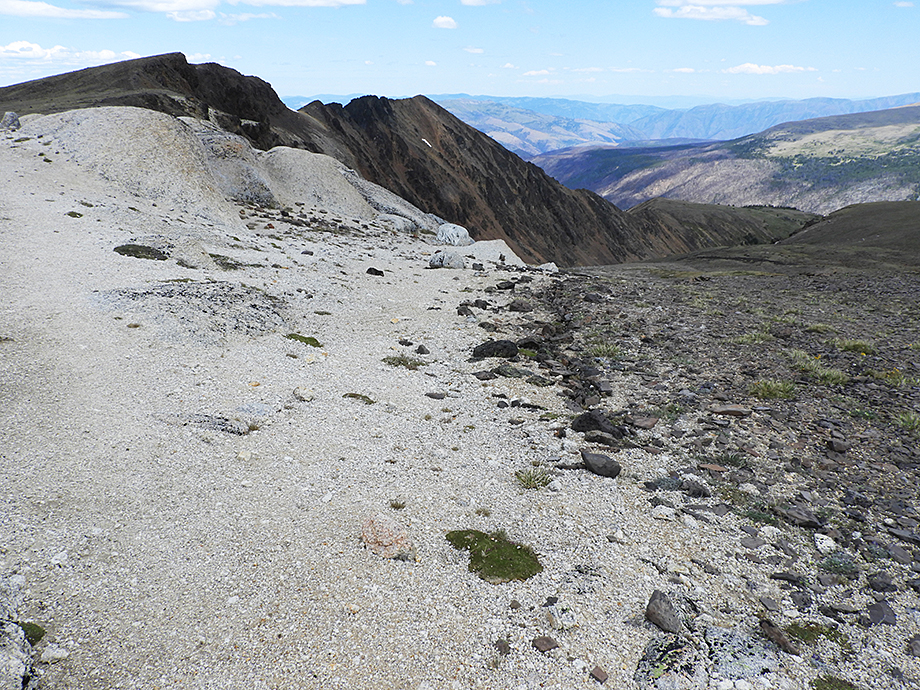
The geology along the Rim Trail is interesting. Here there is a sharp boundary between the pale granitic substrate on the left and the black volcanic basalt on the right.
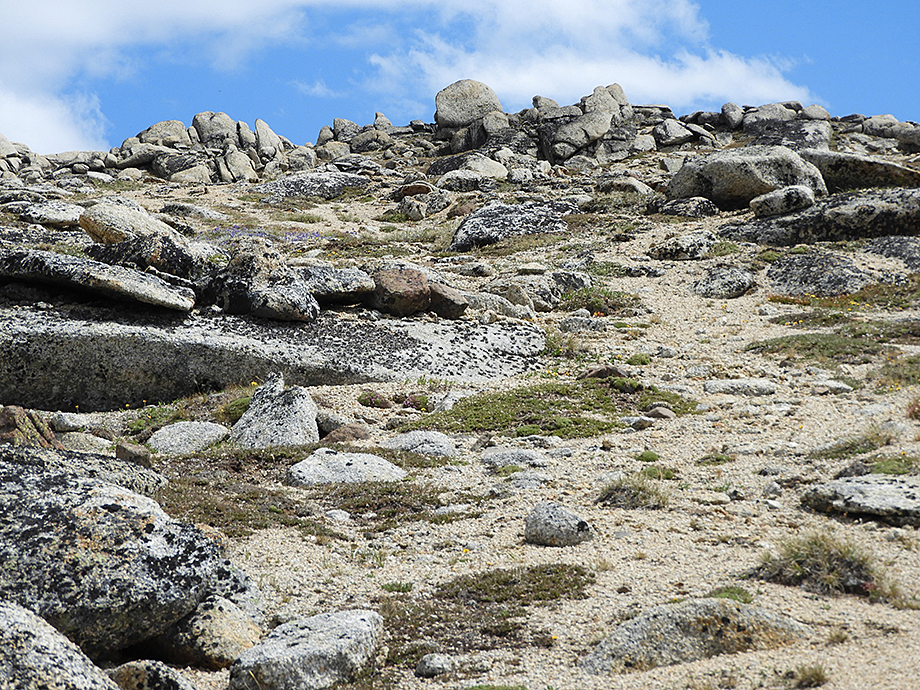
The granitic rocks around Stone City erode into coarse gravelly sand called grus (quartz monzonite). This is great substrate to hike over, but it is very coarse, sharp and porous and most plants have difficulty in establishing themselves here.
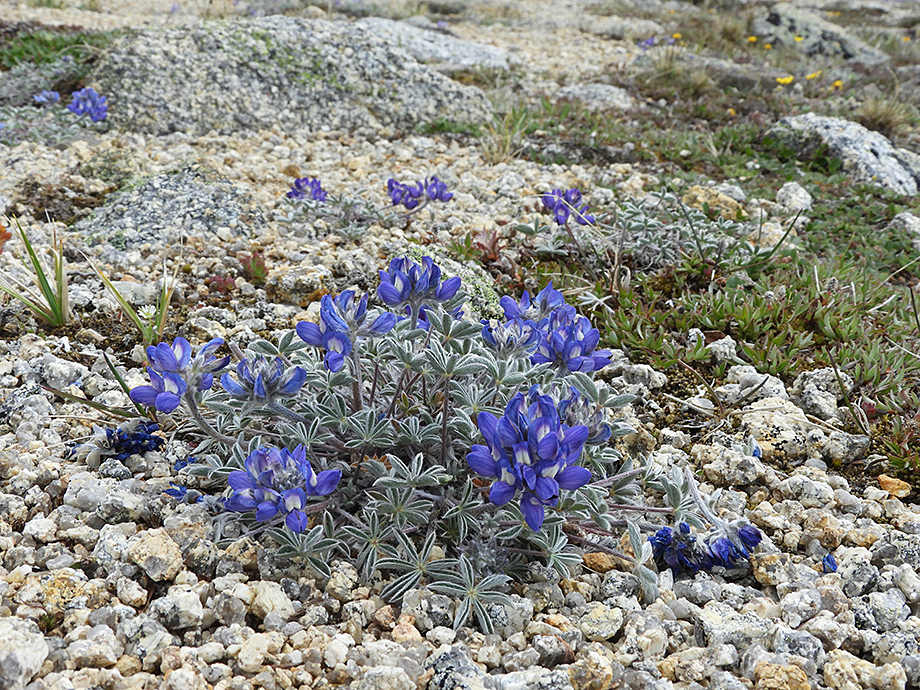
Dwarf Lupine (Lupinus lepidus), also known as Alpine Lupine, is a hardy pioneer species that is able to colonize the harsh grus substrate. This species was also one of the first plants to be re-established after the Mount St Helens eruption.
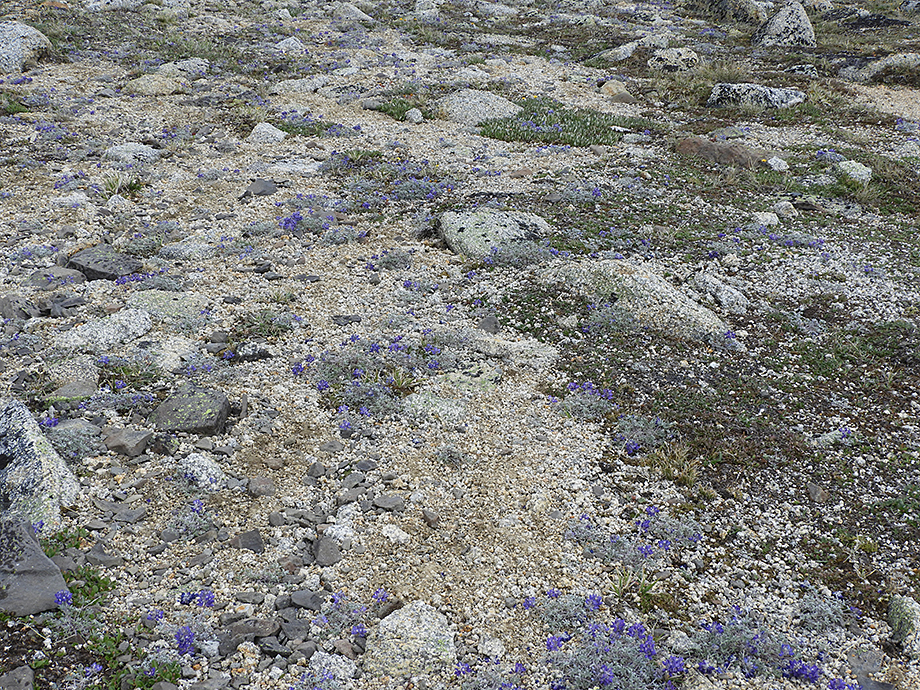
Dwarf Lupines scattered across the gravelly grus near Stone City.
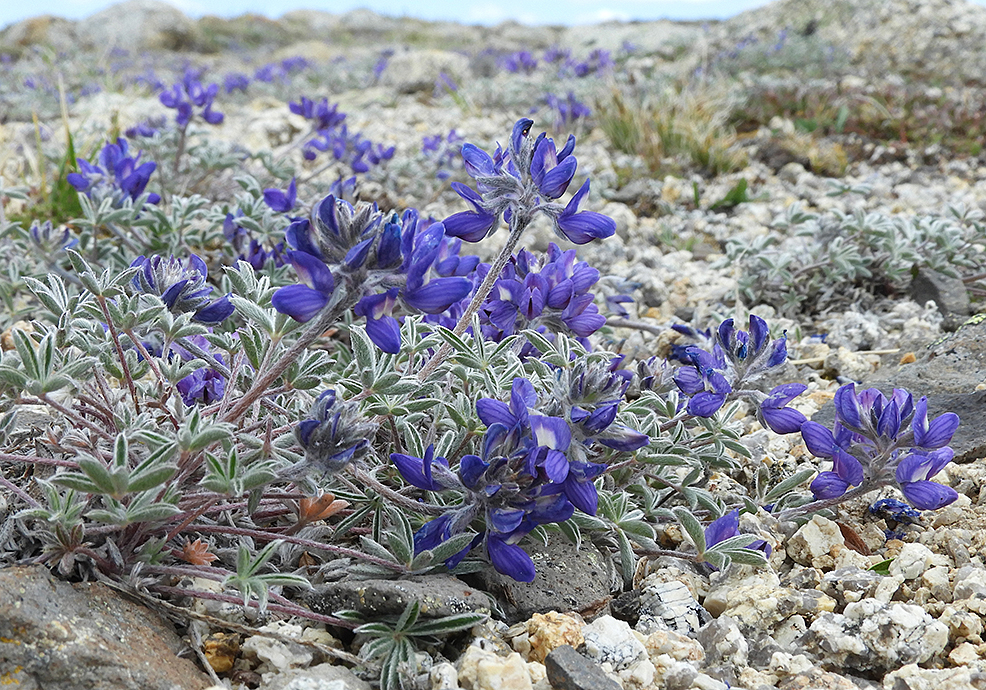
A close look at another Dwarf Lupine.
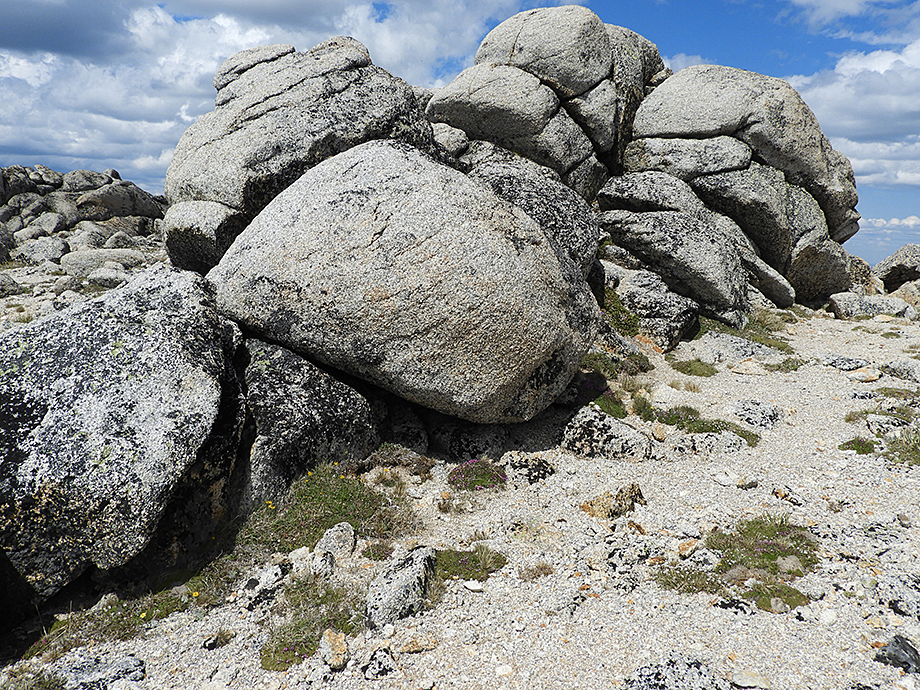
Lovely granitic rock formations at Stone City.
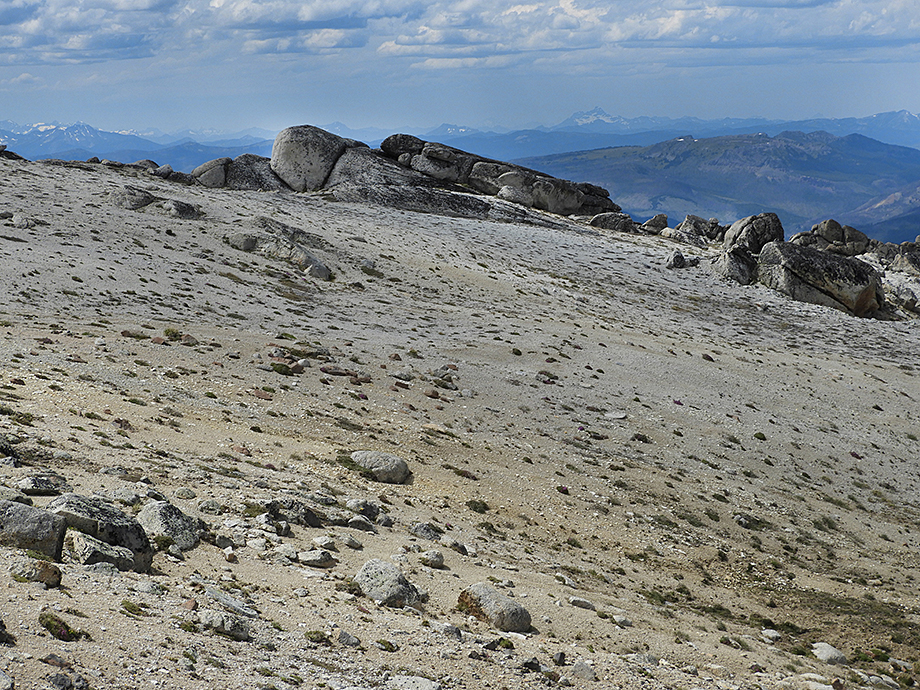
More scenic rock formations at Stone City on the Rim Trail.
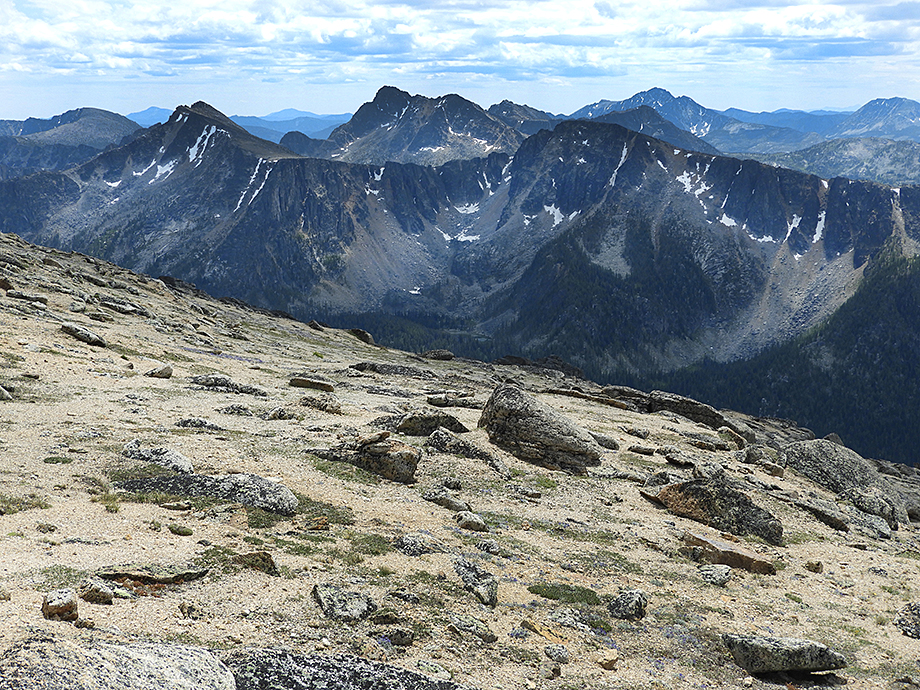
Looking southeast from the Rim Trail at the mountains across the U.S. border in Washington State.
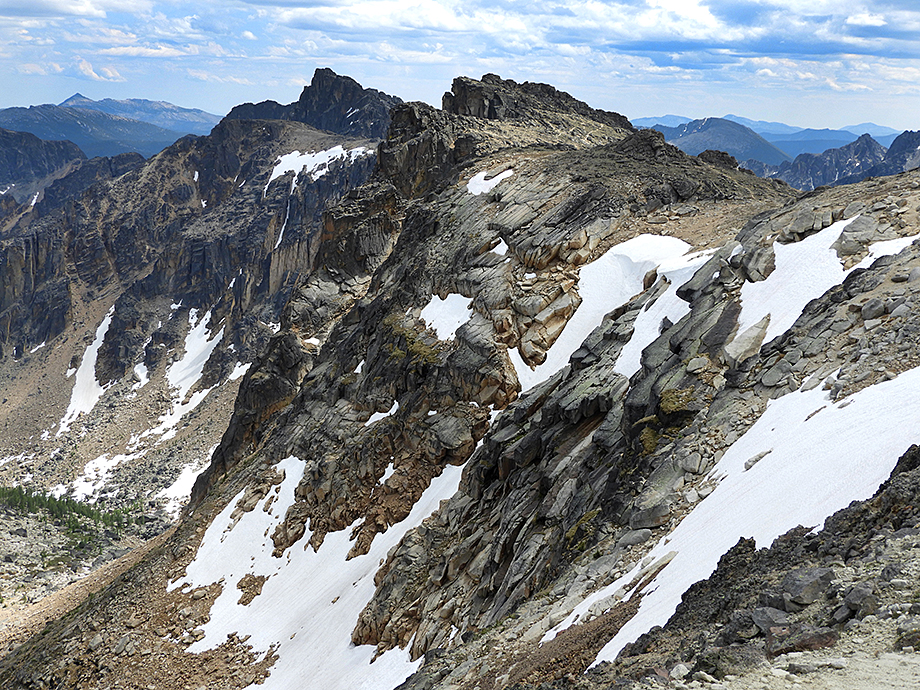
Rugged mountains in Cathedral Lakes Park viewed from the trail between Stone City and Ladyslipper Lake.
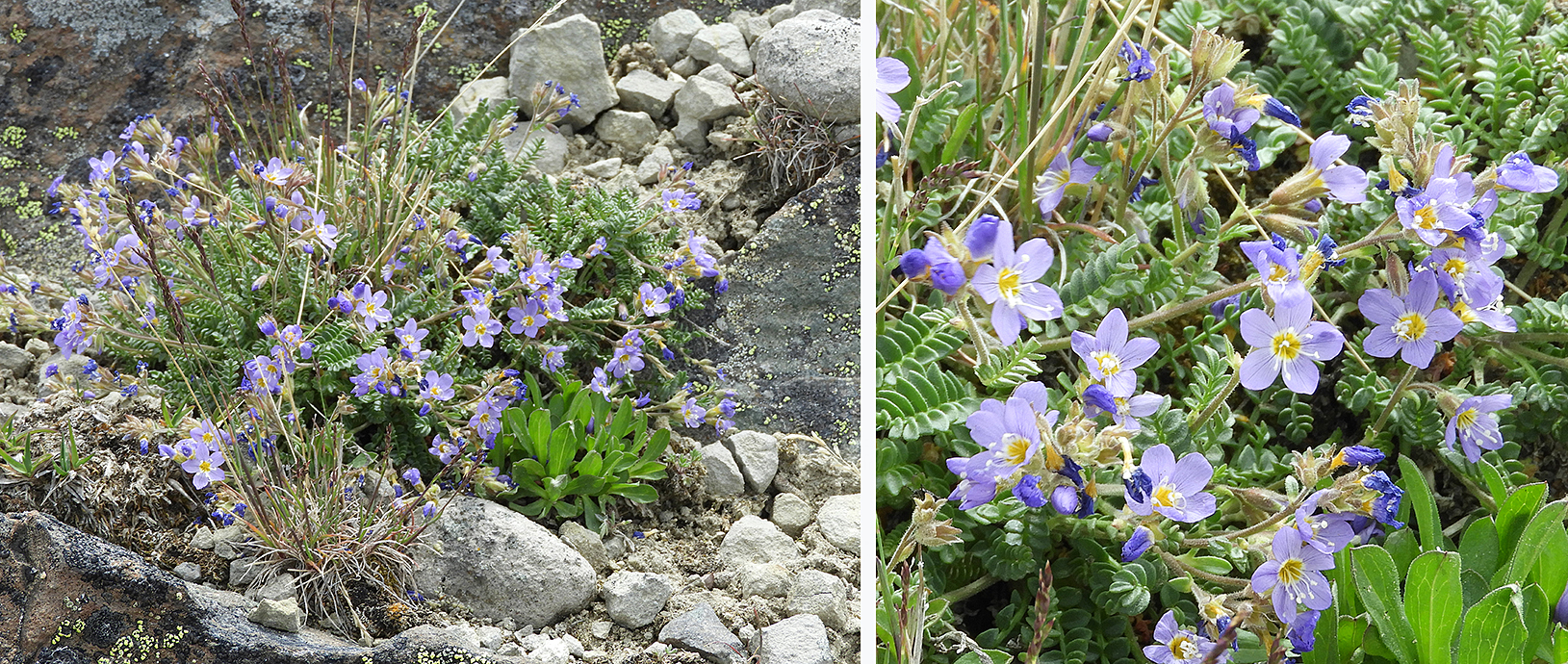
Along the upper Ladyslipper Trail near the Rim Trail one finds lovely patches of flowering shrubs tucked into sheltered nooks. Here is Pretty Jacob’s Ladder (Polemonium pulcherrium).
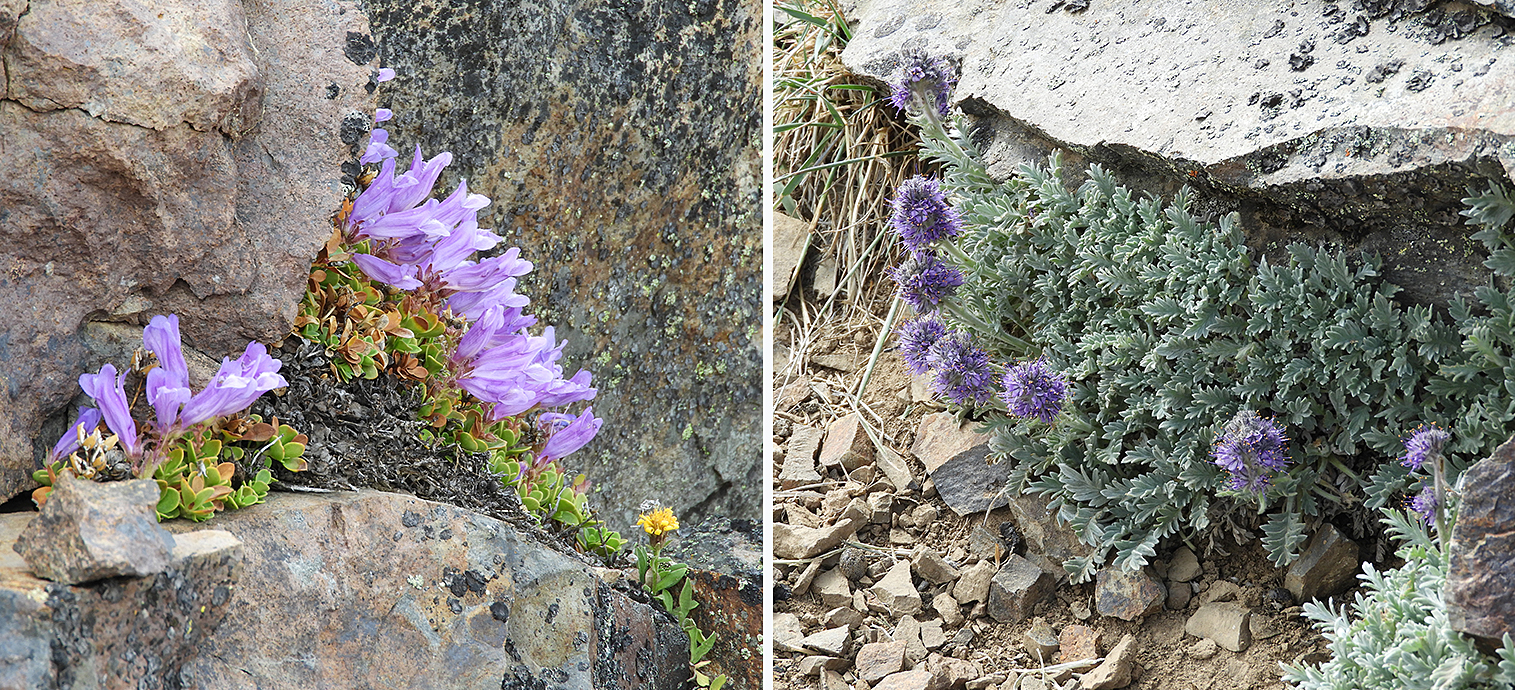
More dwarf shrubs in sheltered nooks along the upper Ladyslipper Trail: Davidson’s Penstemon (Penstemon davidsonii; left) and Silky Phacelia (Phacelia sericea; right).
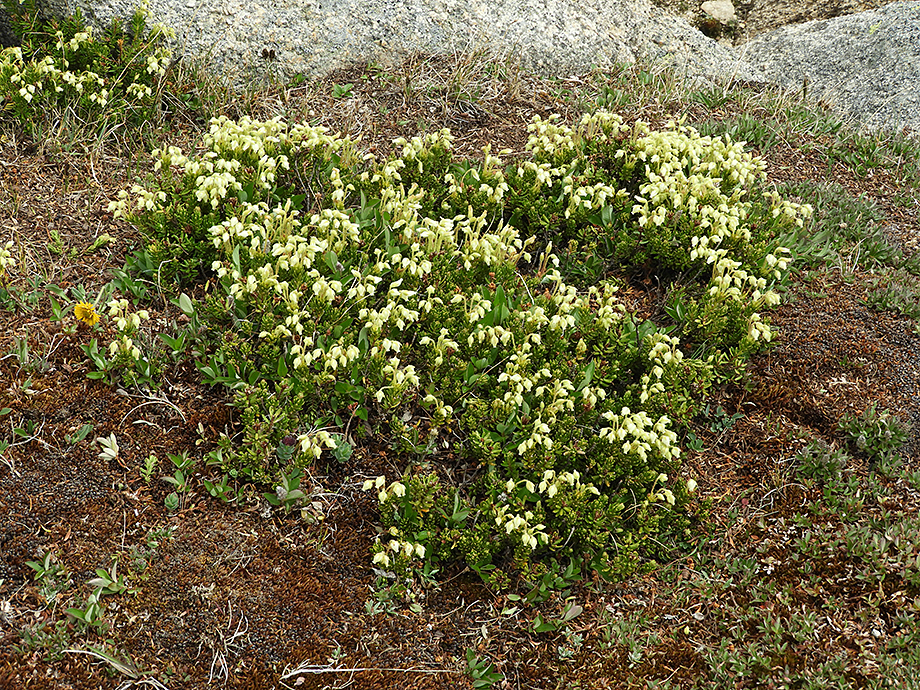
And in more hospitable places, Yellow Mountain Heather (Phyllodoce glanduliflora), ……
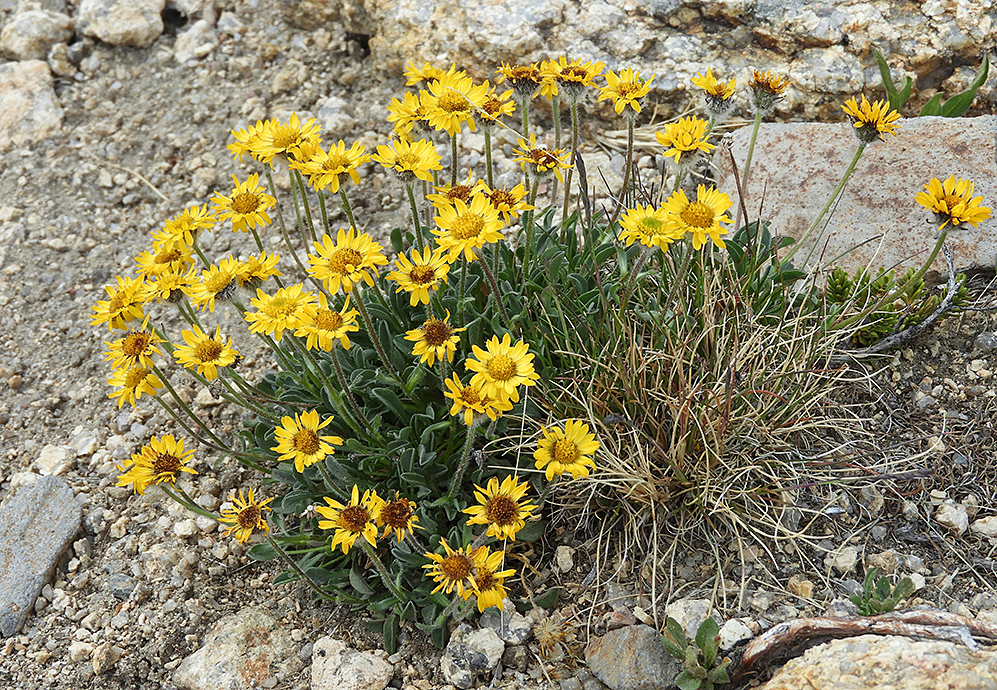
….. and Yellow Alpine Fleabane (Erigeron aureus)
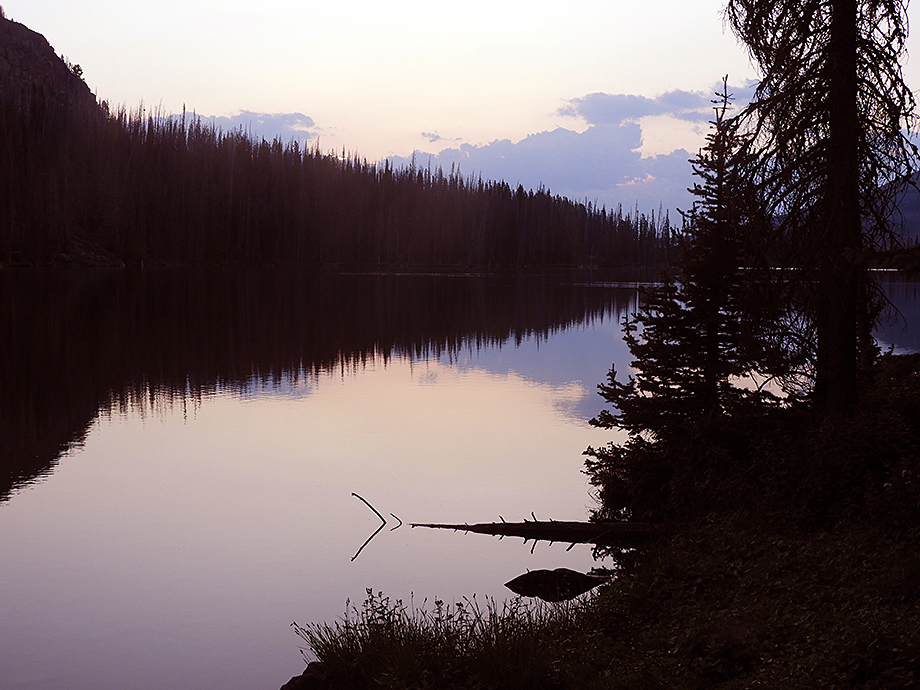
Quiet dusk at Quiniscoe Lake on our last evening at Cathedral Lakes Park.
~~~~~~~~~~~~~~~~~~~~~~~~~~~~~~~