Birding Mamit Lake – August 2020

Mamit Lake (sometimes spelled Mamette) is a medium-sized lake 12 km from our home in Logan Lake. It is surrounded by private ranchlands so access to the water is limited. From a boat launch next to Highway 97C we’ve been taking small kayaks to explore the lake. This is especially rewarding in late summer when the extensive mudflats attract many shorebirds migrating south after their northern or Arctic breeding seasons. The lake also supports many breeding waterfowl and is a popular fishing ground for American White Pelicans. Here are some photos from several paddling expeditions around Mamit Lake – 8.7 km around the shoreline according to my GPS.
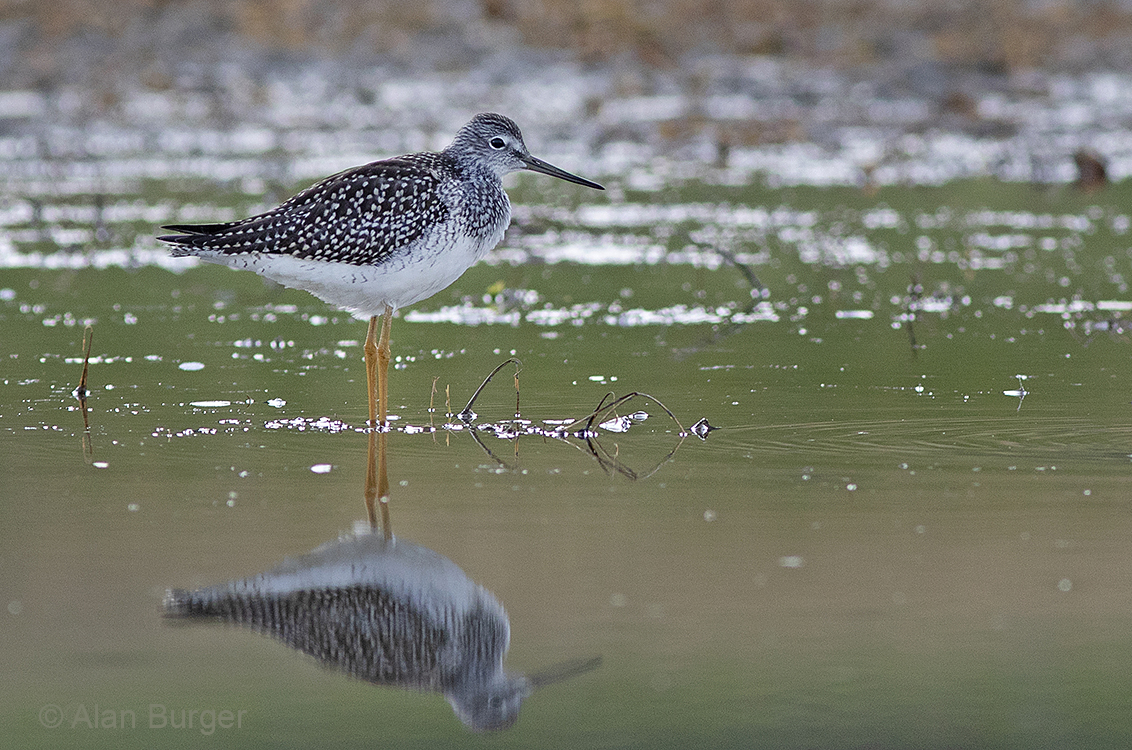
Greater Yellowlegs – in August there are regularly 15-25 of these large shorebirds around Mamit Lake. ©Alan Burger

Greater Yellowlegs. © Alan Burger
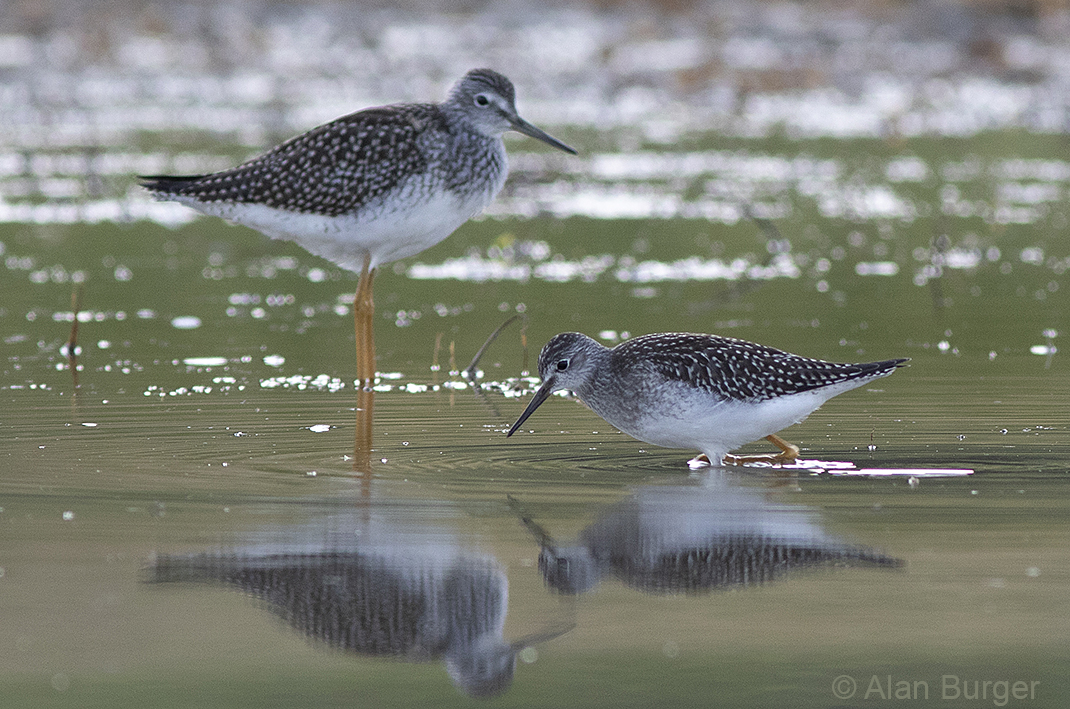
Greater (back) and Lesser (front) Yellowlegs. When they are together like this they are easy to separate, but when alone identification is difficult. ©Alan Burger
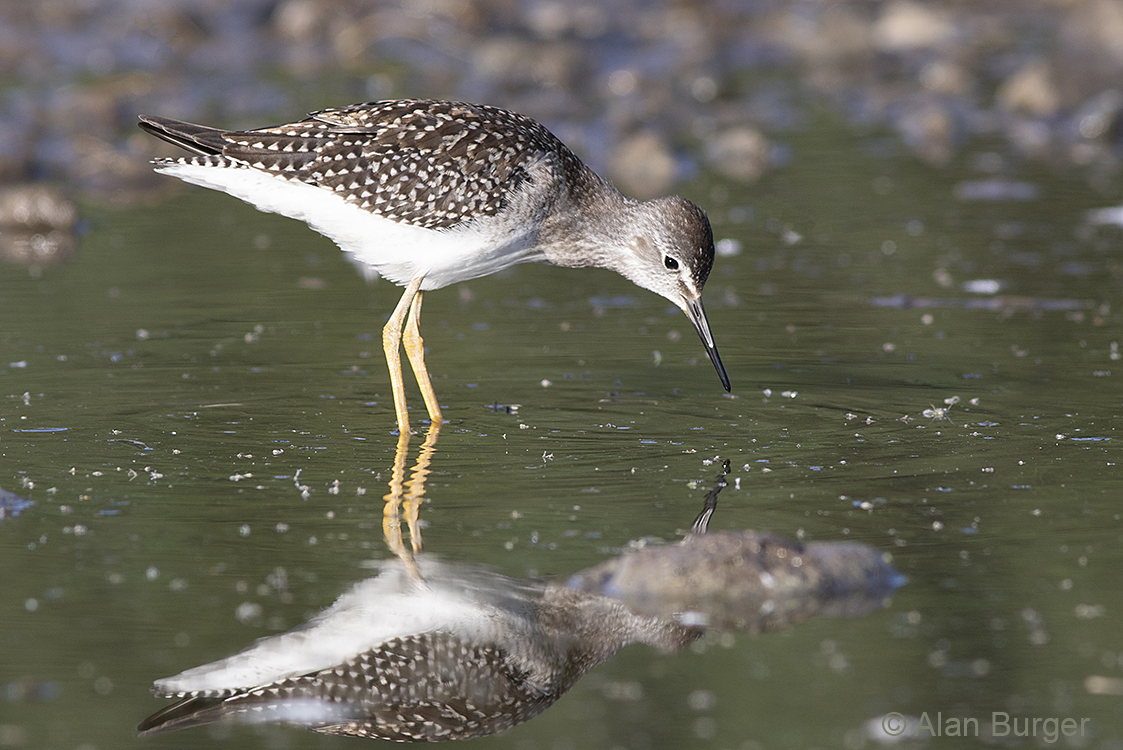
Lesser Yellowlegs. © Alan Burger
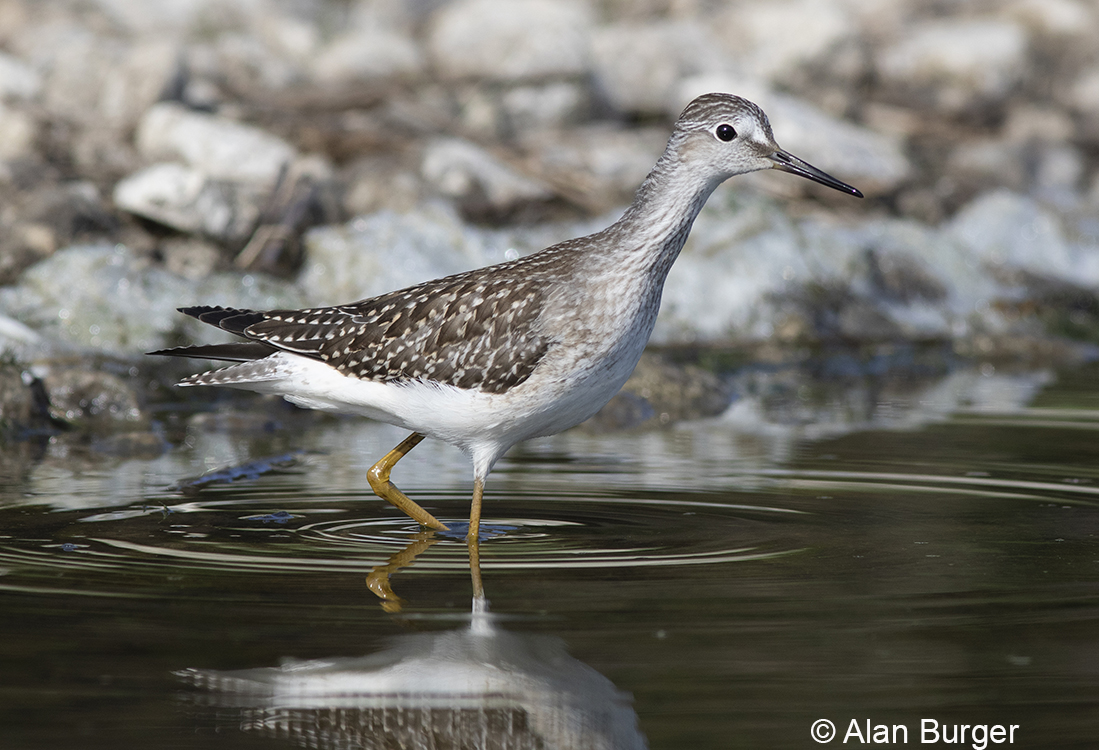
Lesser Yellowlegs foraging in the shallows of Mamit Lake. © Alan Burger
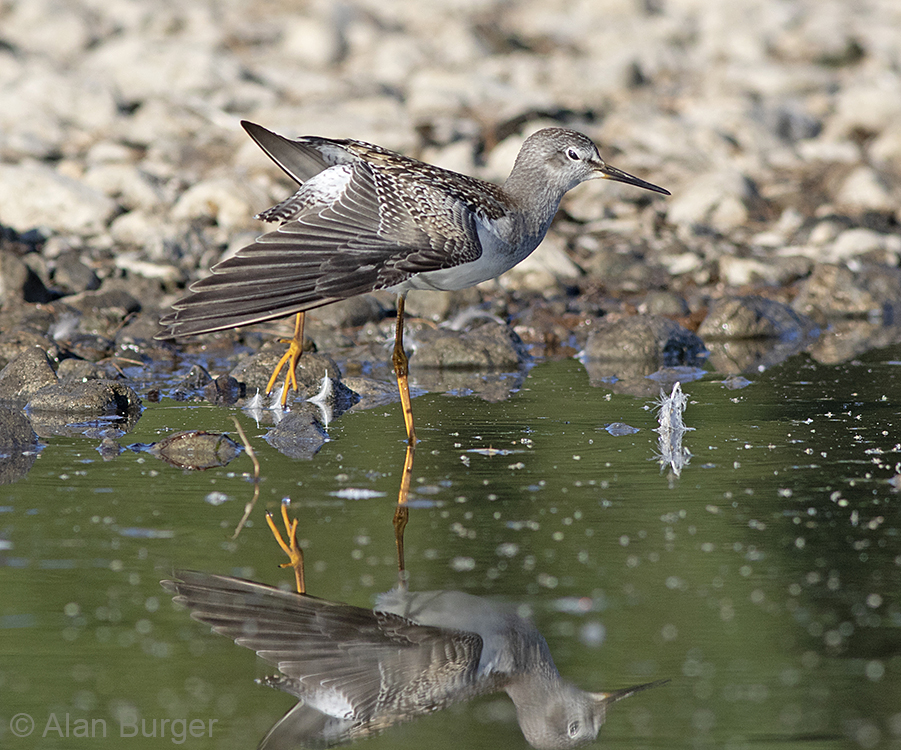
Lesser Yellowlegs doing some stretches. © Alan Burger

Small sandpipers (“Peeps”) are the most common late-summer shorebirds on Mamit Lake. The vast majority are Least Sandpipers, but if one looks carefully there are sometimes other species mixed in – Western Sandpipers and Semi-palmated Sandpipers.
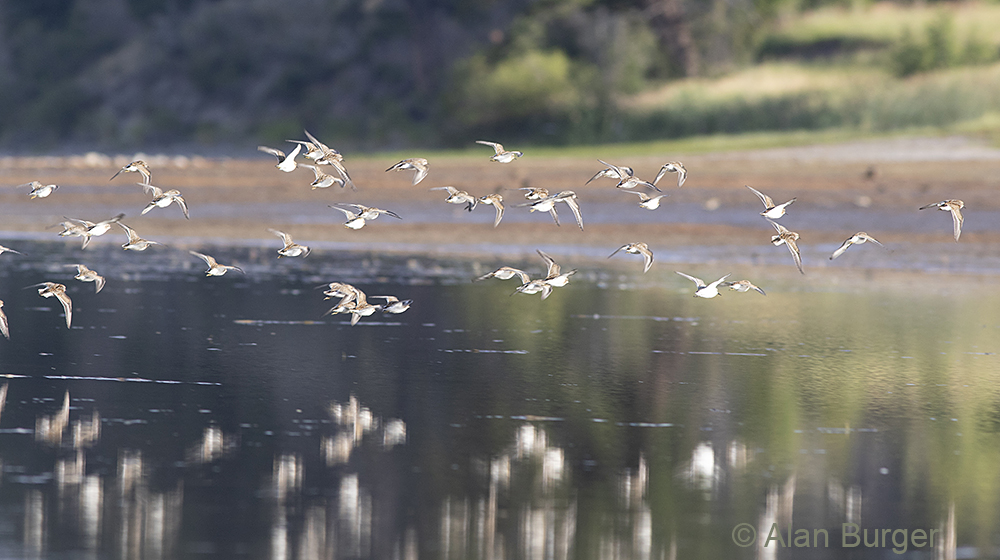
A flock of Peeps circling the mudflats at Mamit Lake. © Alan Burger
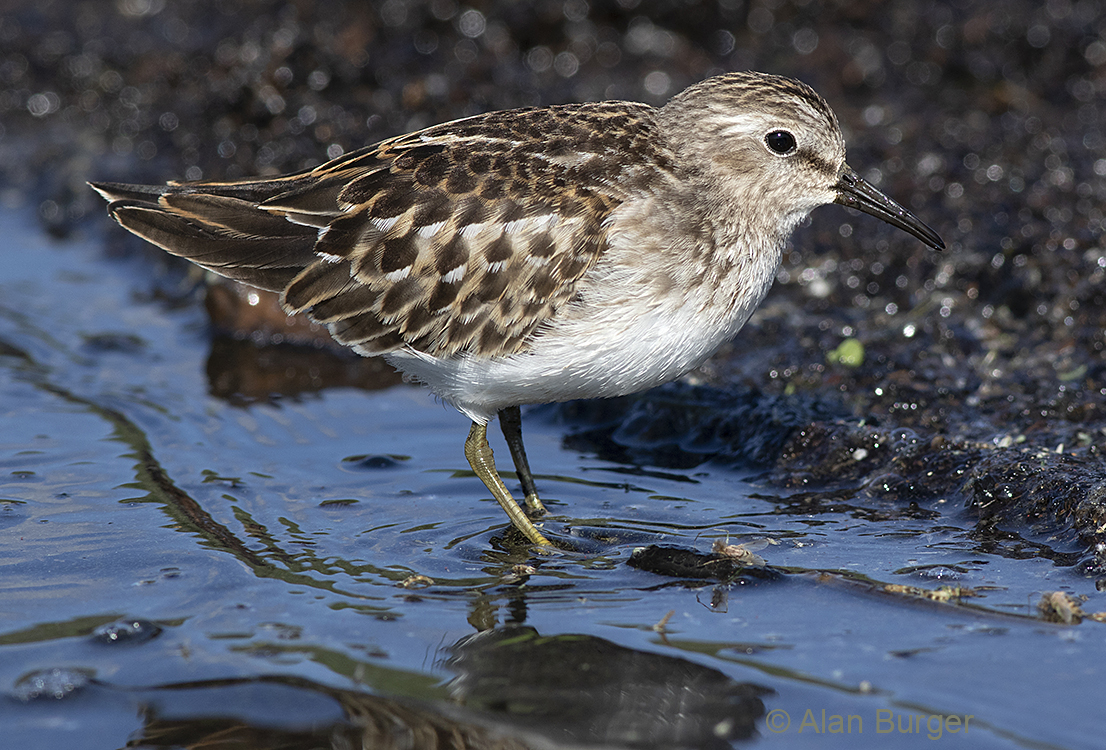
Least Sandpiper – the most common shorebird on Mamit Lake in late summer. © Alan Burger
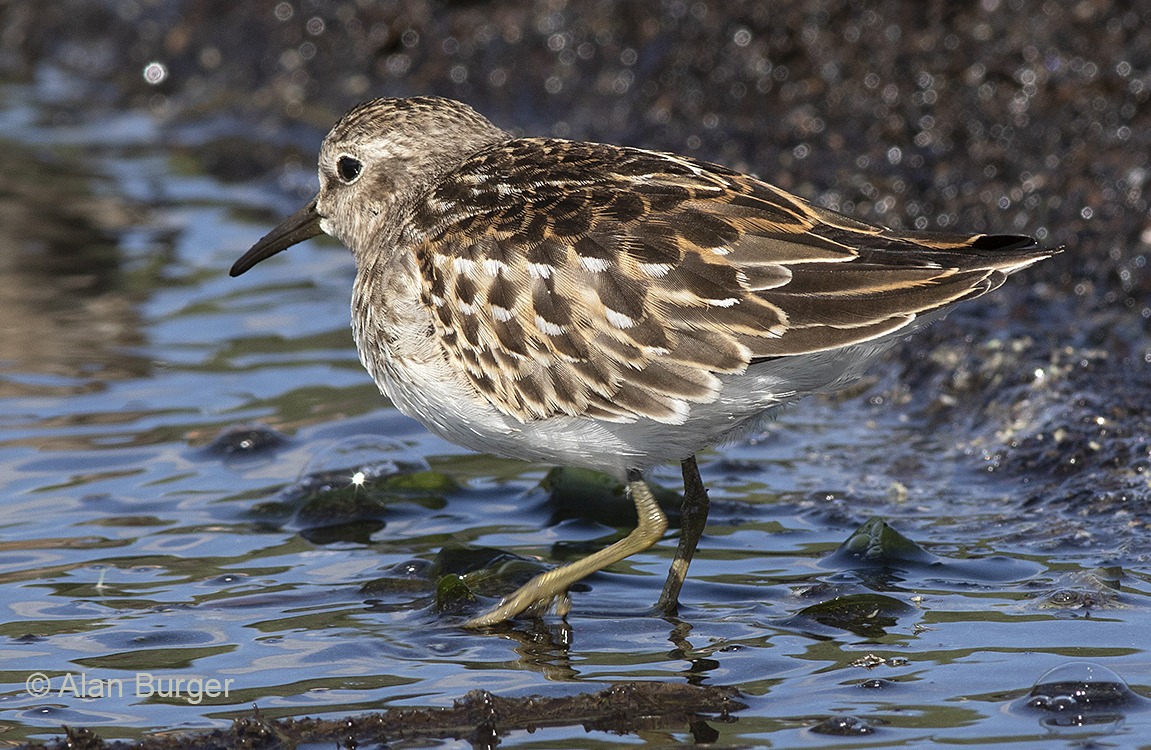
A Least Sandpiper – a juvenile bird with fresh plumage. © Alan Burger
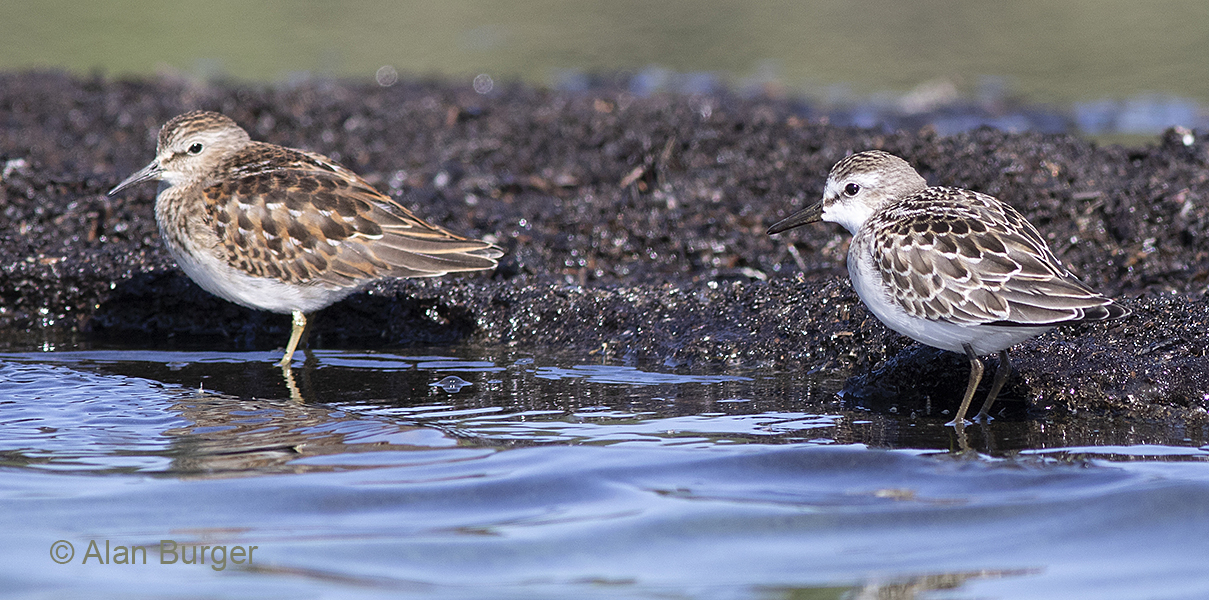
Compare the Peeps: Least Sandpiper on the left, Semi-palmated Sandpiper on the right. Note the difference in leg colour and the stubby beak of the Semi-palmated – both diagnostic features. Mamit Lake 13 August 2020. © Alan Burger
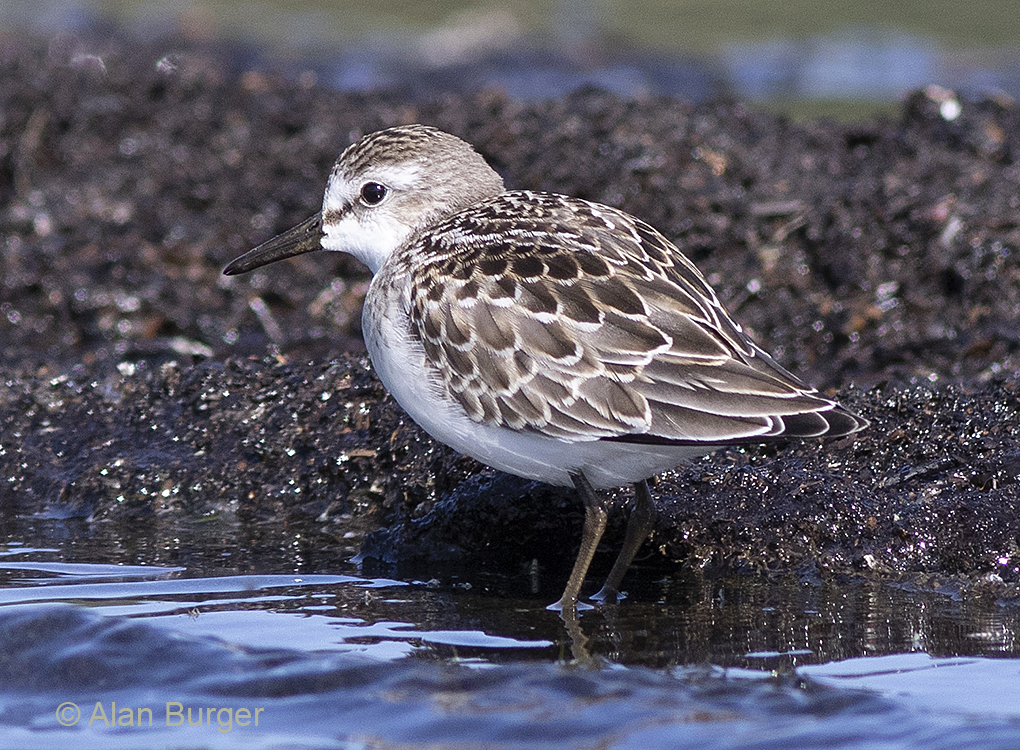
Semi-palmated Sandpiper – a juvenile with white-trimmed feathers. © Alan Burger
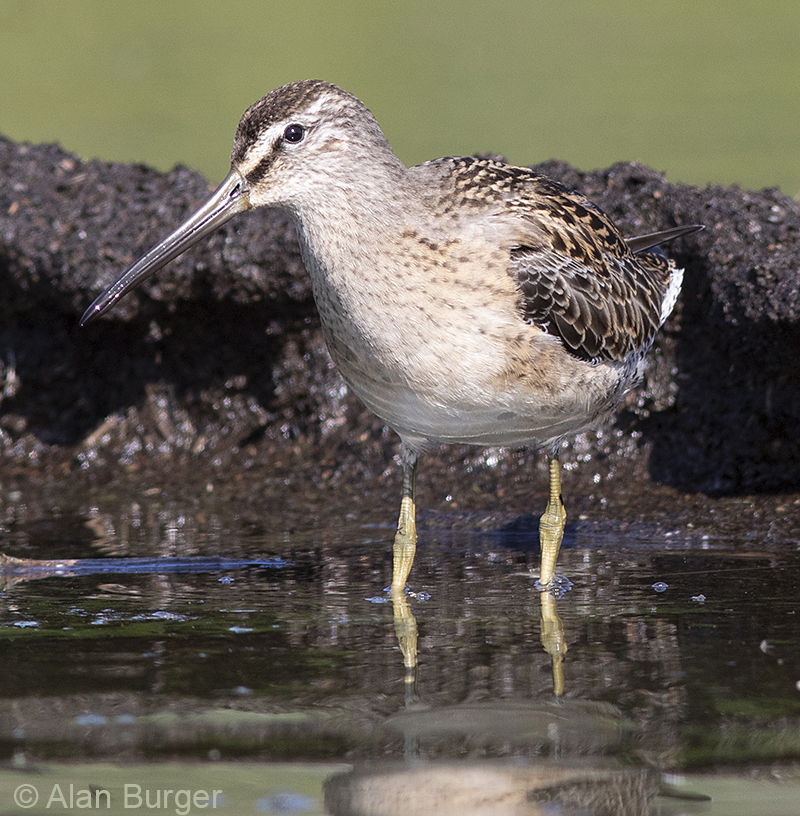
Long-billed Dowitcher. This large shorebird often migrates through the B.C. interior, whereas the very similar Short-billed Dowitcher is along the ocean coast. © Alan Burger
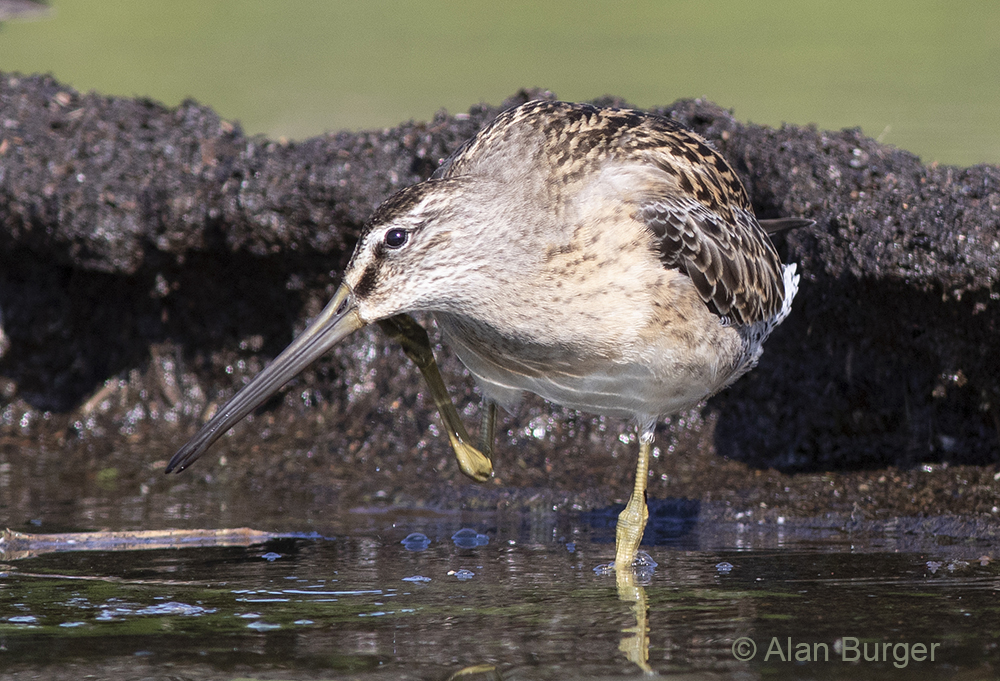
Scratching an itch – Long-billed Dowitcher, Mamit Lake 13 August 2020. © Alan Burger
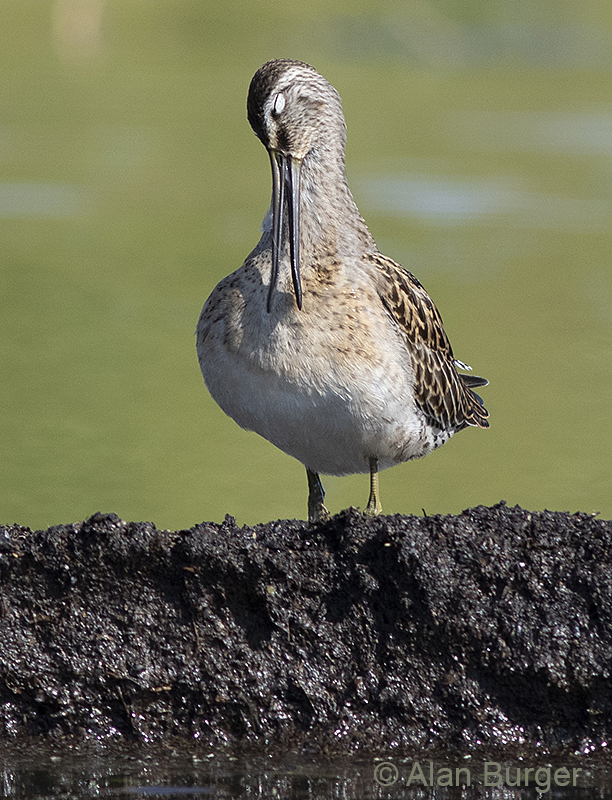
Long-billed Dowitcher. It takes some skill to preen breast feathers with a bill as long as this. © Alan Burger

Only two species of shorebird breed on Mamit Lake – Killdeer and Spotted Sandpiper.
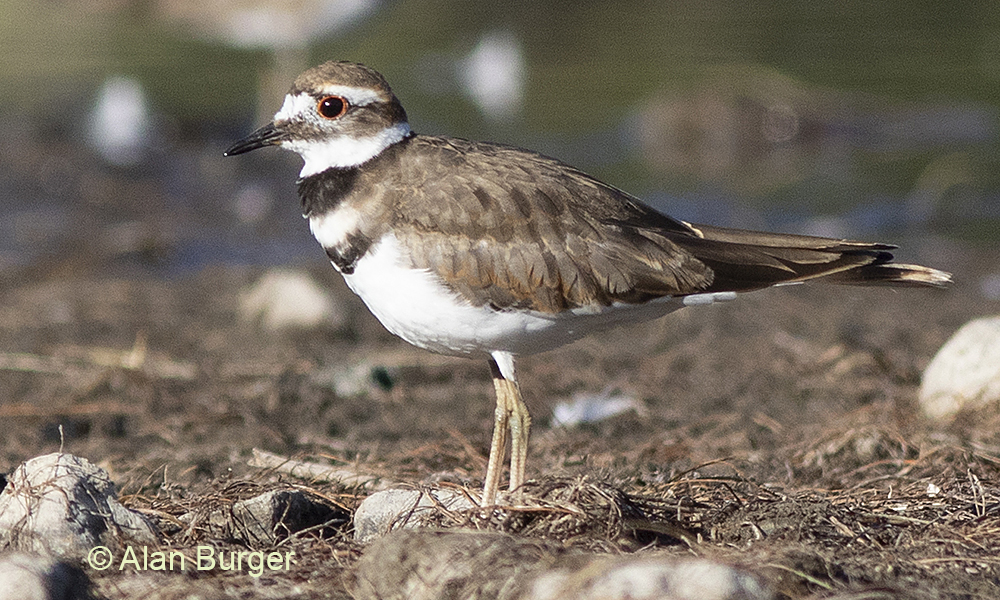
Killdeer – this plover species breeds along the lake edges, foraging mostly on the upper mudflats and grassy verges. © Alan Burger
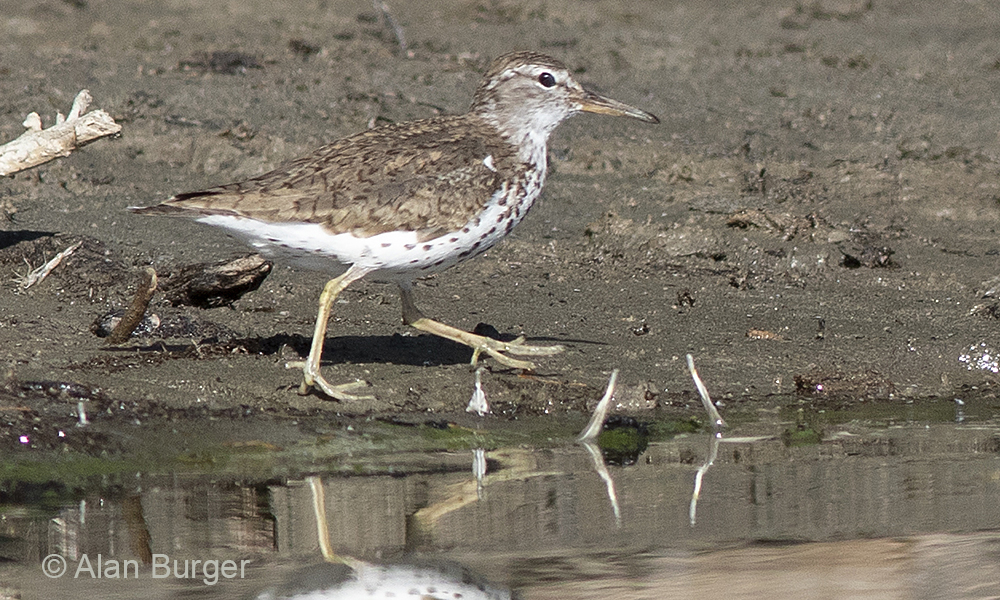
Spotted Sandpipers are a common breeding species on Mamit Lake – there are likely 10 or more pairs scattered around the shoreline. © Alan Burger

Perhaps the most interesting shorebirds to show up on Mamit Lake are phalaropes. These shorebirds generally feed by swimming, and as a result have evolved unique lobed toes. In our area they also tend to feed along the muddy edges of the lake, just like most other shorebirds. Wilson’s Phalaropes breed within southern and central B.C., but Red-necked Phalaropes breed further north, going up into the high Arctic tundra. So far only juvenile phalaropes have turned up on Mamit Lake.
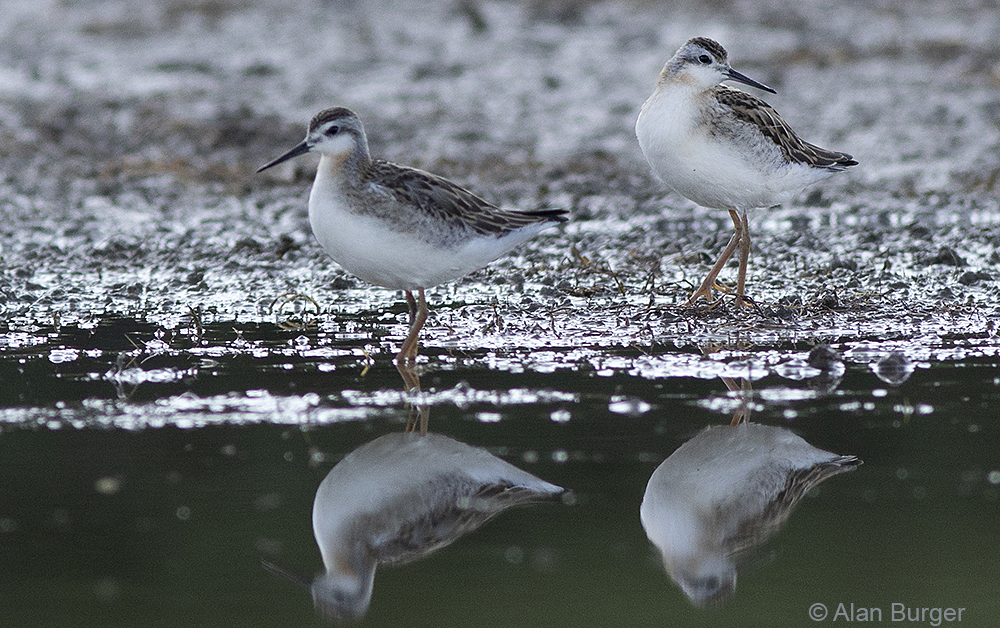
A couple of juvenile Wilson’s Phalaropes. Very narrow, long bills and yellowish legs distinguish this species. © Alan Burger
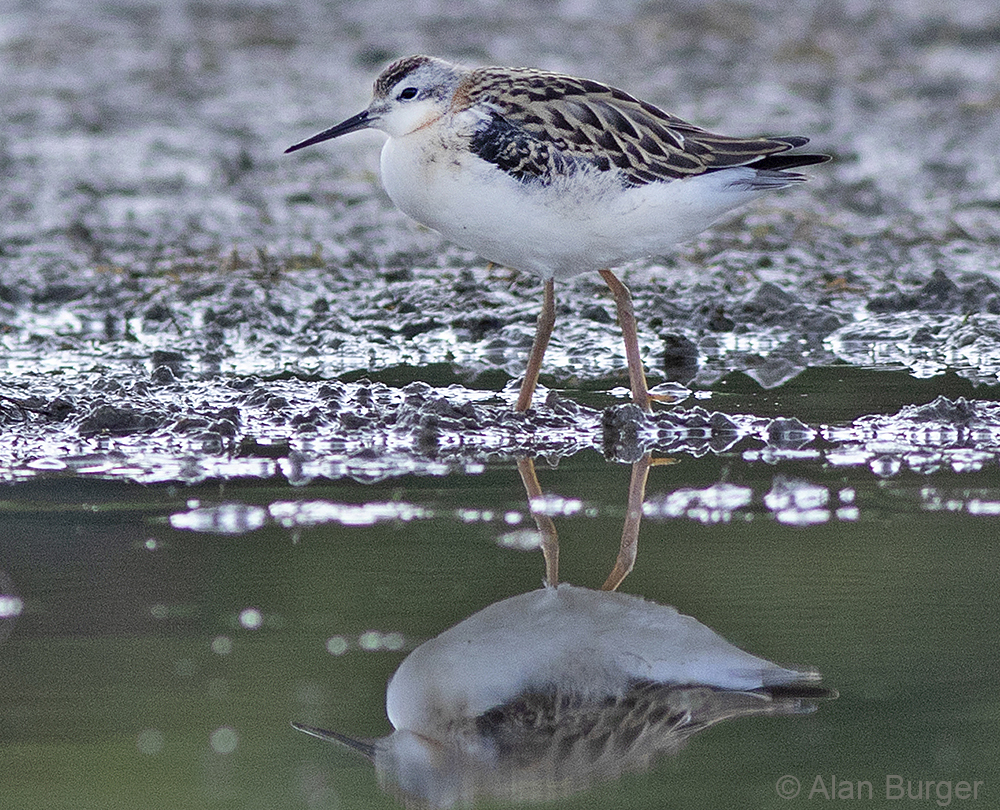
Wilson’s Phalarope – juvenile. © Alan Burger
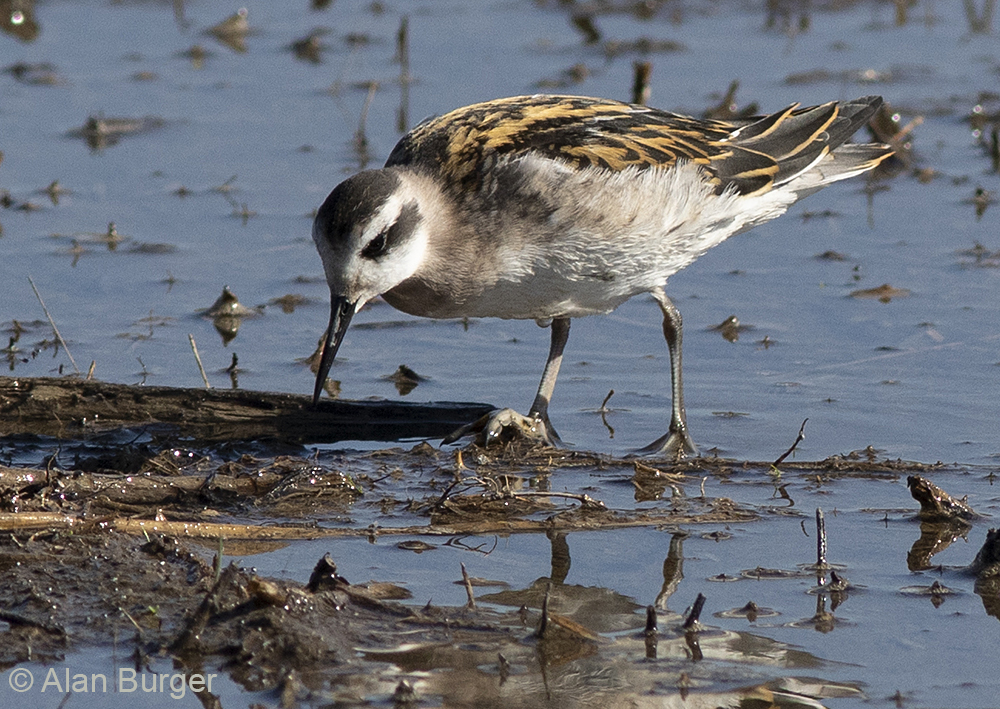
I was excited to find this Red-necked Phalarope on the lake on 5 August 2020. Notice the lobed toes. This species mostly migrates along coastal waters but a few travel inland. © Alan Burger
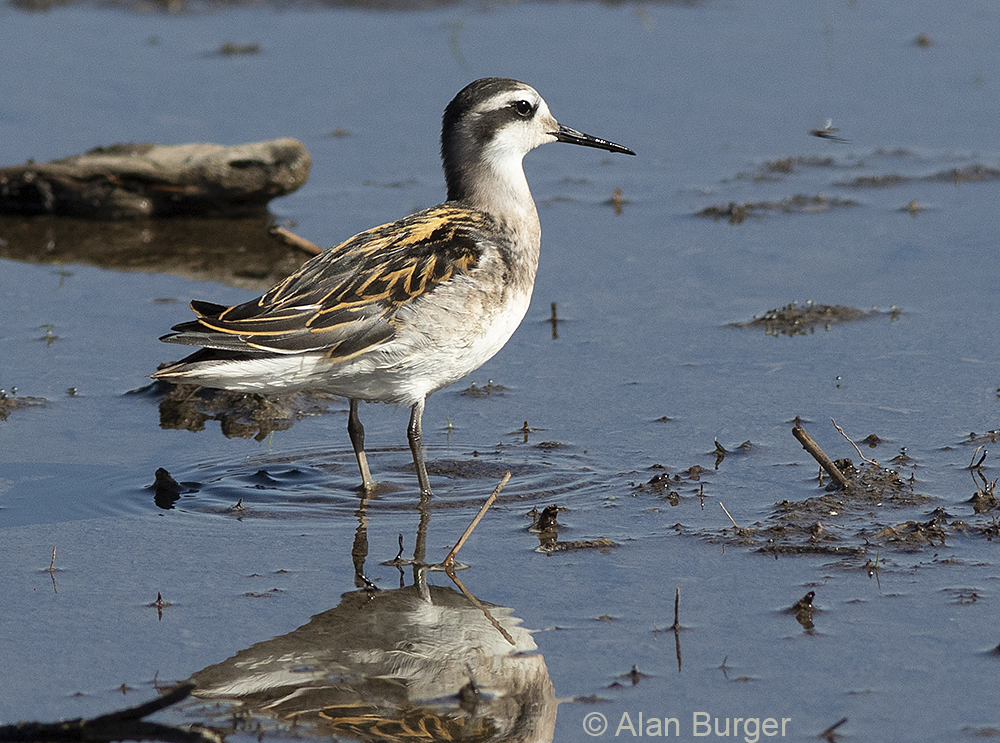
Red-necked Phalarope – juvenile. © Alan Burger

Gulls are relatively rare on Mamit Lake. None breed here and a few pass by en route to other areas. On 4-5 August there were a few gulls present.
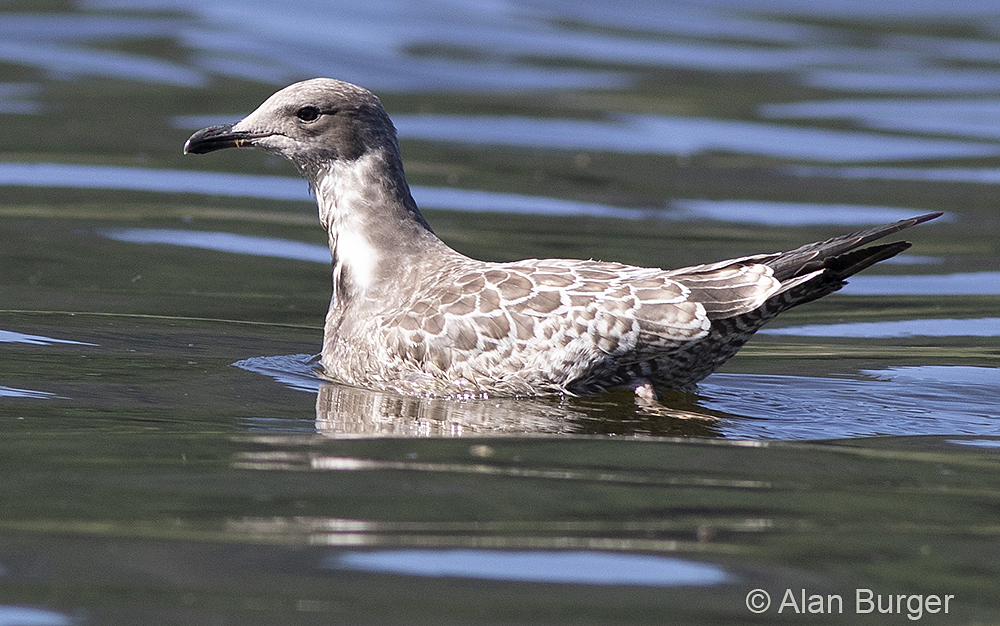
A juvenile California Gull, probably moving from a distant breeding colony. © Alan Burger
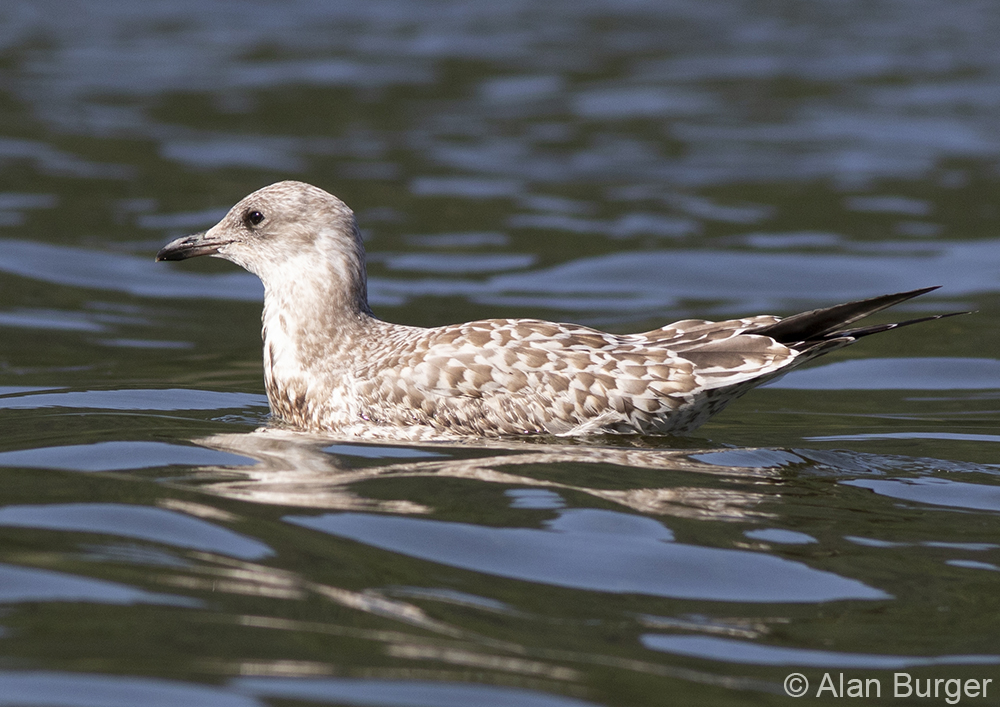
Juvenile Ring-billed Gull. There are several breeding colonies of this species in southern B.C. – the nearest is probably at Salmon Arm. © Alan Burger
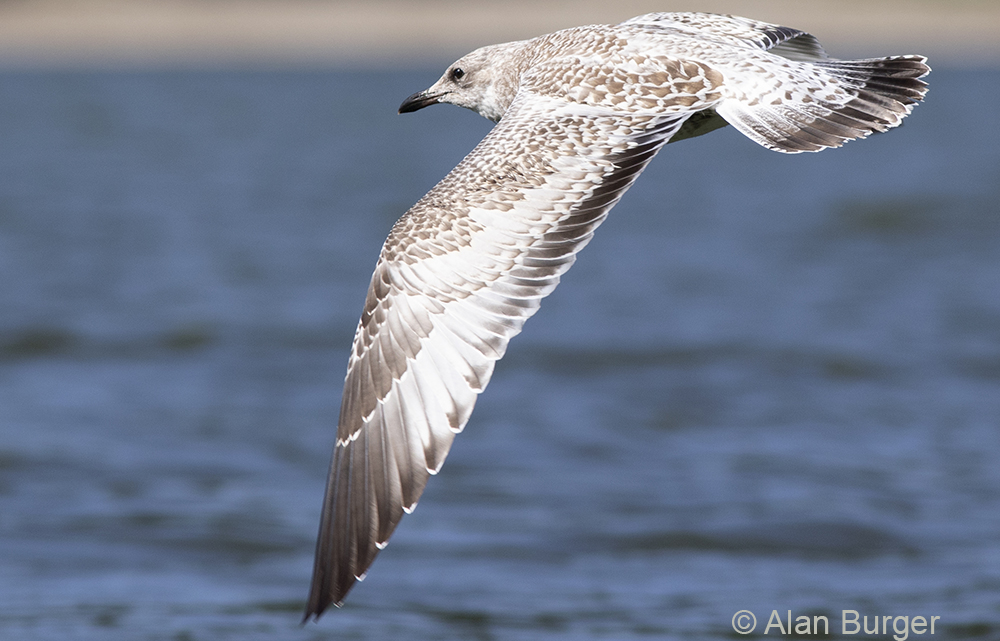
Juvenile Ring-billed Gull. © Alan Burger

It is not just birds that are of interest here. We often see Mule Deer along the shore and Yellow Pine Chipmunks are common, often coming right down to the water’s edge.
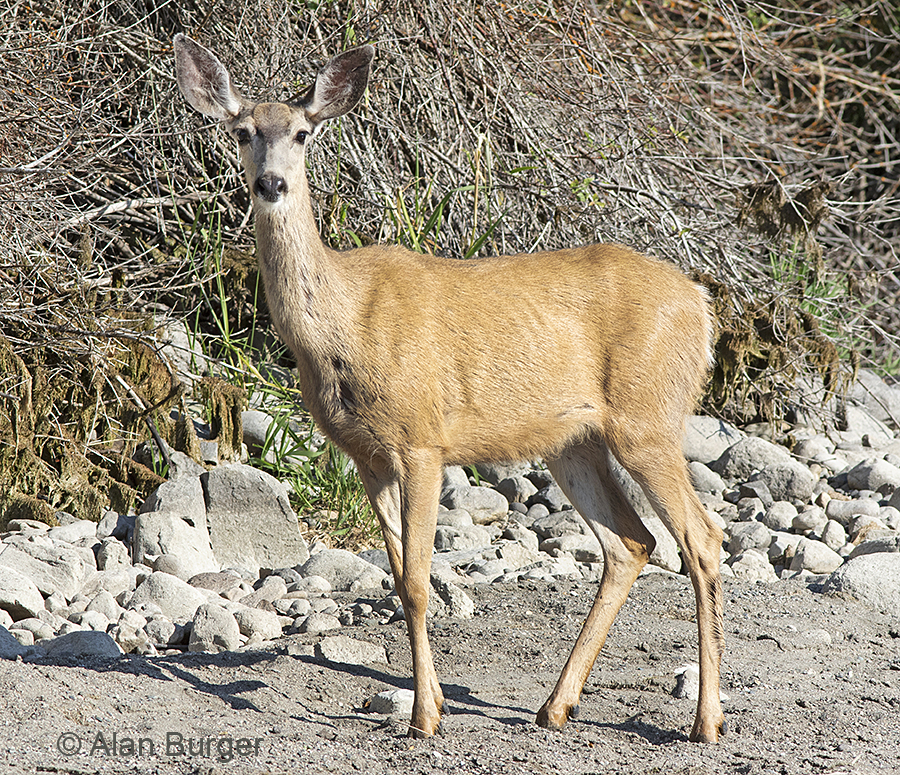
A Mule Deer doe – quite curious about my kayak and flashing paddles. © Alan Burger
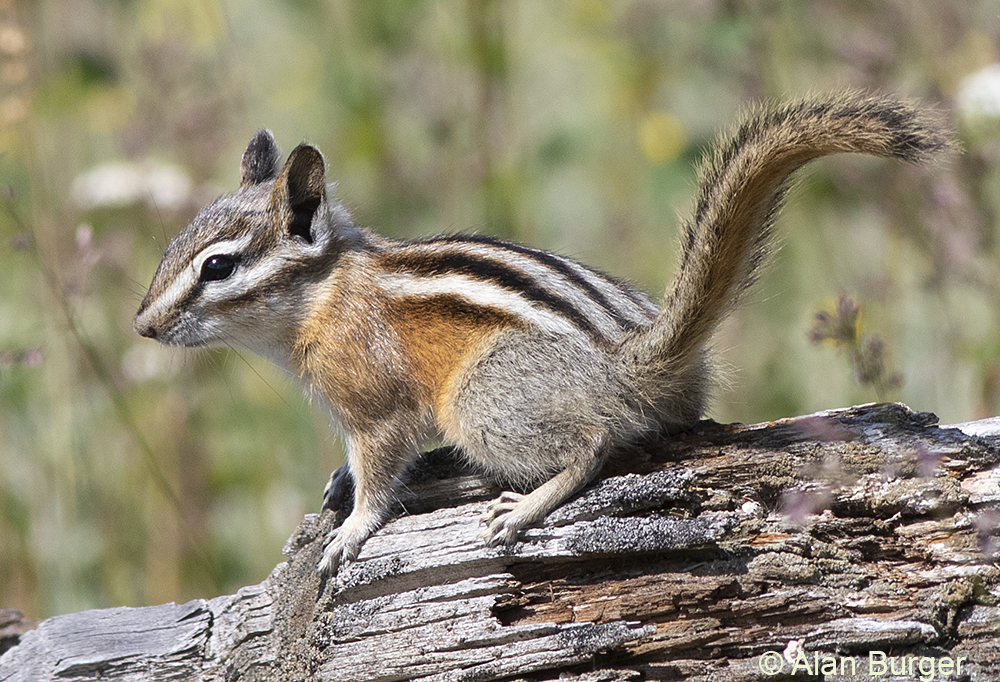
Yellow Pine Chipmunk. These little critters are common around the shoreline of the lake. © Alan Burger

And, of course, there are hundreds of ducks and geese, although I’ve been focused mainly on the shorebirds during my visits.
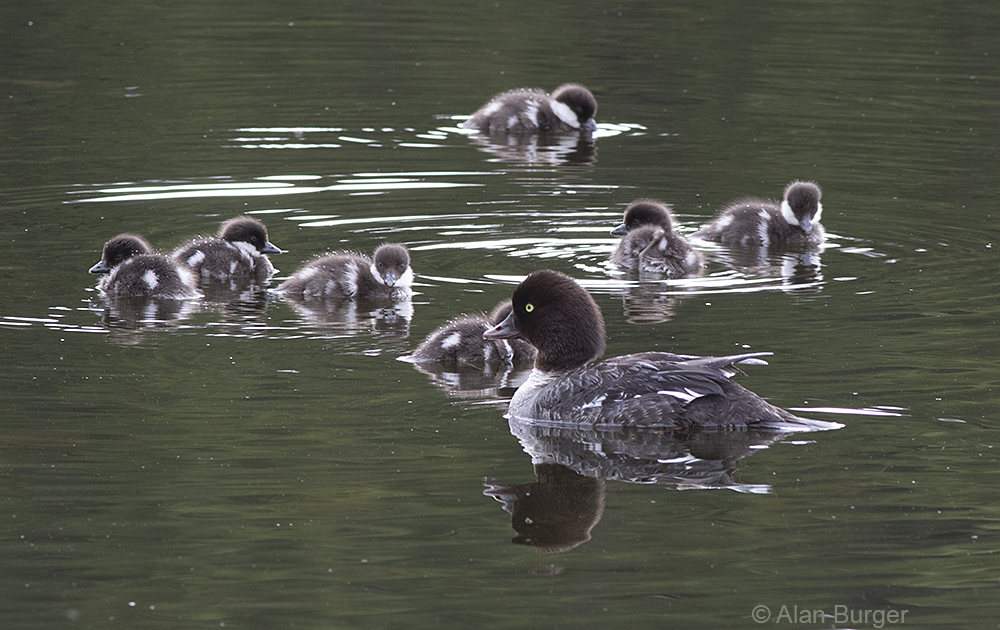
In August one can find 4-5 broods of Barrow’s Goldeneyes on Mamit Lake. I took this photo earlier in the year (27 June) at Logan Lake. © Alan Burger
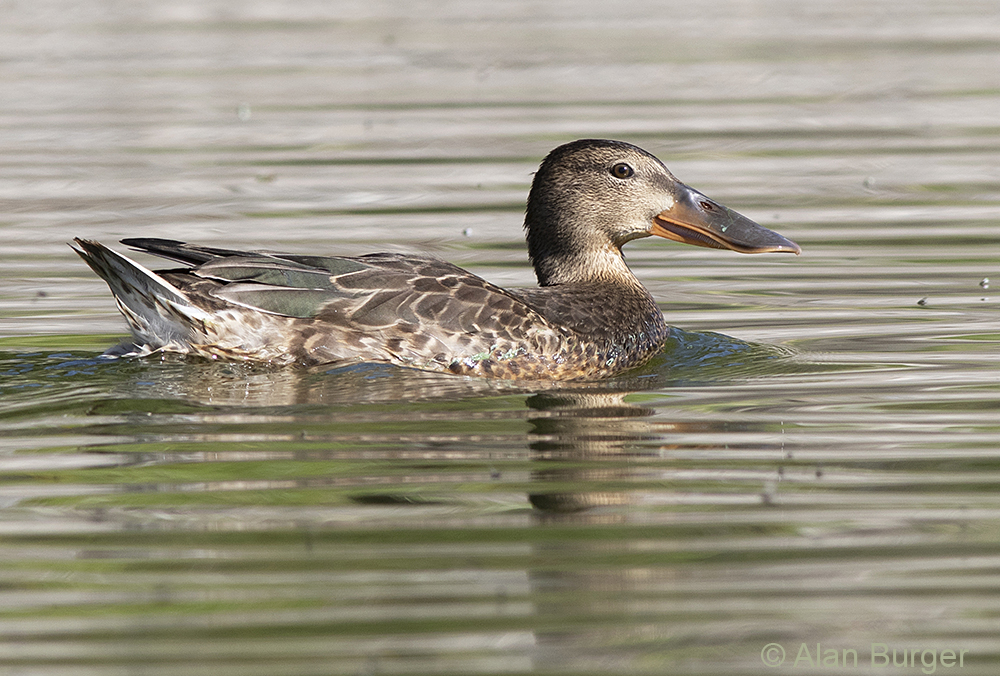
There is no mistaking the magnificent snoz of a Northern Shoveler. This looks like a juvenile bird. © Alan Burger
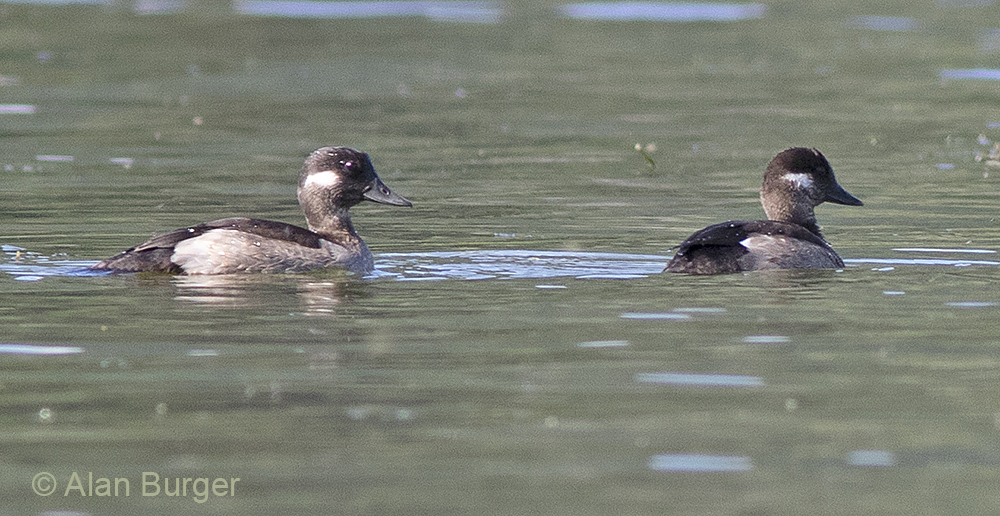
Buffleheads – a few of this species might be breeding on Mamit Lake. © Alan Burger

Paddling along the shoreline also gives one some good views of land birds. The bushes and rushes bordering the lake are full of sparrows, warblers, flycatchers, wrens and others. Along with those birds I also encountered their predators – Sharp-shinned Hawk and Merlin.
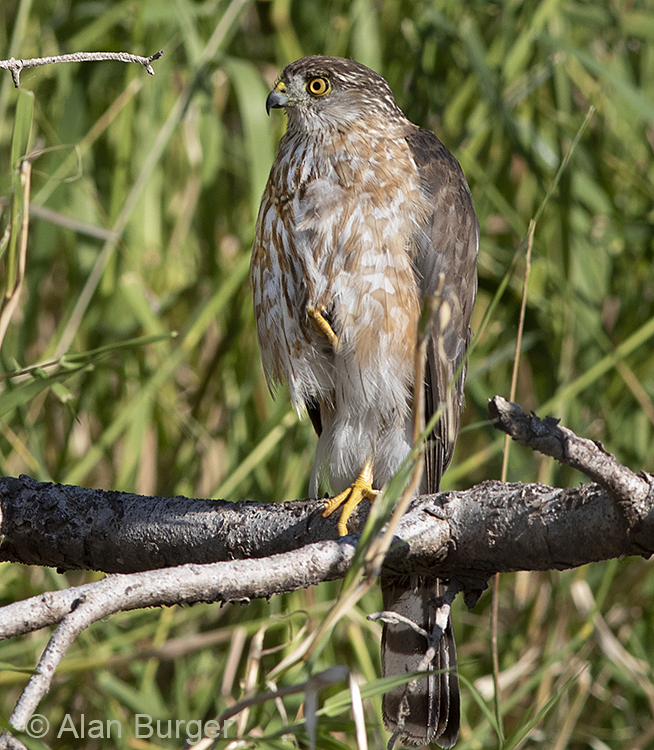
This Sharp-shinned Hawk was hunting small passerines along the lakeshore on 5 August 2020. © Alan Burger
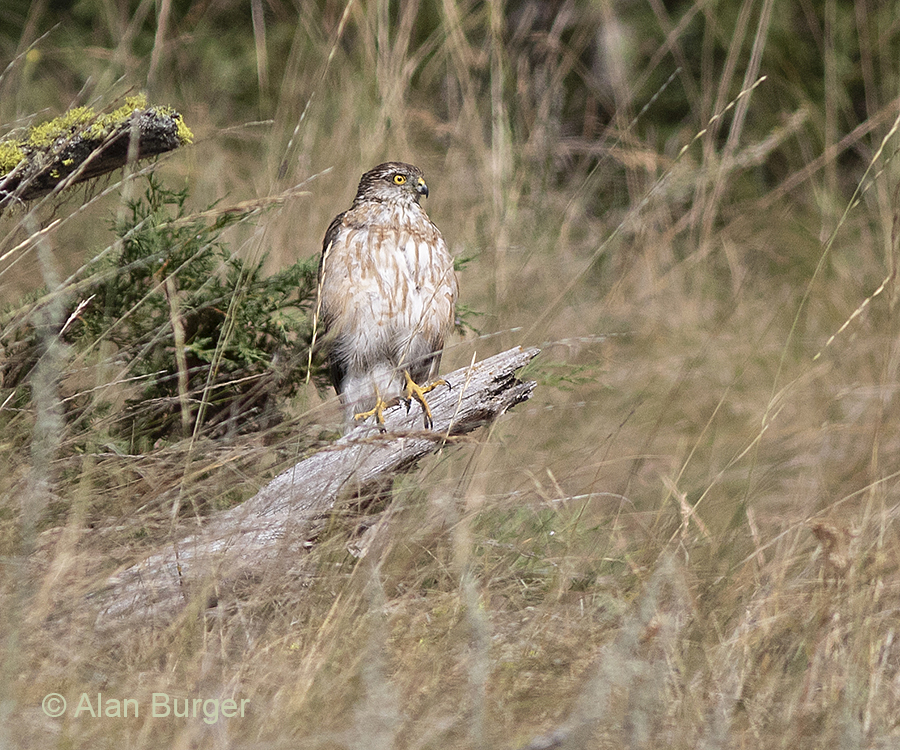
Probably the same Sharp-shinned Hawk, photographed here on 13 August 2020. © Alan Burger

Mamit Lake is a popular fishing spot for anglers, year round – ice fishing is very popular in winter. So too with fish-eating birds when the lake is not frozen over ……
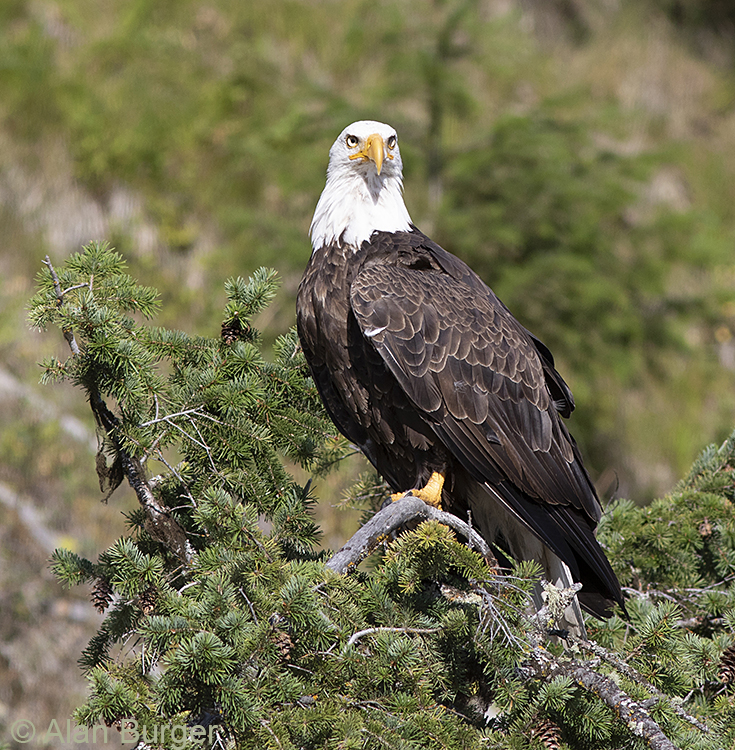
Adult Bald Eagle. © Alan Burger
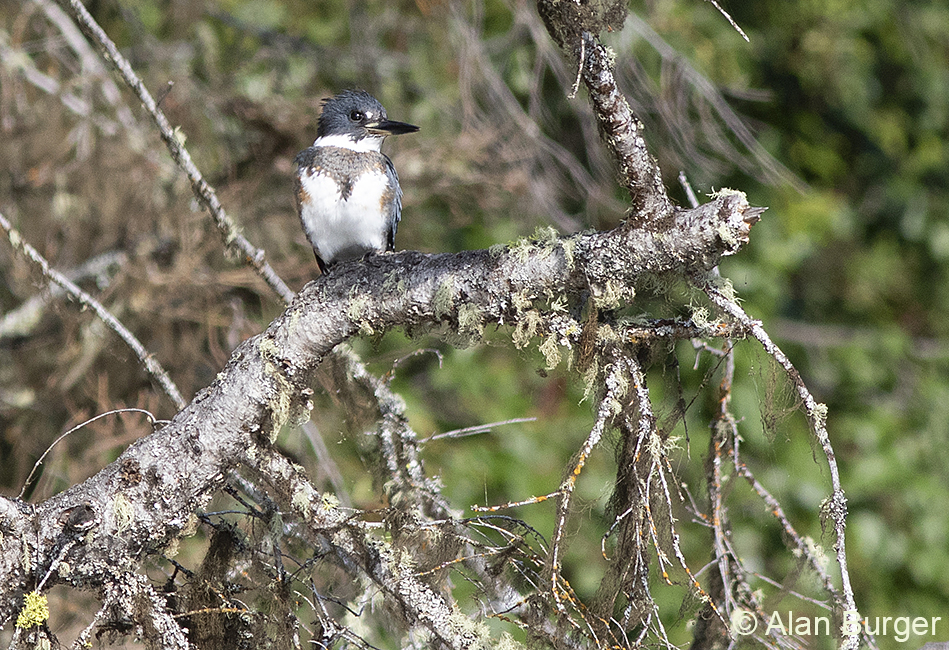
Belted Kingfisher female. © Alan Burger

For several weeks a group of American White Pelicans makes Mamit Lake their fishing ground. These are non-breeding birds. The only breeding site in B.C. is Stum Lake which is over 200 km away as the pelican flies. Many of them are moulting during their local visit and white feathers decorate the little rocky islets on which they spend much of their time.
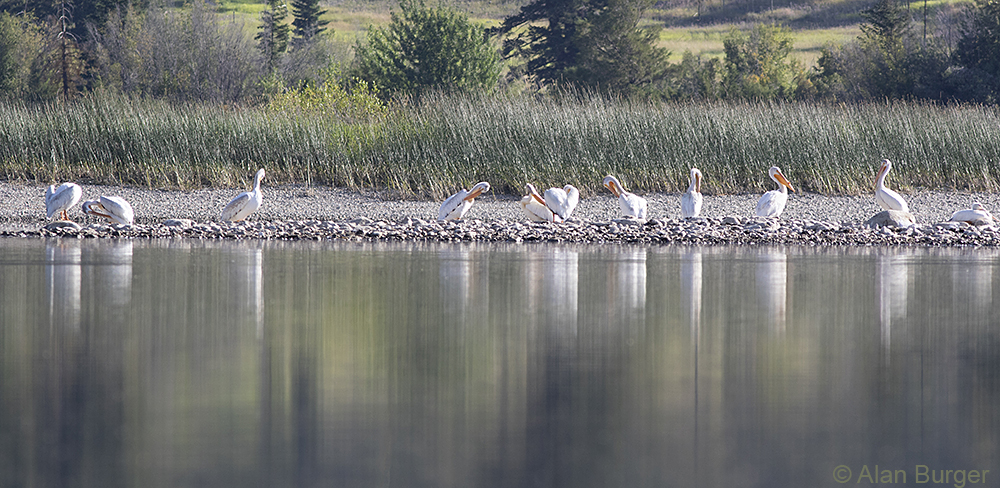
American White Pelicans on Mamit Lake. © Alan Burger
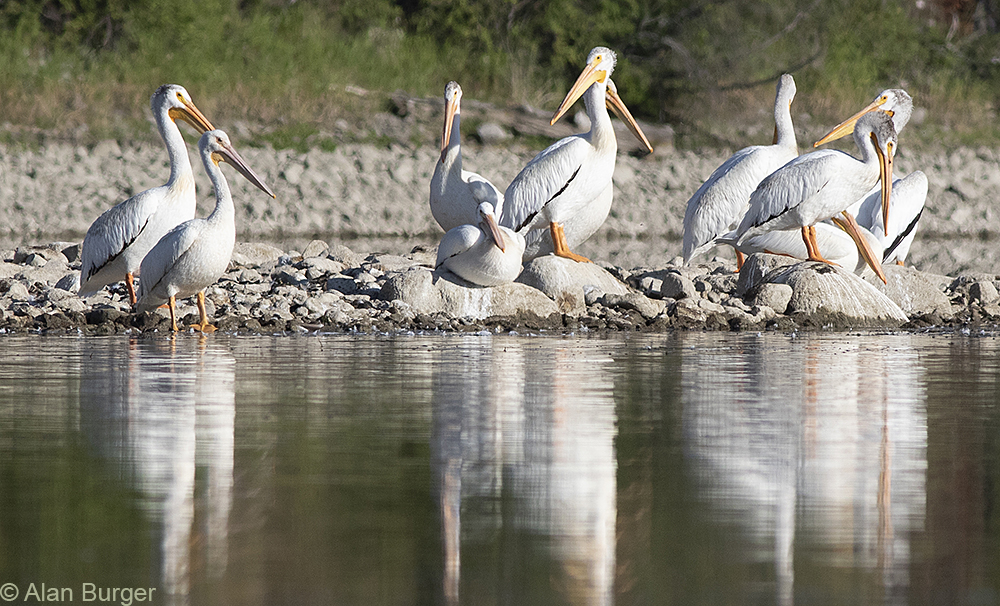
American White Pelicans roosting on a small rocky islet in Mamit Lake. Notice that most of these birds have grey on their heads, indicating that they are immatures. © Alan Burger
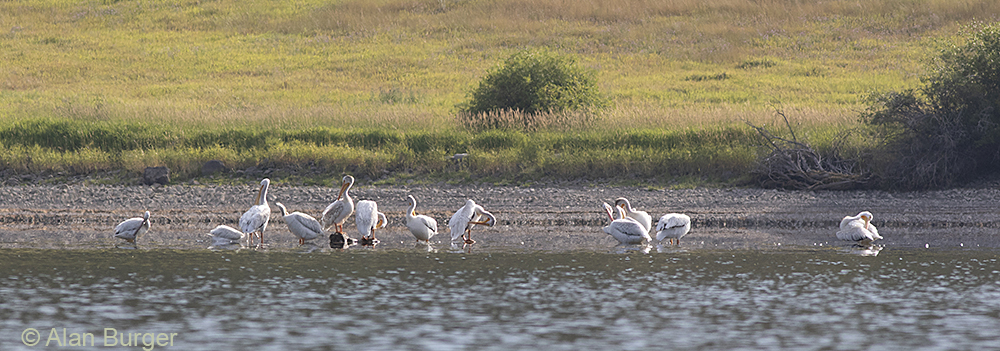
American White Pelicans. The birds are moulting and spend a lot of time preening. © Alan Burger


All photos taken with a Canon 7D Mark II with a Canon 300 mm EF L F4.0 lens.

To see bird checklists from Mamit Lake click here – eBird Mamit Lake
Posted in Uncategorized | 1 Comment

Migrating from Montevideo – getting home from a COVID ship

Background: I was working as naturalist/lecturer on the vessel MV Greg Mortimer for Aurora Expeditions (More on MV Greg Mortimer and my Antarctic work). During our second Antarctic voyage the COVID situation around the world became very serious as a pandemic, and we cut the voyage short. Around this time, as we started heading north, one of the passengers developed a fever and was kept in isolation. Argentina and the Falkland Islands had closed their ports. We headed to Montevideo, Uruguay and anchored on 27 March about 20 km offshore in the huge gulf at the mouth of Rio Plato. Over the next 19 days we remained at anchor. Supplies were brought to the ship and a medical team came several times to do COVID tests. Eventually, out of 217 people on board (Aurora staff, ship’s crew and passengers) 128 tested positive for COVID. During our stay 8 people were taken off to hospital in Montevideo. On April 10 we went into the dock and the Australians and New Zealanders (the majority of passengers and staff) were allowed to leave and flew by charter to Melbourne. The 15 of us remaining, excluding the ship’s officers and crew, stayed on board and we went back to the anchorage.

Eventually, with a huge amount of planning and lobbying by our embassies, Aurora and many other people in several countries, the rest of us from Europe, U.S. and me from Canada were allowed to leave. I must give a huge thank-you to the Canadian ambassador in  Uruguay Joanne Frappier and her staff for amazing support and bulldog persistence in working on my behalf. At first the Canadian regulations would not allow me back into the country and it was just a day before we were due to leave that word came that I could go with the others on the flight out.

But then nature played a card and we had a major storm for 2 days which prevented getting a pilot on board, so our departure was delayed by half a day.

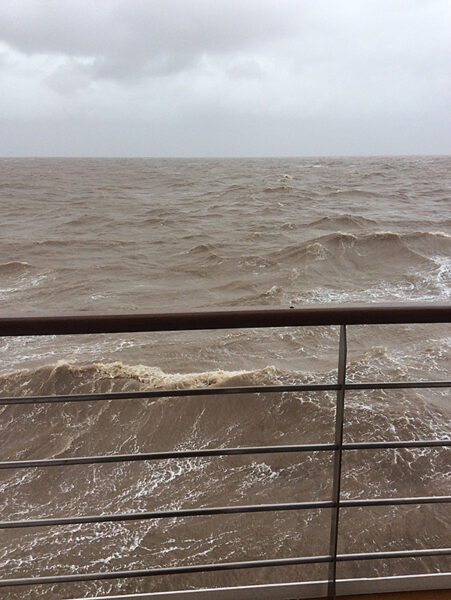
Stormy seas at our anchorage off Montevideo delayed our departure. The sea is only 10 m deep here so the waves churned up River Plate sediments making the sea brown.

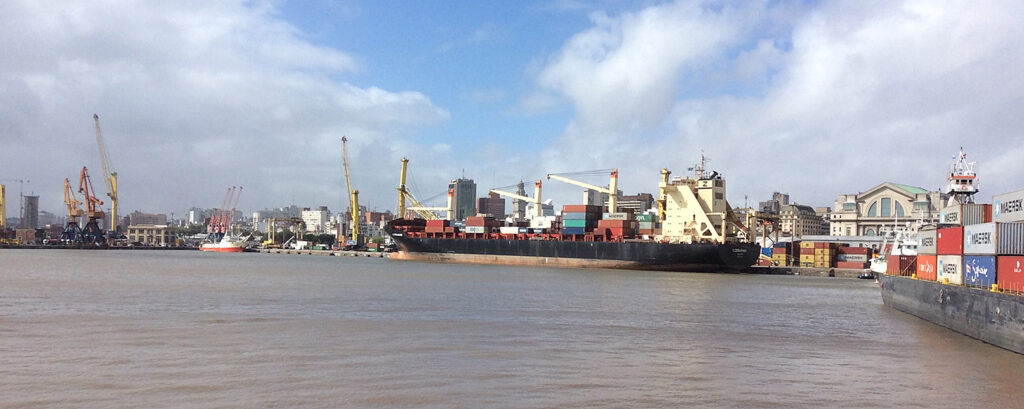
Finally on 15 April we lifted the anchor and at noon docked at Montevideo harbour

Montevideo harbour

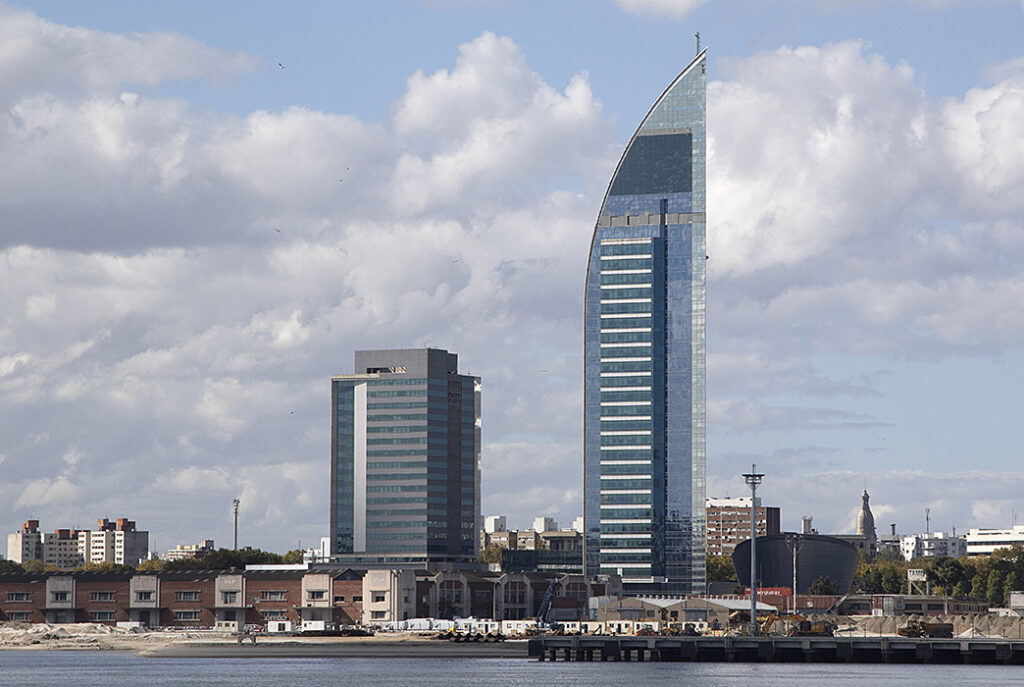
Part of Montevideo city near the harbour.

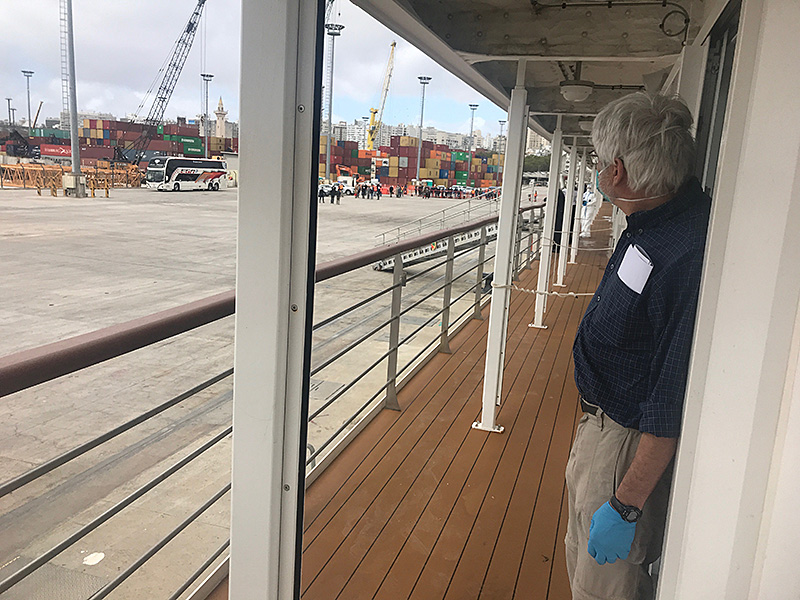
The wharf where we docked was cordoned off with a police barricade and there was a crowd of officials and media there. Even as we came into the harbour people on shore were waving and hooting their car horns. Our departure was obviously a major media event.

Waiting to leave the ship. Note the barricade and media at the end of the wharf.

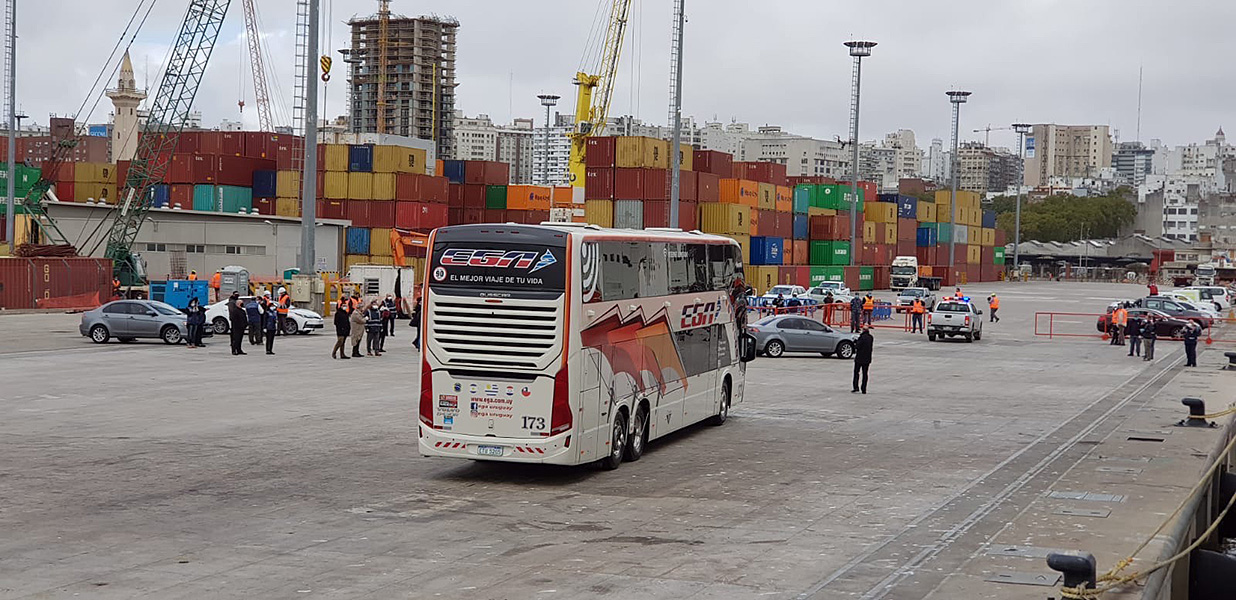
After about an hour of waiting the bus approached the ship and we prepared to leave.

Our bus at the Montevideo harbour. A very welcome sight.

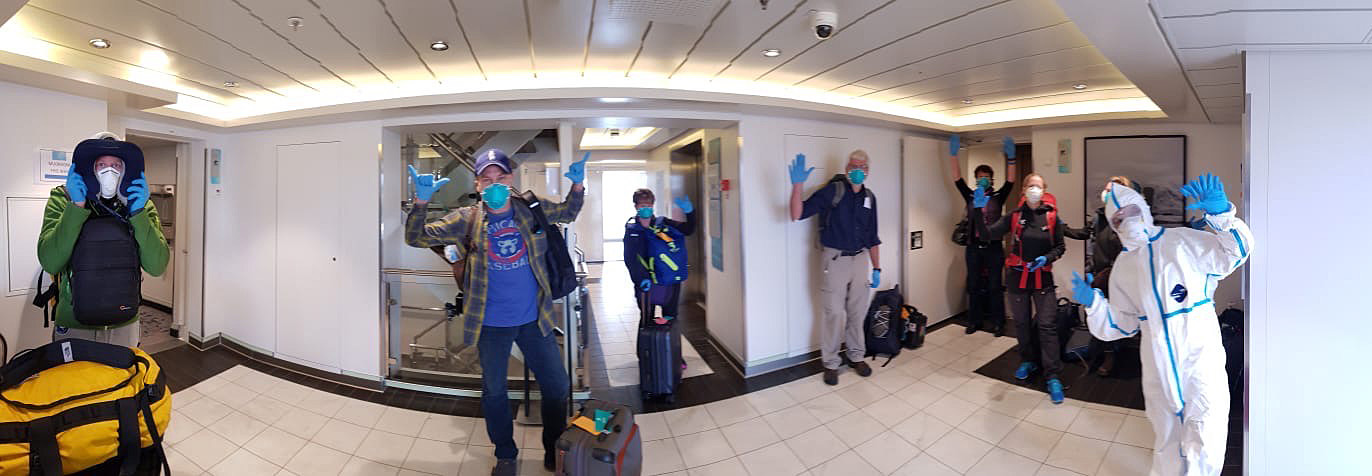
After weeks on the ship and 19 days at anchor we are finally leaving the ship. The person on the right in the PPE suit is the Uruguayan doctor who came on board for the final 10 days. Note the appropriate 2 m spacing.

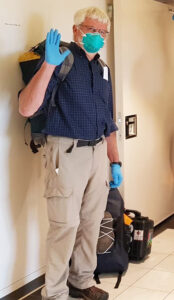
Alan preparing to leave the ship.

As our bus left the harbour an amazing thing happened. We were joined by a motorcade of 6 motorcycle police who, with sirens blaring, cleared a path for our bus through the city – stopping traffic at all the intersections. I thought that the people of Uruguay would have been glad to be rid of us – we arrived uninvited at their doorstep, with COVID infections, and consequently added to the hassles they were already having as a small country dealing with this pandemic. But, it was exactly the opposite – the people were proud of how their country had helped us and were happy to see us finally off the ship. As we drove along the beautiful seafront boulevard that runs for miles there were hundreds of people out on their apartment balconies or in the street – waving and clapping, waving the Uruguayan flag and honking their horns. It was a very emotional experience. Joanne Frappier had told me to sit on the left side of the bus and that allowed me to spot her, on her 4th floor balcony, wildly waving the Canadian flag – what a great send-off!

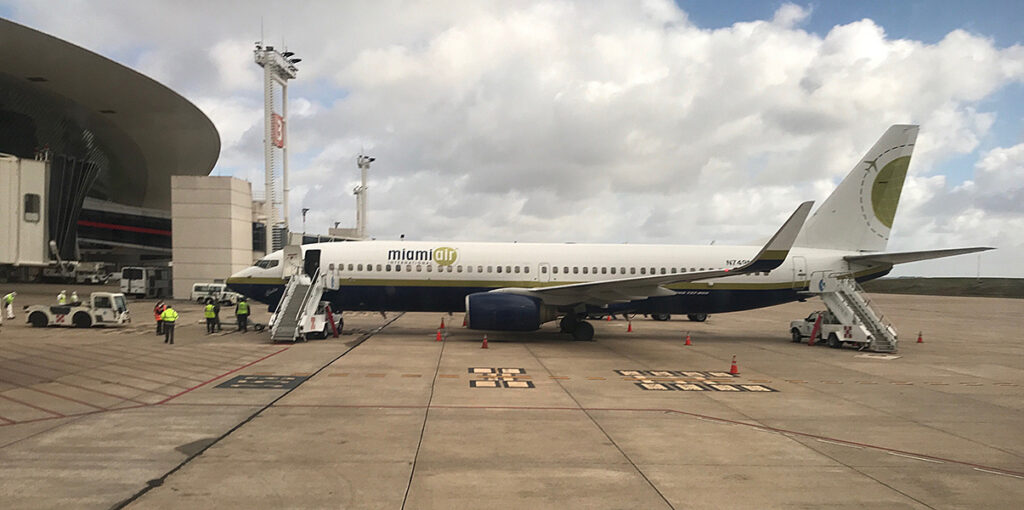
This Boeing 737 configured for medical evacuations took us from Montevideo to Miami.

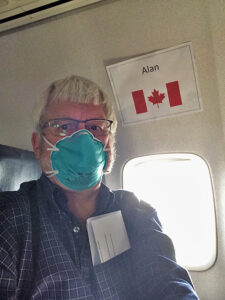
In my allotted seat on the 737 from Montevideo

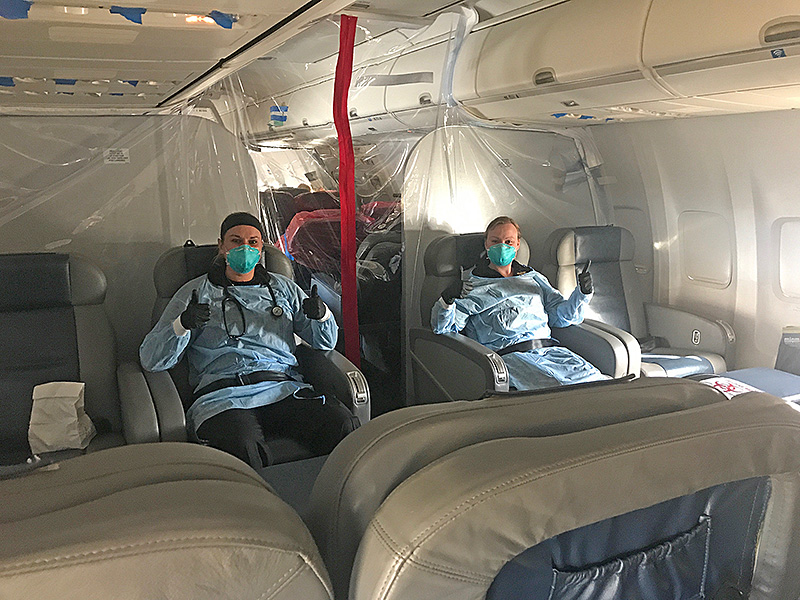
This flight was organized by REVA – a company specializing in medical evacuations around the world. We had a doctor and 2 nurses on board who did regular checkups throughout the trip.

Nurses on our Montevideo – Miami flight. Note the plastic barricades which isolated parts of the plane.

We refueled in Manaus, Brazil, unfortunately in the middle of the night so we didn’t see anything of the surrounding Amazon river and forest. At Miami those of us going to the U.S. and Canada got off and the plane continued to England and Amsterdam with the European staff and passengers. We then went in smaller planes – one to Chicago and one to Phoenix and Vancouver.

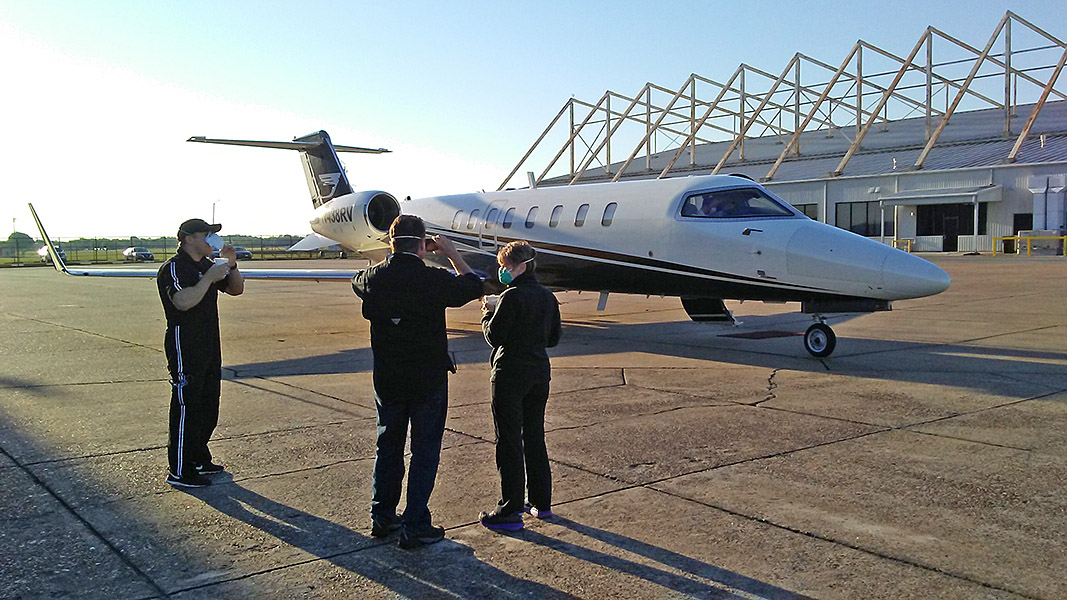
The Learjet that took me and four Aurora passengers from Miami.

I have always wanted to fly in a Learjet. This is a Learjet 45. We flew at over 45,000 feet – about 10,000 ft higher than regular commercial jets. Quite spiffy. We landed at Houston to refuel and get coffee and then on to Phoenix where the last 2 Aurora passengers were deposited. At Phoenix the pilot was told that he was not permitted to land in Vancouver as planned (no reason given) so we took off and headed to Bellingham, Washington near the Canadian border.

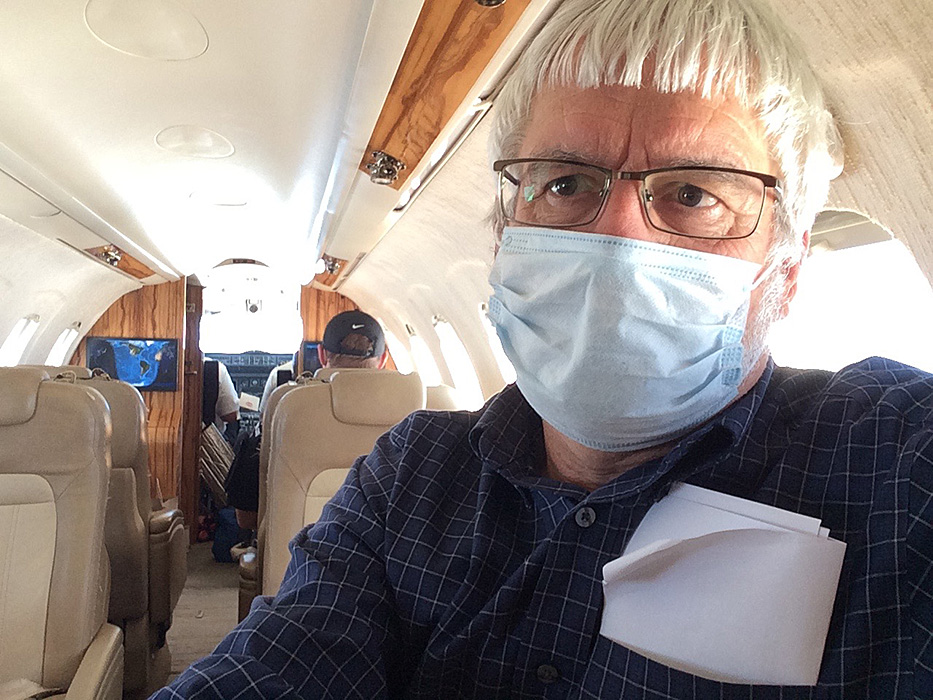
Alan as the lone passenger in the Learjet. The other person in the seat behind me is the medical orderly who accompanied the flight.

At Bellingham there was an ambulance waiting to take me to the Canadian border. After some delays with lots of phonecalls we set off – Bellingham is about 30 minutes drive to the border. Half way there we received a message that Canada was not going to let me in and to return to the ambulance base. Half way back to their base the driver received another message that it was OK to proceed. Back again towards Canada. At the border another bizarre scene – a line of border guards blocking our way – eventually directing the ambulance to one of the search bays. After a long wait the expected agent from the Canadian public health authority arrived. As the back of the ambulance opened there was a line of 4-5 border guards with black uniforms, visors, and surgical masks and carrying guns in their belt holsters. One doesn’t normally joke with border guards but I thought “What the f..k is this?” and said to them “Are you here to shoot me if I make a break for it?” After a stunned silence they grinned and said “Welcome back to Canada”.

The public health lady was very pleasant and after reading me my rights, “$750,000 fine or three years in jail if you break quarantine”, I was put in a large Mafia-black SUV and we followed the government car into Vancouver. I had to contrast this reception with the joyous send-off that we had received in Montevideo, but I was impressed at how seriously Canada is taking this COVID pandemic.

So I’m writing this from my quarantine hotel in Vancouver near the airport. One of my friends, Nigel, sent me a poem to welcome me back to Canada and that spurred me to respond in kind:

I’m stuck here in this hotel
In a world that has gone close to hell

This Covid thing’s such a bad blight
My sentence is a fortnight

I’m up on the sixth level floor
Not ever allowed out the door

My view of the parking lot is clear
A freeway or two also near

In the distance coast mountains I see
Would love to be up there so free

Of birds I am sad to report
My checklist is awfully short

A robin or two and a crow
Some chickadees flitting below

Gulls sometimes come flying by
On the river a far goose I did spy

Our Antarctic expedition was shortened
So South Georgia visit abortened

A problem of where we could go
Ushuaia and Falklands said no

Montevideo was the next bet
Uruguayans might welcome us yet

At anchor we stayed nineteen days
Our exit faced many delays

When finally told we could leave
Relief like you wouldn’t believe

Our path was Miami-ed and Phoenix-ed
But landing Vancouver was nix-ed

To Bellingham I was then landed
At the border a Covid risk branded

Although my situation’s a curse
I’m ecstatic it isn’t much worse

I’m very much healthy and fit
Beating Covid I’m doing my bit

Looking forward to that happy day
When I’m free to go on my way

One day soon we’ll beat this bad bug
And once more be able to hug

~~~~~~~~~~~~~~~~~~~~~~~~~~~~~~~~~~~~~~~~~~~~~~~~~~~~~~~~~

My joy at being back in Canada was somewhat tempered by hearing, a few days after getting here, that one of the ship’s crew had died of COVID in the Montevideo hospital. Quite a sobering reminder of how lucky I have been in not getting seriously ill.

~~~~~~~~~~~~~~~~~~~~~~~~~~~~~~~~~~~~~~~~~~~~~~~~~~~~~~~~~

My longtime friend and expedition team-mate Robyn Mundy who was Deputy Expedition Leader on this voyage has written an erudite description with photos of what we experienced on the COVID ship:  https://writingthewild.net/

Detailed analysis of our ship’s infection published in BMJ Thorax journal: https://thorax.bmj.com/content/early/2020/05/27/thoraxjnl-2020-215091.full

Our team doctor Jeff Green describes working in this situation: https://www.baybuzz.co.nz/2020/04/21/on-board-a-cruising-petrie-ship/

Article in the Guardian newspaper about the problems the remaining ship crew are experiencing: https://www.theguardian.com/environment/2020/may/03/greg-mortimer-cruise-ship-uruguay-coronavirus-allegations

Majority of the ship’s crew allowed to leave for Montevideo (11 May 2020) https://www.bbc.com/news/world-latin-america-52642875

Posted in Uncategorized | 1 Comment