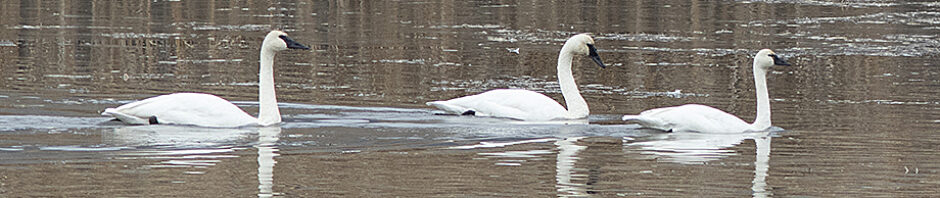
In October-November 2025 I spent three weeks in the Western Cape province, South Africa. I was mostly visiting family but along the way I visited lovely places, had many wonderful hikes and saw interesting wildlife. Here are a few photos …..
All Photos © Alan Burger
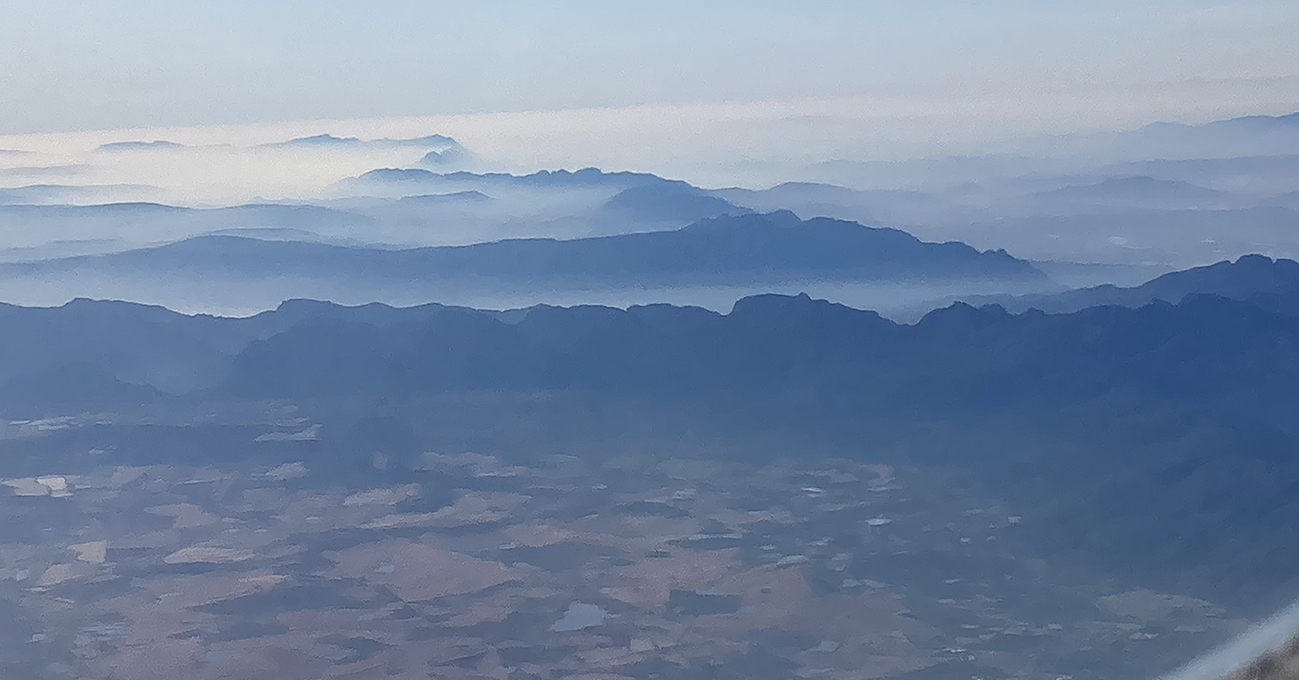
Early morning view of the Cape mountains as the plane descends towards Cape Town airport.
My first few days were spent with my brother Lynton and his family at Kalk Bay – one of the outlying southern villages of Cape Town.

Kalk Bay viewed from the mountain trail. Although it has become gentrified, Kalk Bay remains an active fishing port. Simonstown and the southern Peninsula are in the distance.
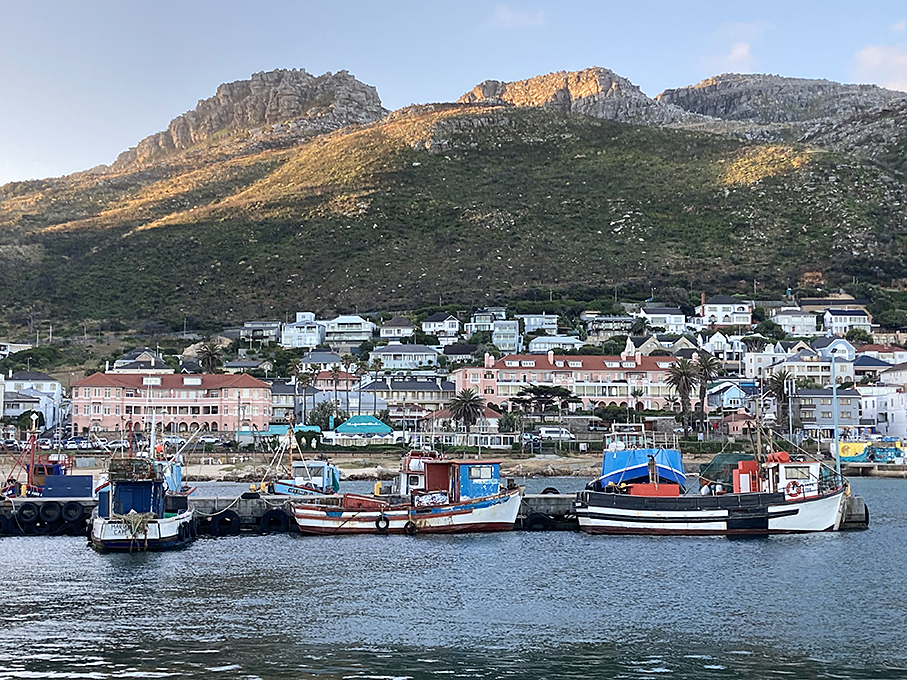
Kalk Bay from the harbour. The houses extend up the slope to the boundary of the Table Mountain National Park which preserves the native fynbos vegetation across most of the Cape Peninsula.
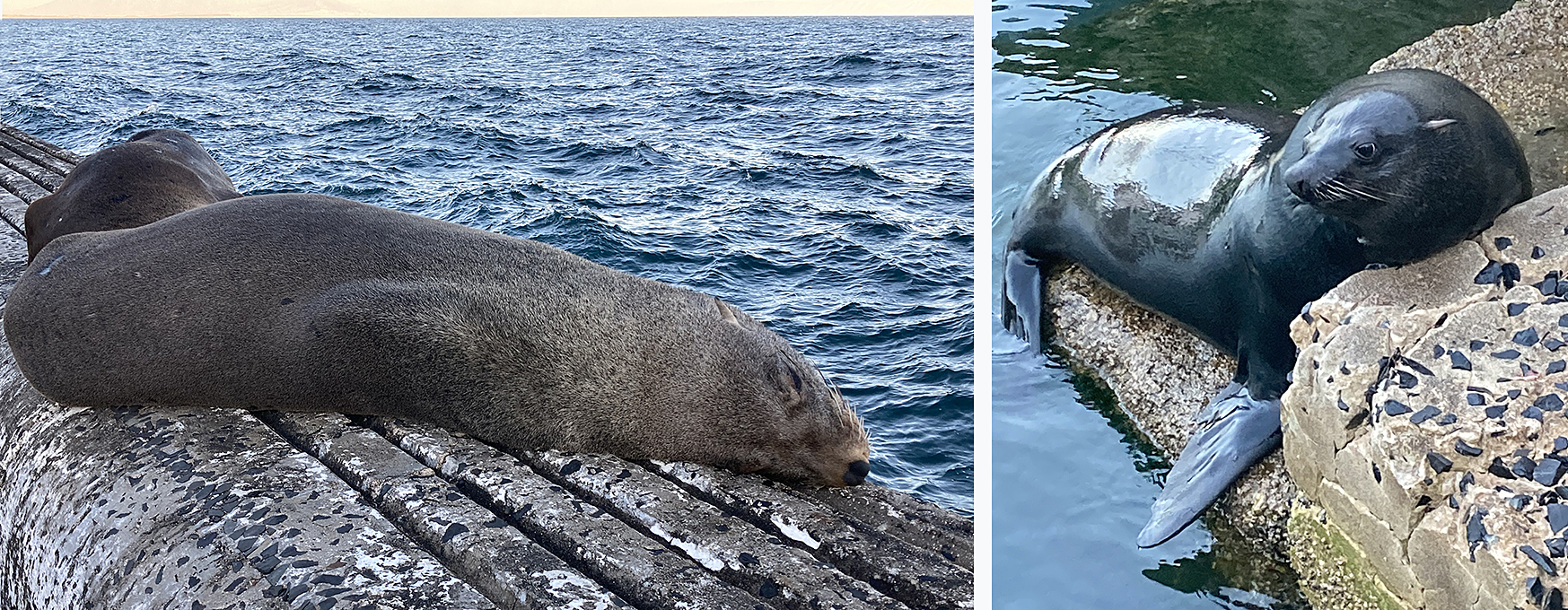
These big Cape Fur Seals hang around Kalk Bay harbour waiting for someone to toss them a fish head or fish guts. They are the largest of the fur seals – the boy on the right was huge and intimidating.

Speckled Pigeons are common in many towns and farms in South Africa.
Kalk Bay was an ideal location for trips around the Cape Peninsula. Our first stop was the Boulders penguin colony in Simonstown. Some years ago African Penguins began nesting in this suburban neighbourhood – the first mainland colony for this species. This colony has grown a lot; it is now part of the Table Mountain National Park and a very popular tourist attraction. Unfortunately African Penguins are declining across the rest of their range, largely because of human over-fishing of their preferred prey fish.

African Penguins at the Boulders colony. The grey fluffy is a large chick.

Penguins resting on the rocks at Boulders colony.
The next stop was Cape Point – the tip of the Cape Peninsula where the Atlantic and Indian Oceans meet. This large nature reserve is also part of the Table Mountain National Park and has unspoiled fynbos vegetation and a spectacular coast.
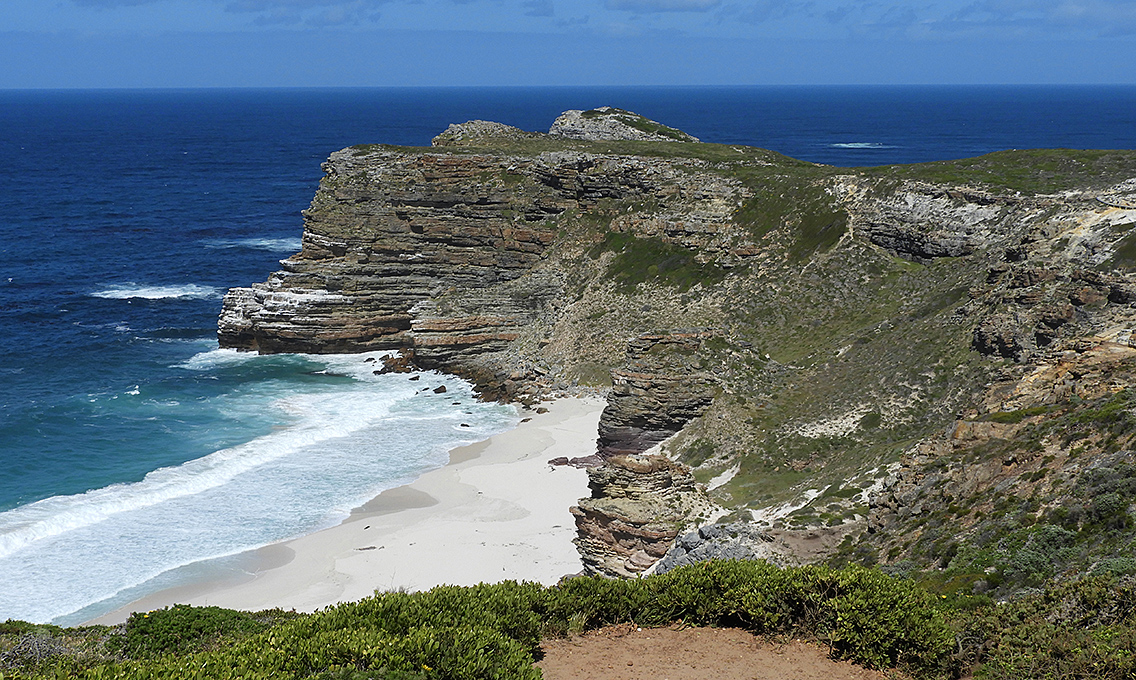
Cape Point, where the Atlantic and Indian Oceans meet.
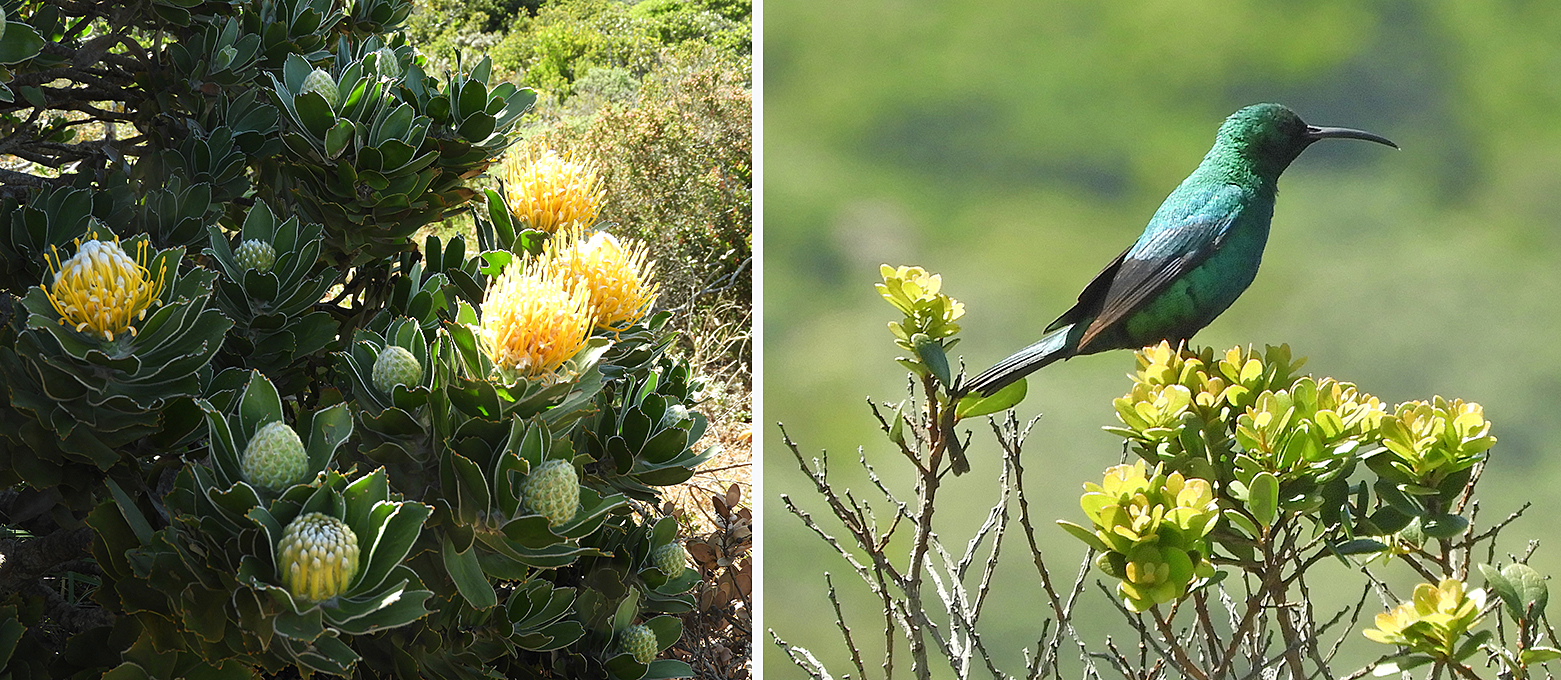
Tree Pincushion (Leucospermum conocarpodendron) and one of its pollinators, a Malachite Sunbird male.
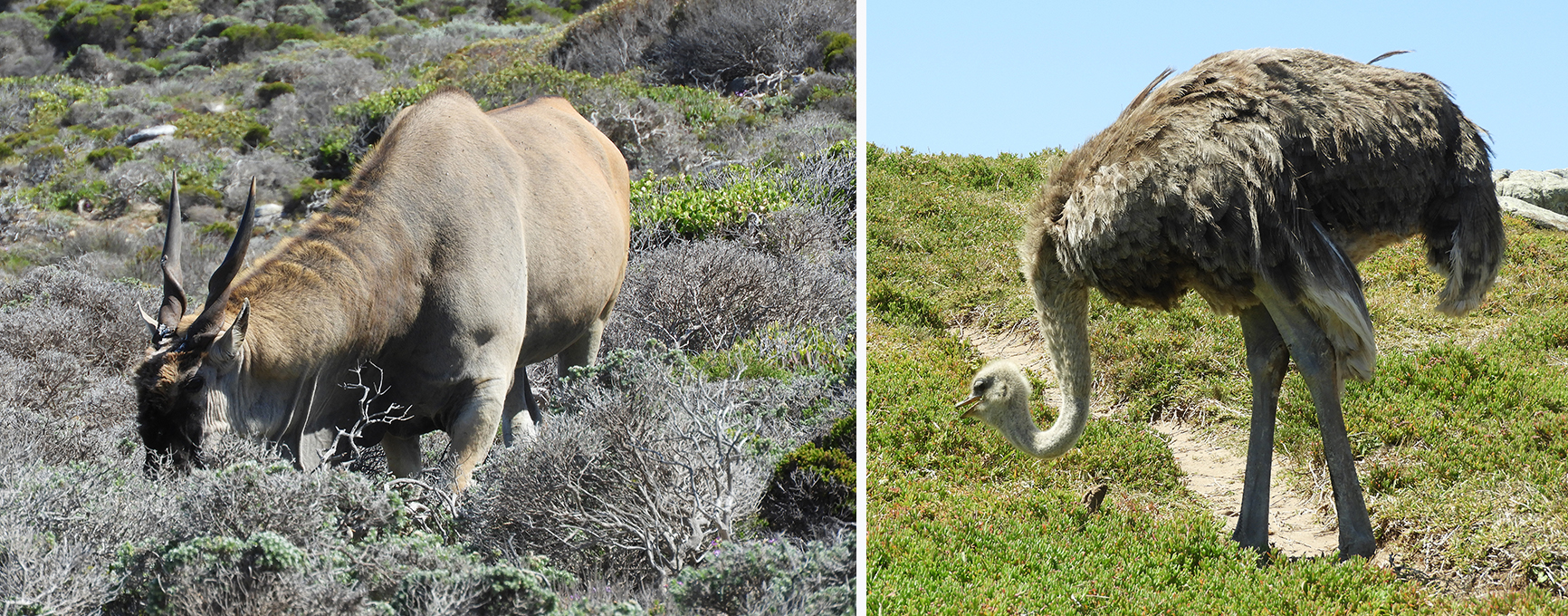
Some of the wildlife in the Cape Point reserve: an eland (Africa’s largest antelope) and a female ostrich (the largest bird).
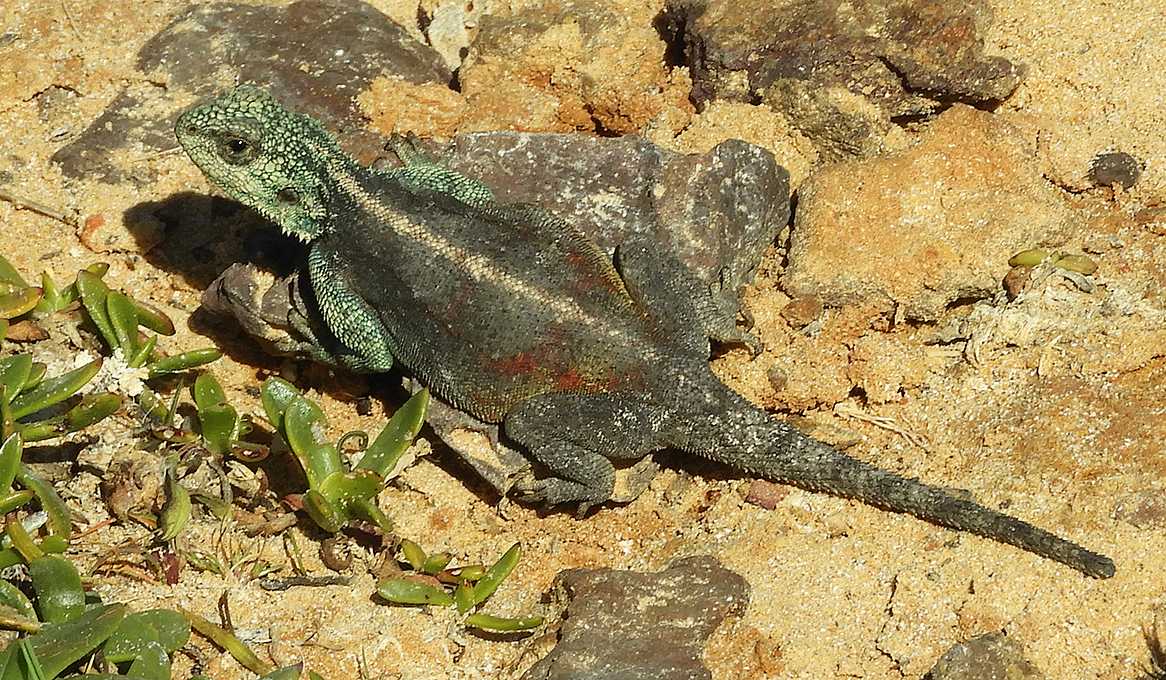
Southern Rock Agama (Agama atra) – a fairly common lizard in the Cape area.

More lizards at Cape Point: Black Girdled Lizard (Cordylus niger) and Knox’s Ocellated Sand Lizard (Meroles knoxii).
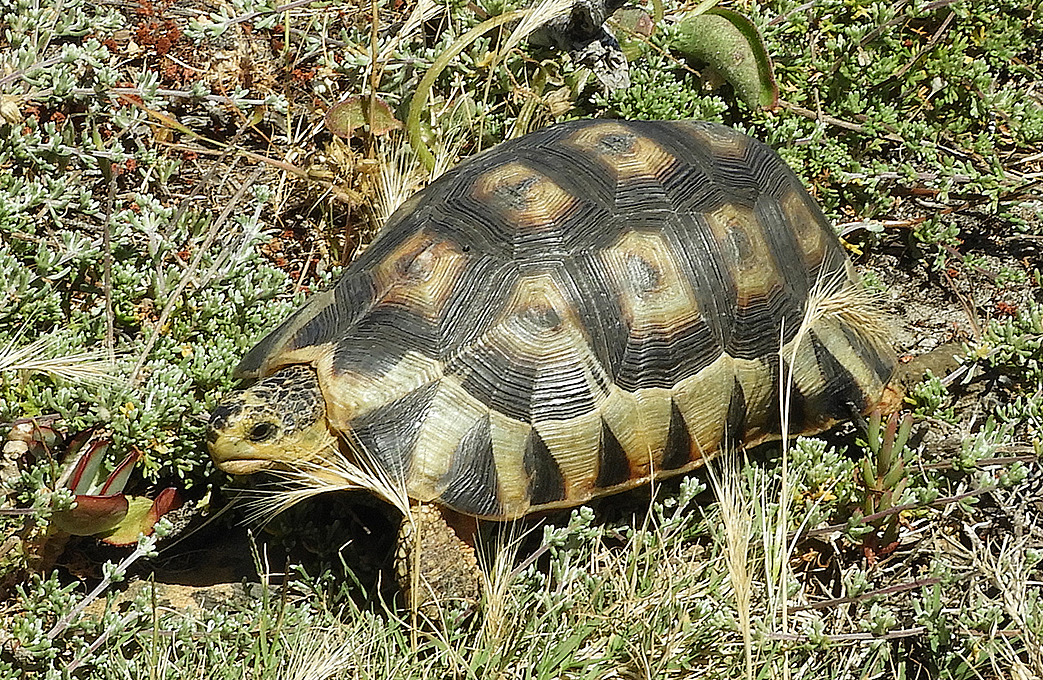
Angulate Tortoise (Chersina angulata) – one of four tortoise species on the Cape Peninsula. This one was about the size of a rugby ball.
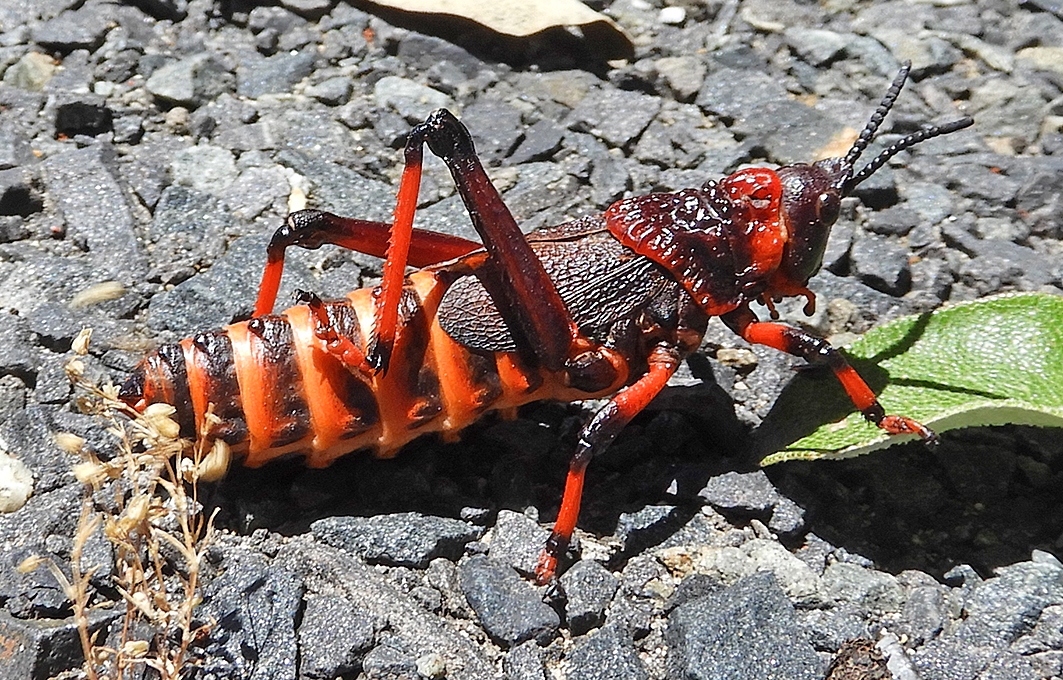
The bright colour of this big grasshopper signals its toxicity. Koppie Foam Grasshopper (Dictyophorus spumans) is also known as the African Foam Grasshopper – when molested it releases a toxic foam from glands in its thorax.
I spent a wonderful morning at the Rondevlei Nature Reserve, tucked among the southern Cape Town suburbs.
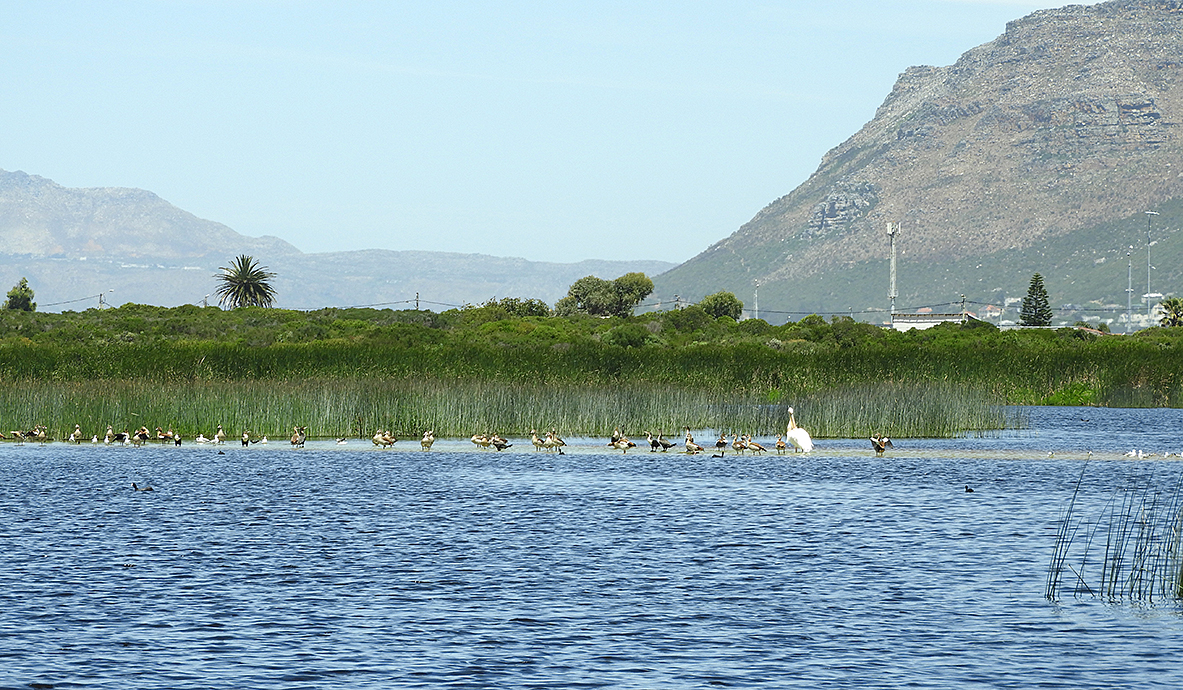
Rondevlei Nature Reserve is a haven for numerous birds. It also has a small group of hippopotamus that were re-introduced a decade or so ago, but I did not see them.
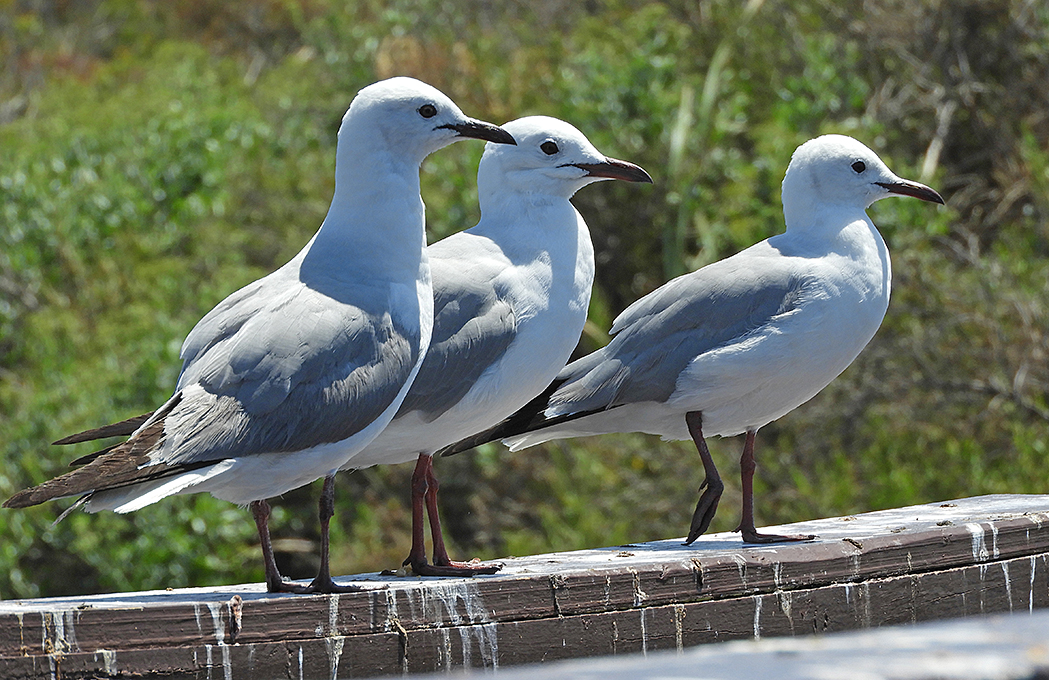
Hartlaub’s Gulls – the common small gull in the Cape.
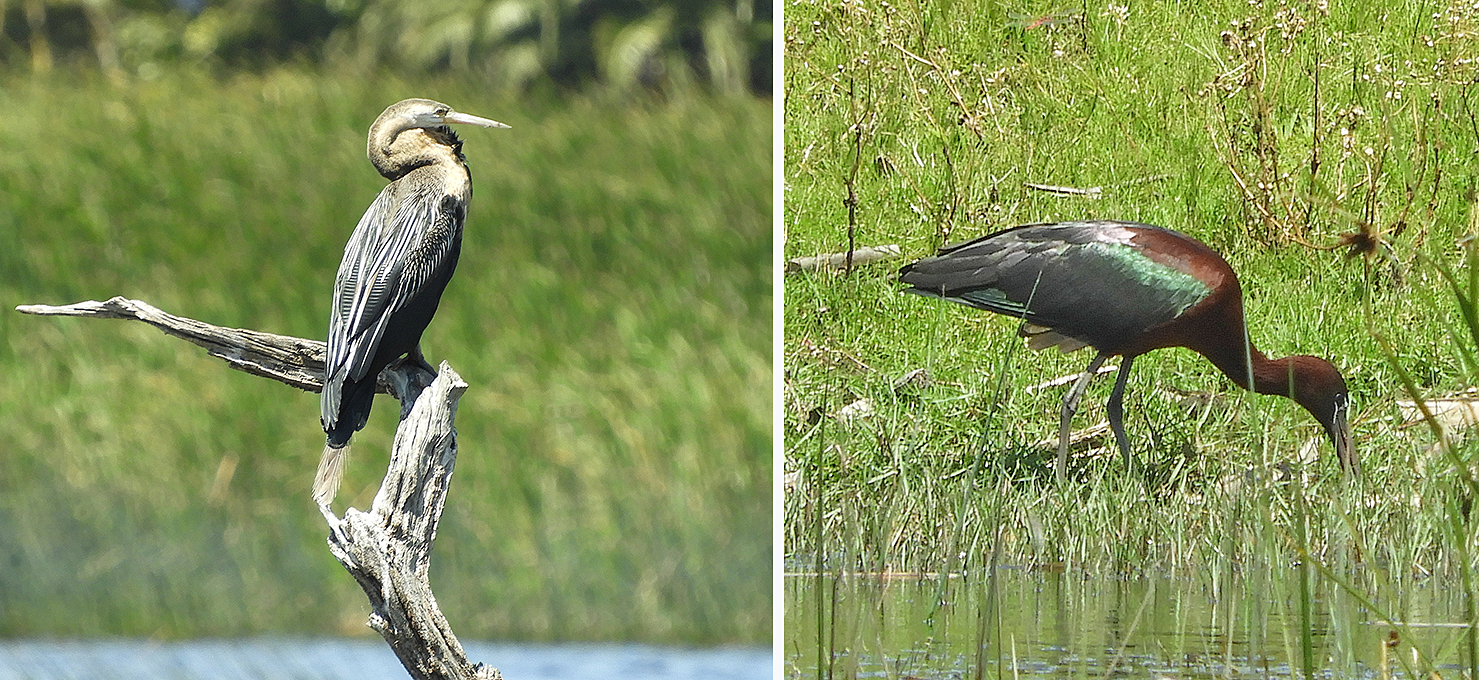
Two quite special waterbirds – African Darter (left) and Glossy Ibis (right).
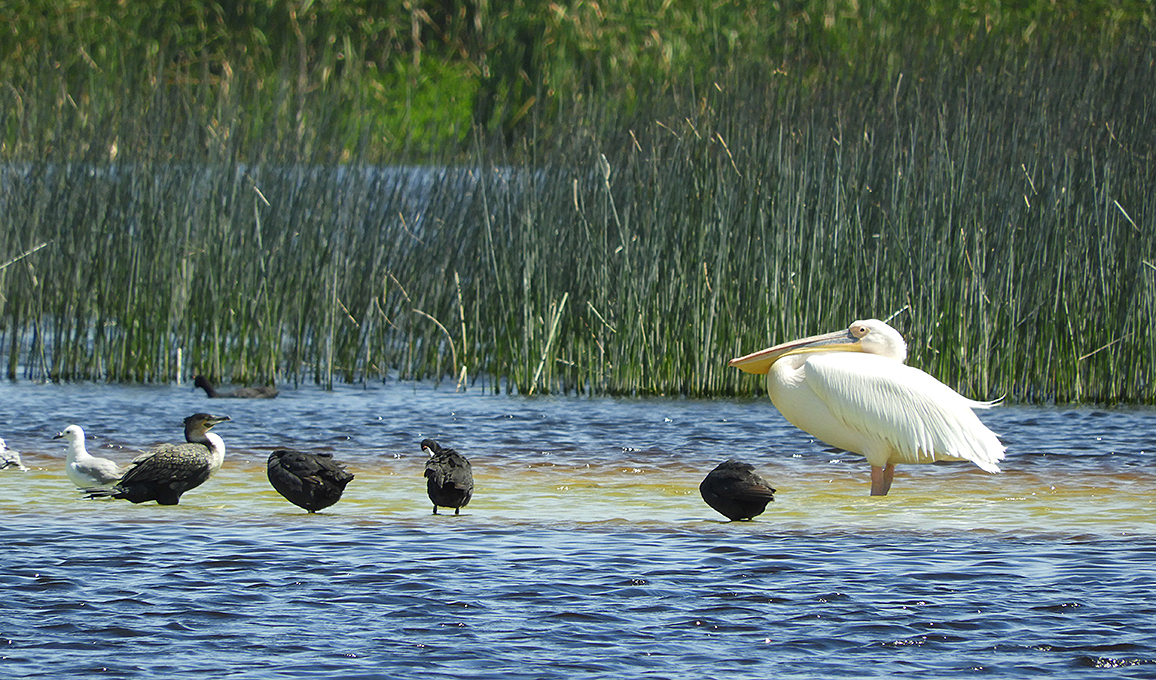
A selection of waterbirds, including Hartlaub’s Gull, White-breasted Cormorant, African Coot and Great White Pelican.
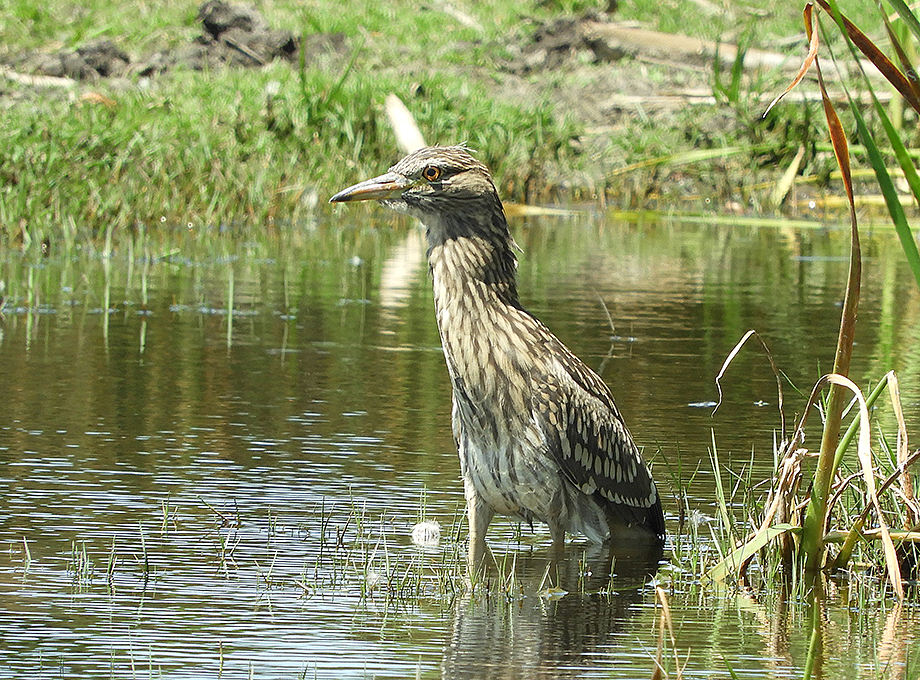
A juvenile Black-crowned Night Heron.
We held a family reunion in the Cederberg Mountains north of Cape Town – these mountains are famous for their sandstone rock formations and interesting vegetation which is a mix of fynbos and Karoo species.
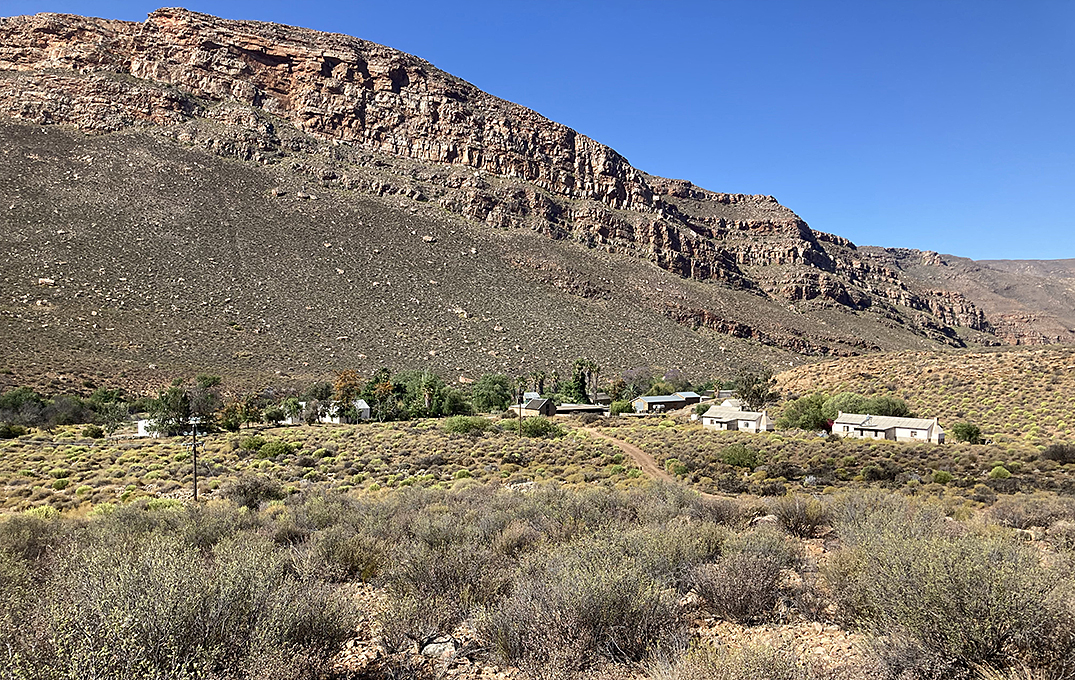
We stayed at the Nuwerust Resort which is an old farmstead now set up for tourists and campers. Our accommodation was the original farmhouse dating back to the 1850s.
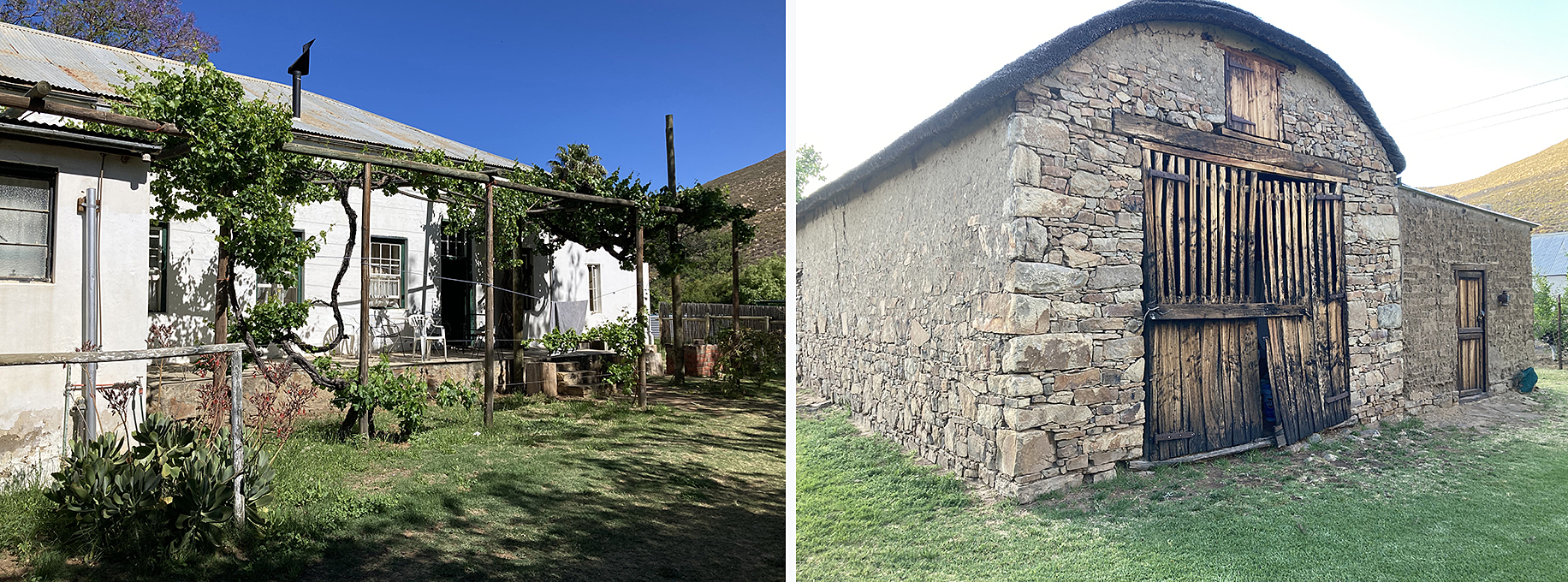
The 1850s Nuwerust farmhouse where we stayed – the grape vine on the right is over 100 years old. The owners pick all the grapes before they ripen to prevent the baboons from wrecking the trellis. The right photo is a shed – probably also over 150 years old.
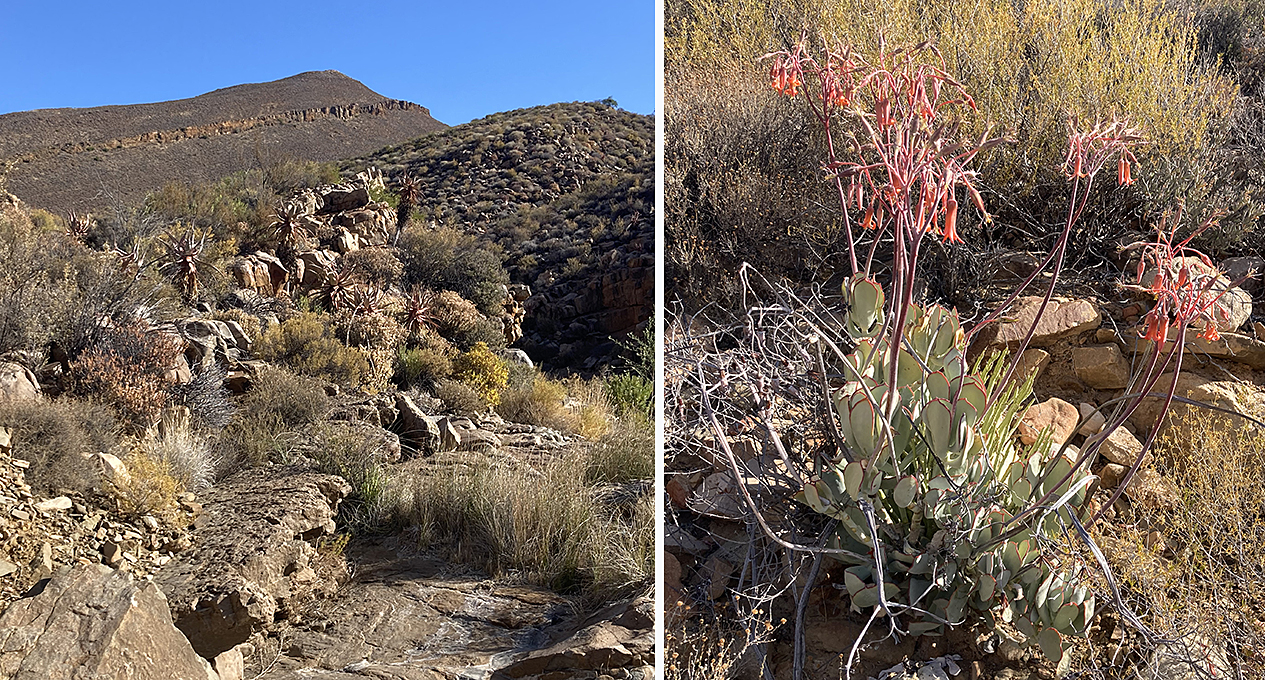
The Cederberg is primarily dry country with a mix of fynbos shrubs and Karoo succulents, like aloes. The plant on the right is Pig’s Ear (Cotyledon orbiculata), which has become a common garden plant in South Africa and around the world.
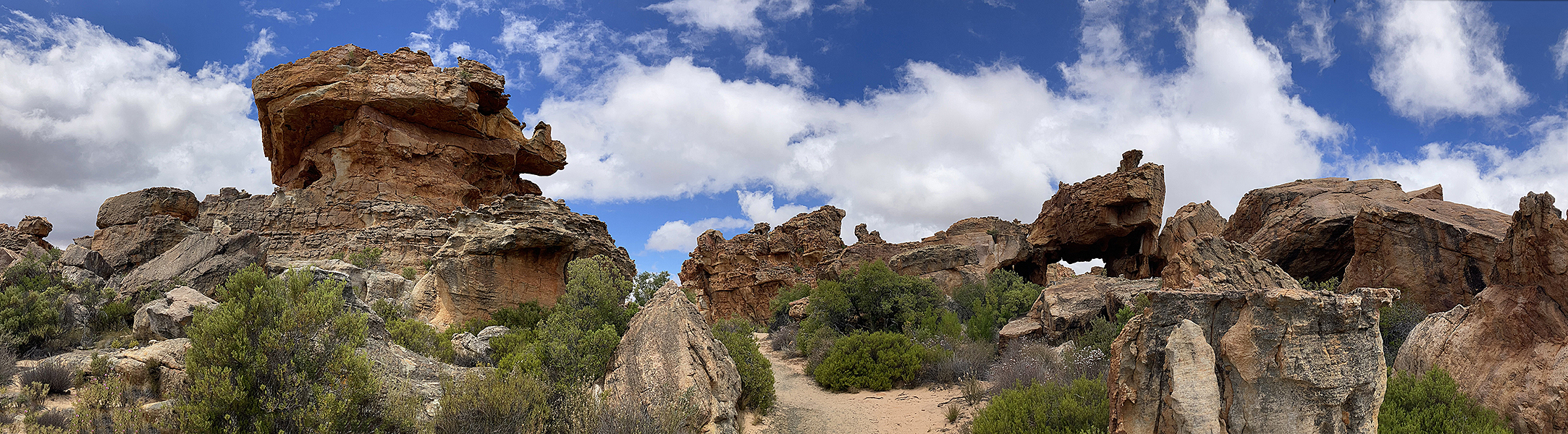
A small sample of the wonderful sandstone formations in the Cederberg.
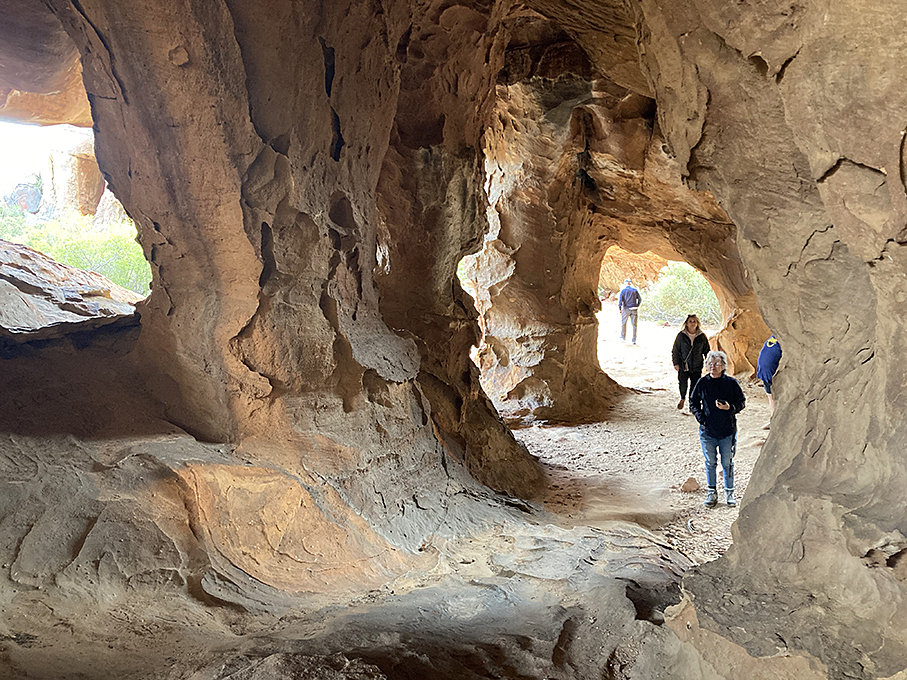
These sandstone caves are known as the Stadsaal (City Hall in Afrikaans).

Sandstone rock formations in the Cederberg

Prehistoric cave art made by San (Bushman) people.

Cederberg sandstone

The Cederberg sandstone attracts rock climbers from around the world. I came around a corner to see this woman falling off the cliff – and be held by her rope. While I watched she attempted a difficult pitch several times, and fell several times.
From the Cederberg I went eastward to the Garden Route coast. Along the way we past through Montagu where my father’s family originates – many farm gates here have the name Burger on them.
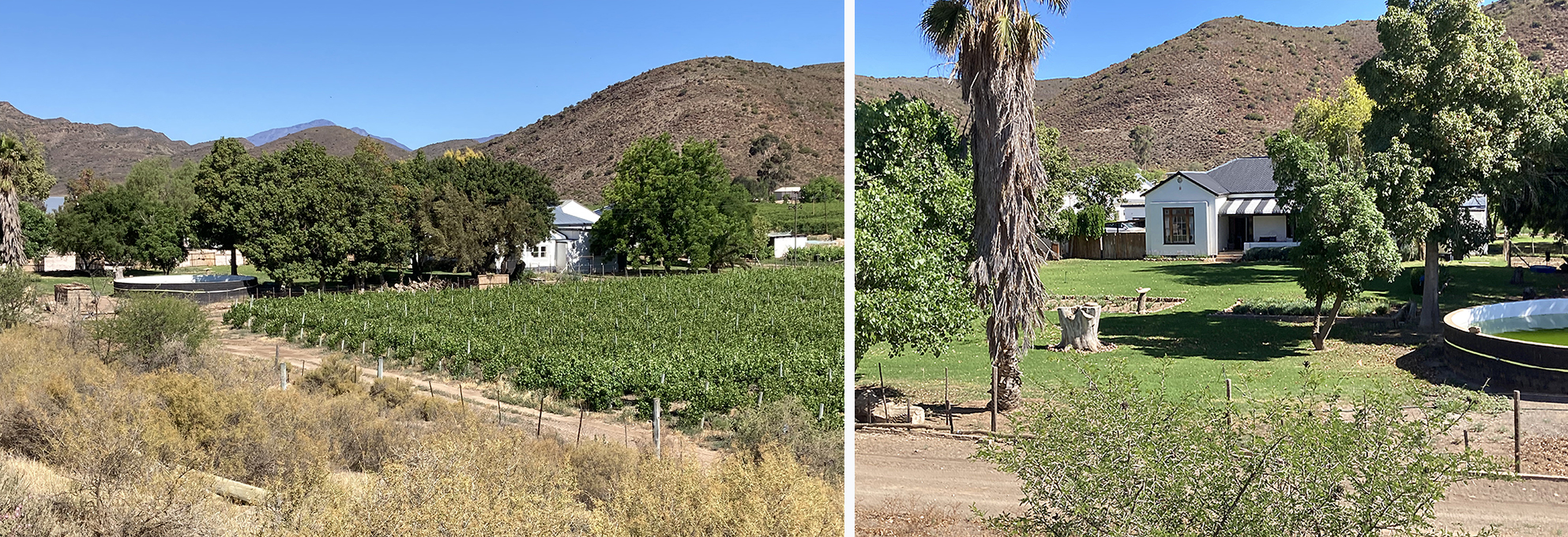
The farm “Three Star” near Montagu where my father grew up and where we spent many summer holidays as children. The vineyard where we feasted on grapes, the lawn where we played cricket with our cousins and the dam where we swam on hot summer days are still the same as they were 60-70 years ago. Sadly the farm in is no longer in our family.

A Blue Crane in the wheatfields near Riversdale – South Africa’s national bird.
I spent a few days in Mossel Bay, staying with my cousin Meryl.
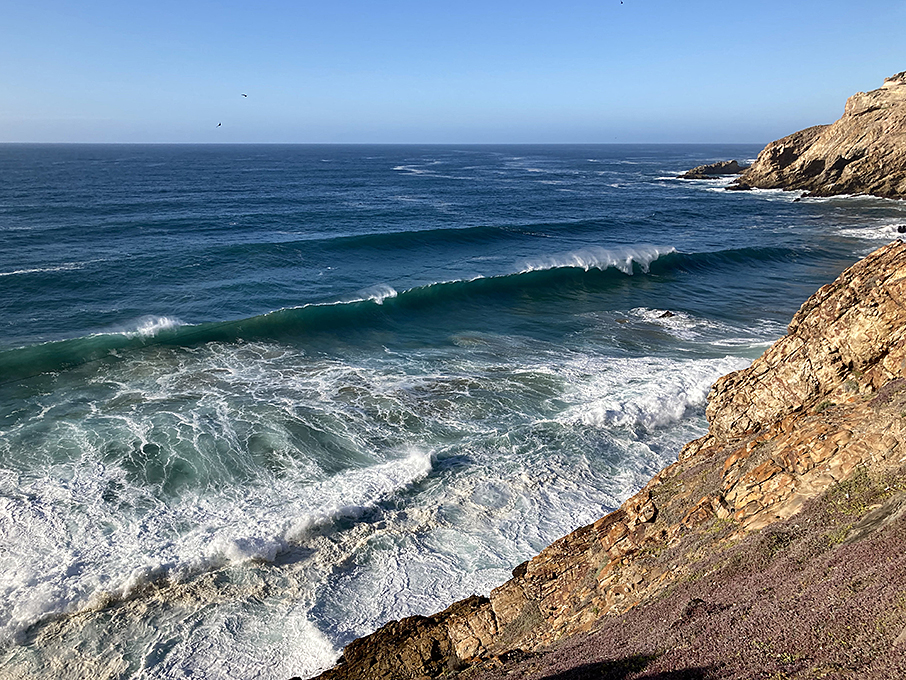
Big waves along a rugged coast. There is an excellent hiking trail that runs many km from Mossel Bay along the clifftops.

A Dassie (Rock Hyrax, Procavia capensis) – these are common across southern Africa, living among boulders, cliffs and rock outcrops. Their closest living relatives are elephants.
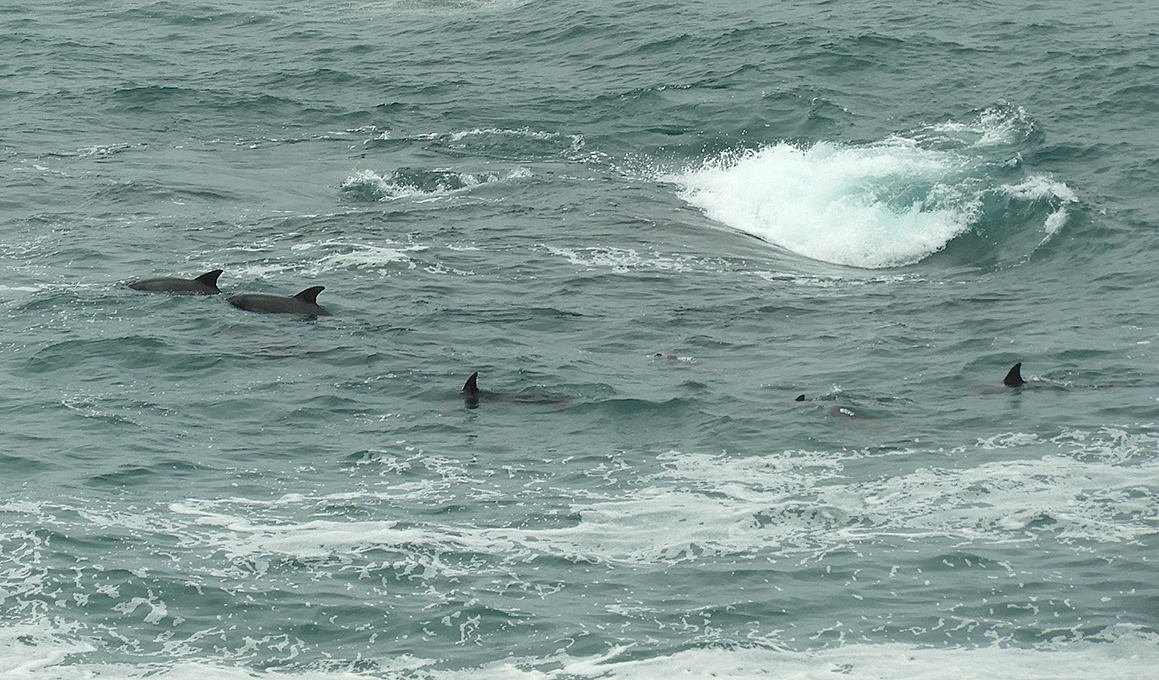
Indo-Pacific Bottlenose Dolphins (Tursiops aduncus) seen from the Mossel Bay cliffs.

A Bushbuck in thick vegetation near Mossel Bay.
A highlight here was a guided tour of the Pinnacle Point caves near Mossel Bay. These are now within a gated golf estate, but excavations in the caves show evidence of human occupation from 60,000 to 100,000 years ago. The artifacts found in these caves are important evidence of the level of technology that Homo sapiens had at that time.
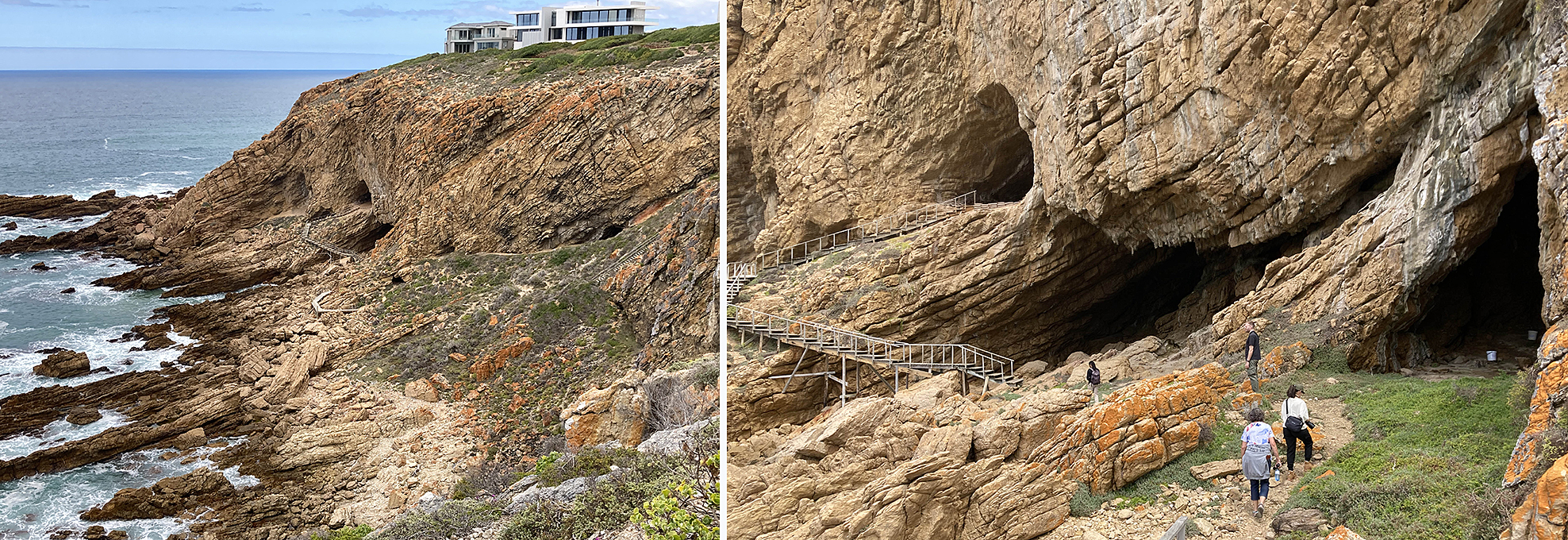
Some of the caves below the Pinnacle Point golf estate where excavations have revealed important data on early humans.
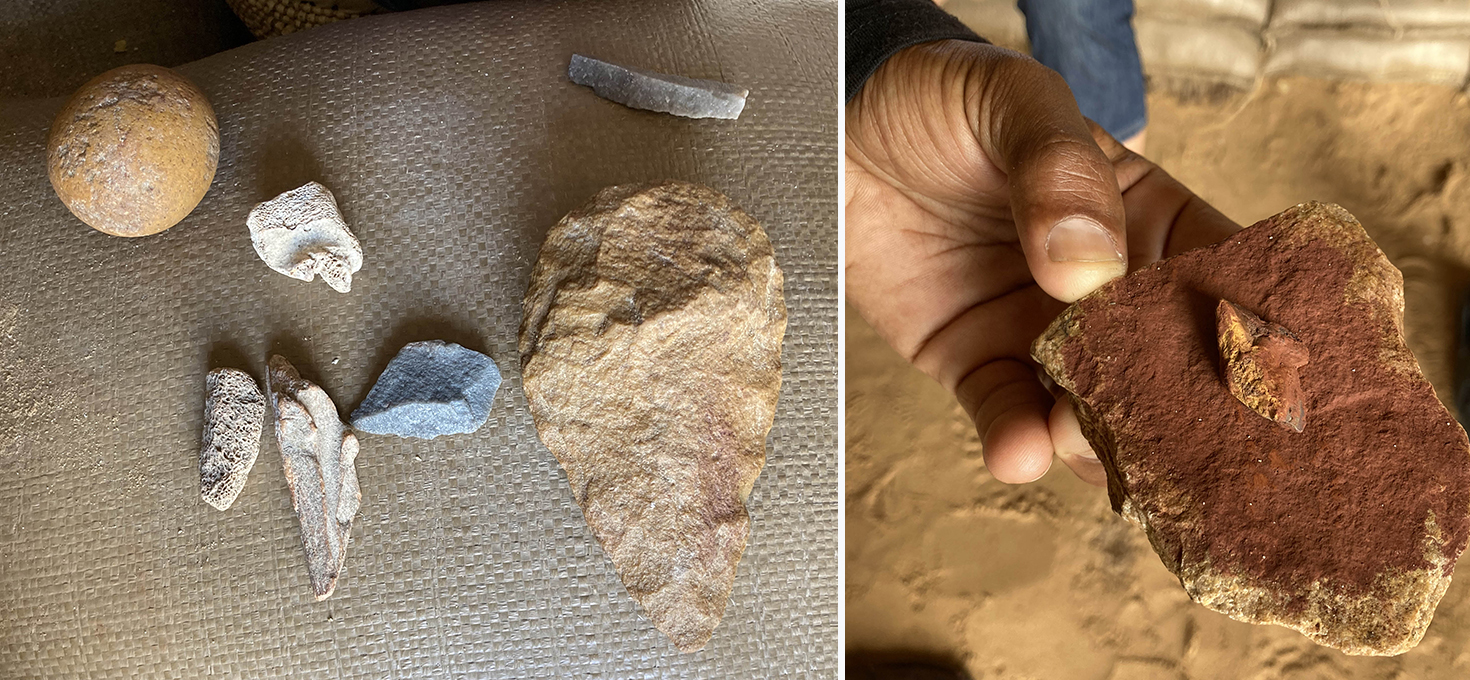
Some of the stone implements found in the Pinnacle Point caves. On the right is a stone yielding ochre, used for cave paintings and bodily decoration. The artifacts discovered in these caves show that humans had fairly advanced technology 60-100,000 years ago.
Next, a few days with my brother Harry and his wife Mary-Beth in George.
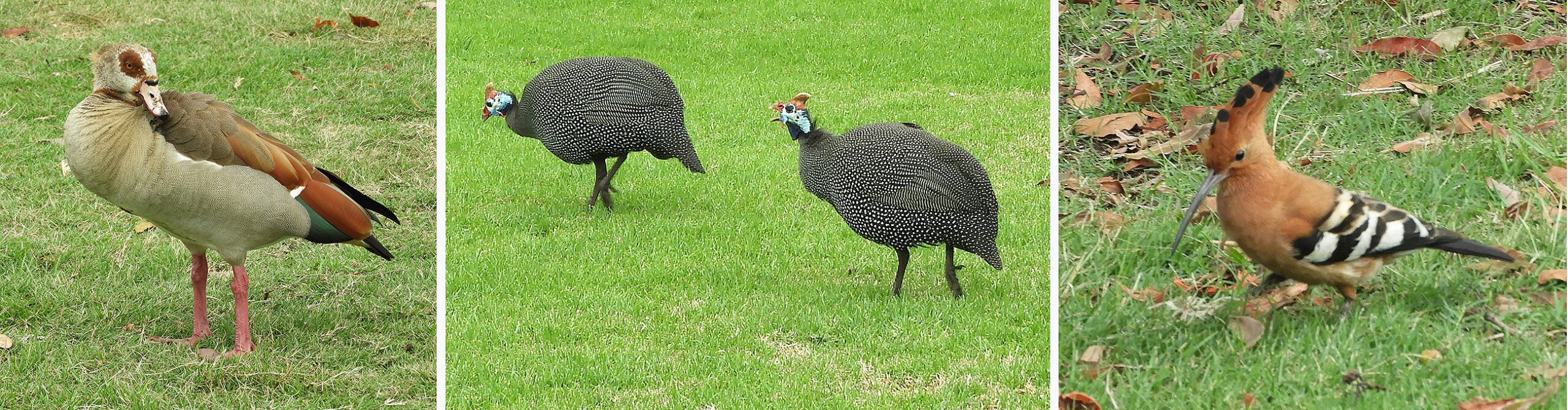
Some common birds on the Garden Route: Egyptian Goose, Guineafowl and African Hoopoe.
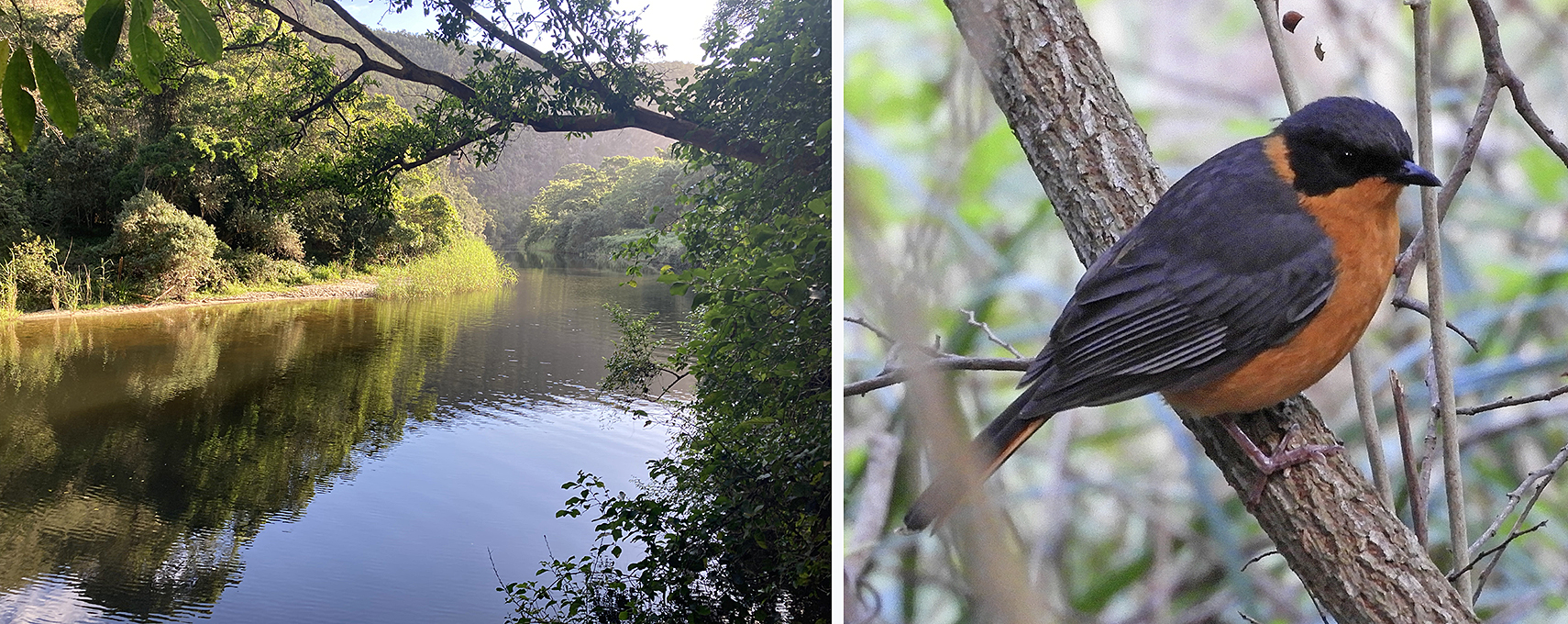
The Garden Route National Park at Wilderness has many lovely hiking trails. This was one of the Kingfisher Trails along the Touw River. Chorister Robin was one of the many forest birds that we found here.
We oldies (me, brother and cousin all in our 70s) went down memory lane with a visit to Buffels Bay near Knysna where our extended families spent many memorable summer vacations, renting basic beach houses. We looked for these but they have all since been replaced by much bigger and fancier holiday homes.
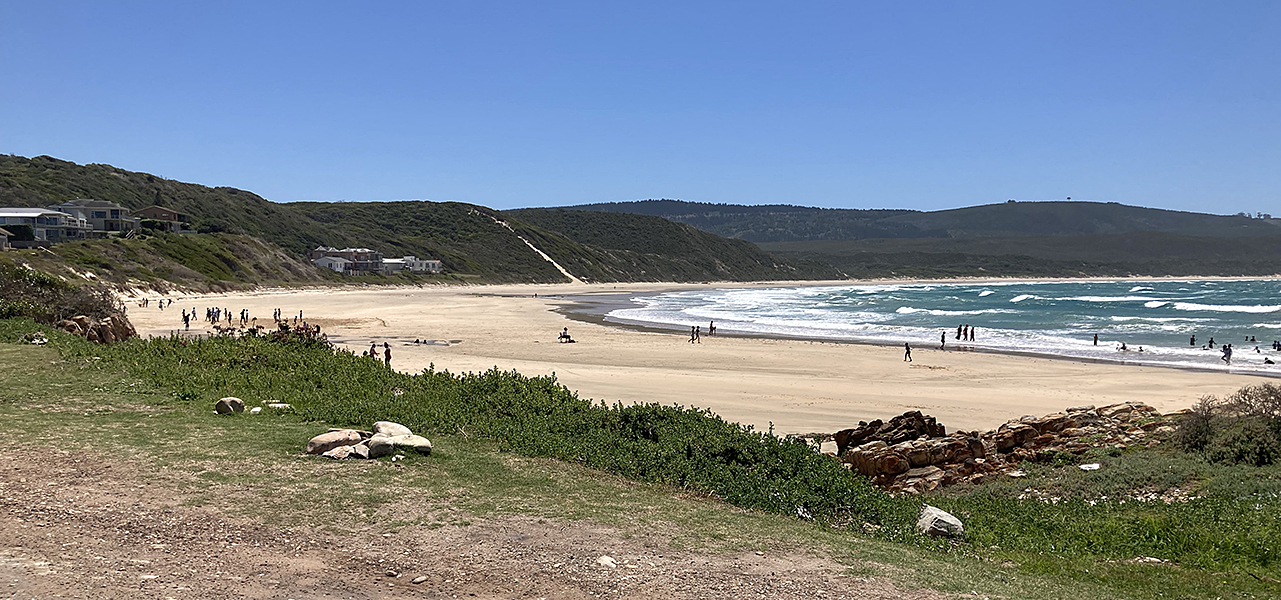
The lovely beach at Buffels Bay where my family spent many summer holidays when I was a kid.

Part of a flock of over 1,000 terns roosting on the rocks at Buffels Bay. Mostly Great Crested Terns (formerly Swift Terns) with yellow beaks and a few smaller Sandwich Terns with black beaks.
Next, back south-west to the tiny village of Vermaaklikheid near Cape Agulhas where my brother Damien and his family have a holiday place.

The holiday cottage at Vermaaklikheid is a restored fisherman’s cottage, with some added sleeping cabins.

There were hundreds of terns roosting at the mouth of the Duiwenhoks River near Vermaaklikheid.

Some of the terns at the mouth of the Duiwenhoks River: mostly Sandwich Terns with dark beaks with a few Great Crested Terns (larger with with yellow beaks), Caspian Terns (largest with red beaks; right photo) and small Common Terns (centre photo).
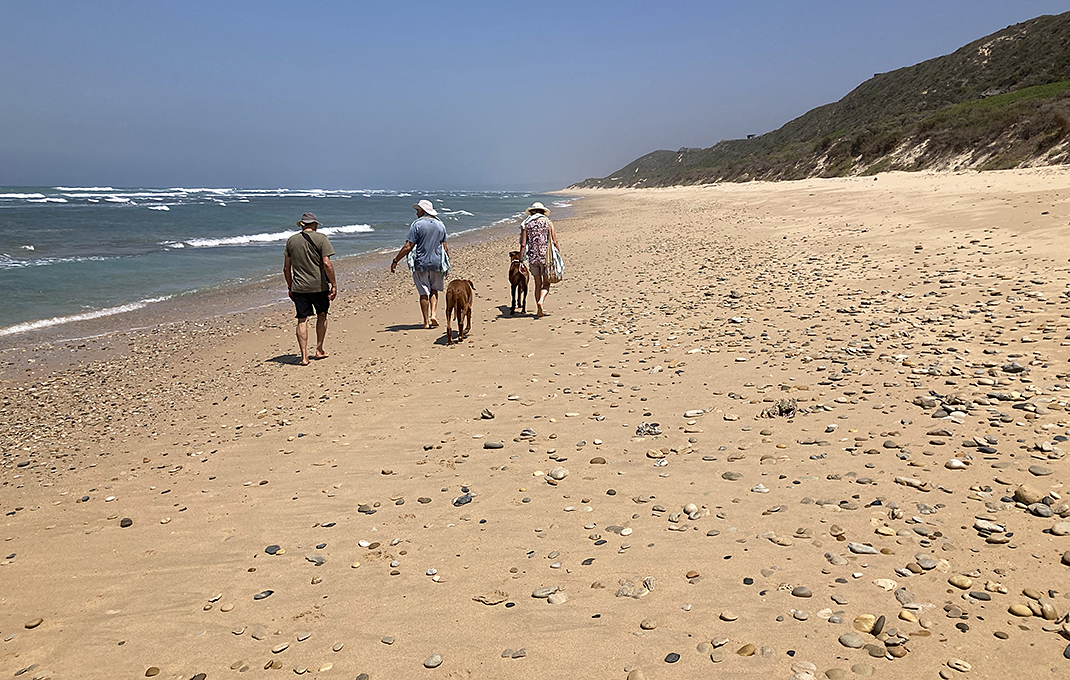
This sandy beach goes for miles.
Then, a few days in Stellenbosch where my brother Damien and his wife Marianne live. Their garden includes a large pond which attracts many interesting birds and frogs.
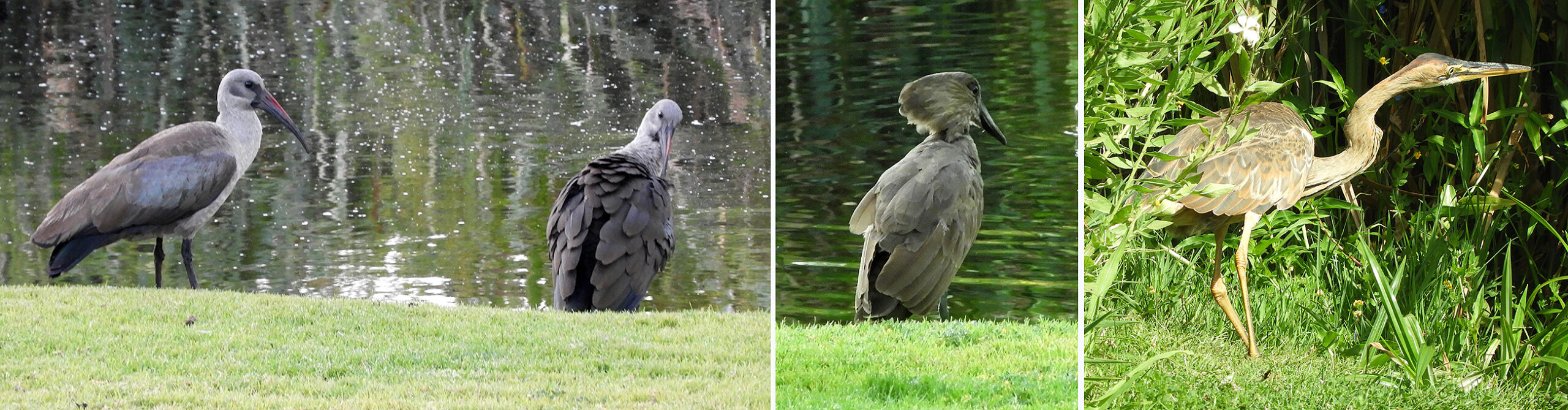
Birds at the Stellenbosch pond (L to R): Hadedah Ibis, Hamerkop and Purple Heron.
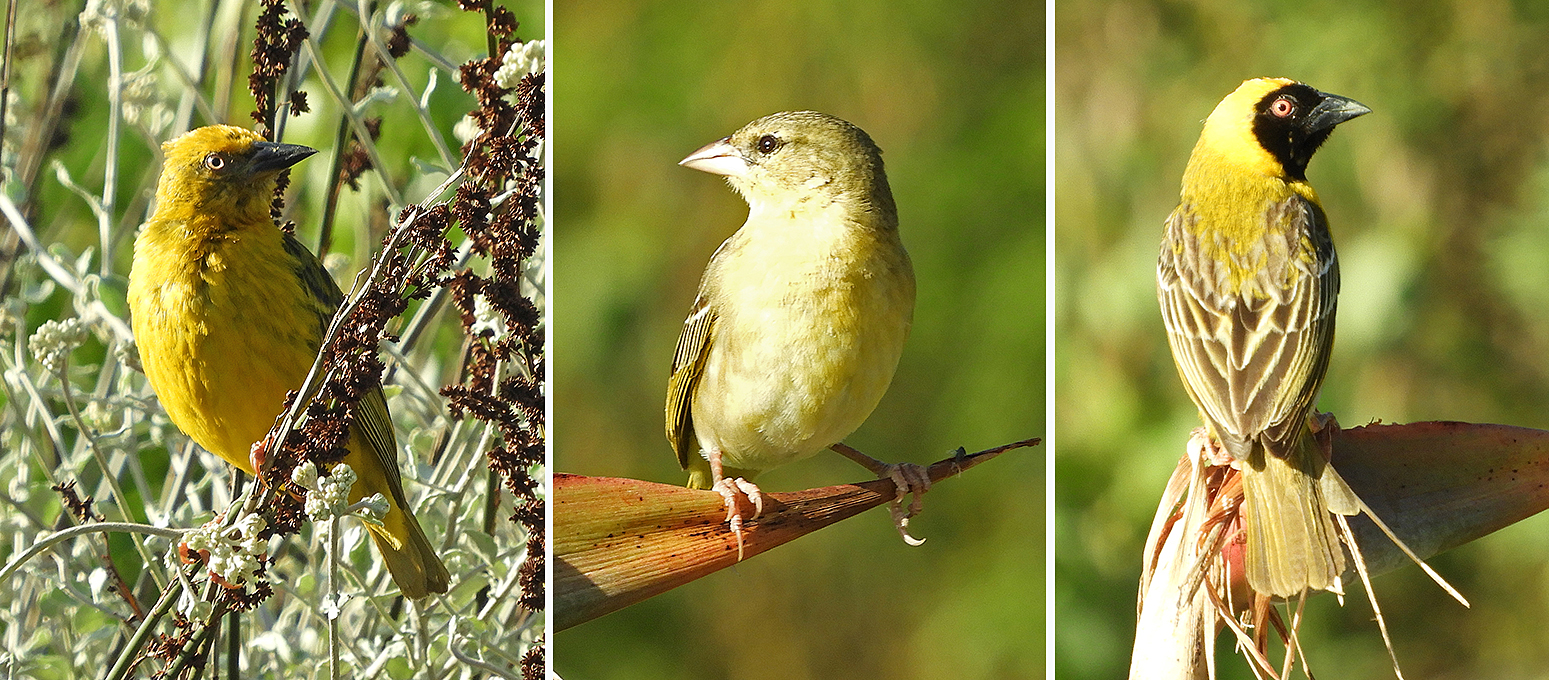
Weavers in Stellenbosch (L to R): male and female Cape Weaver and male Southern Masked Weaver.
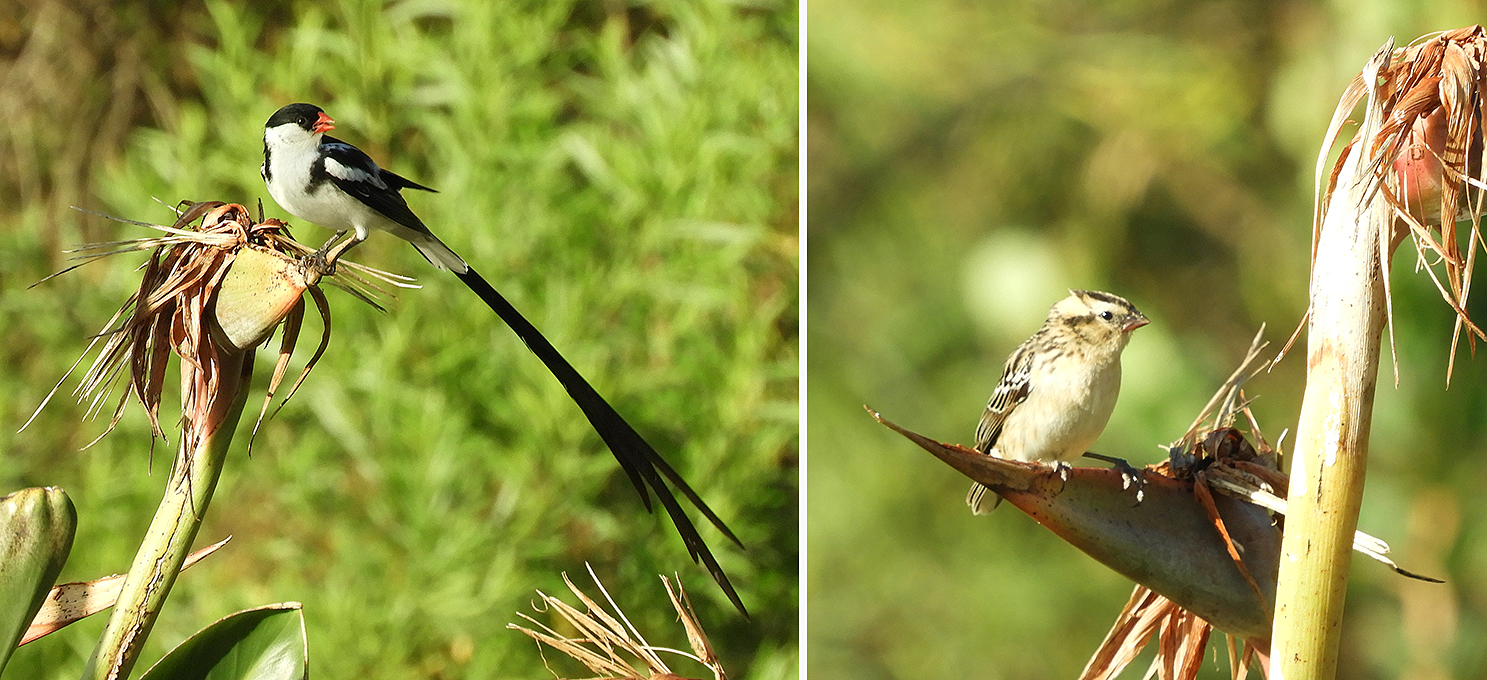
Male and female Pin-tailed Whydah. This elegant male spent hours in energetic flapping displays to the 2-3 females that were nearby. I felt exhausted just watching him. The females seemed unimpressed.
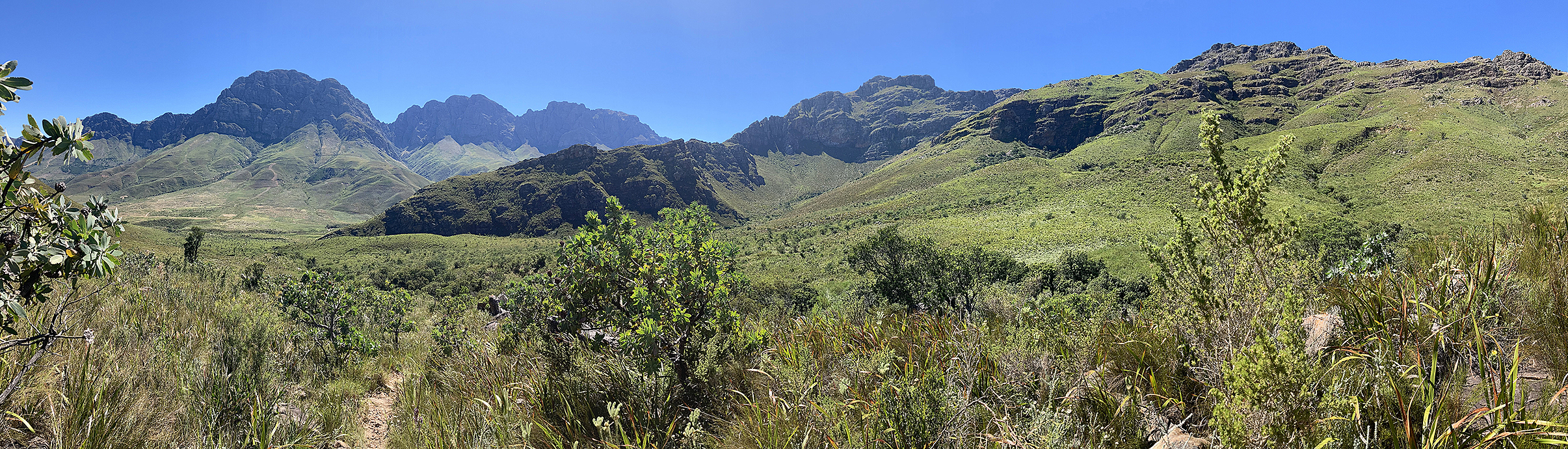
The Jonkershoek Nature Reserve near Stellenbosch is one of my favourite places in the Western Cape. It has many hiking trails, wonderful fynbos vegetation and interesting birds, with a backdrop of lovely mountains.
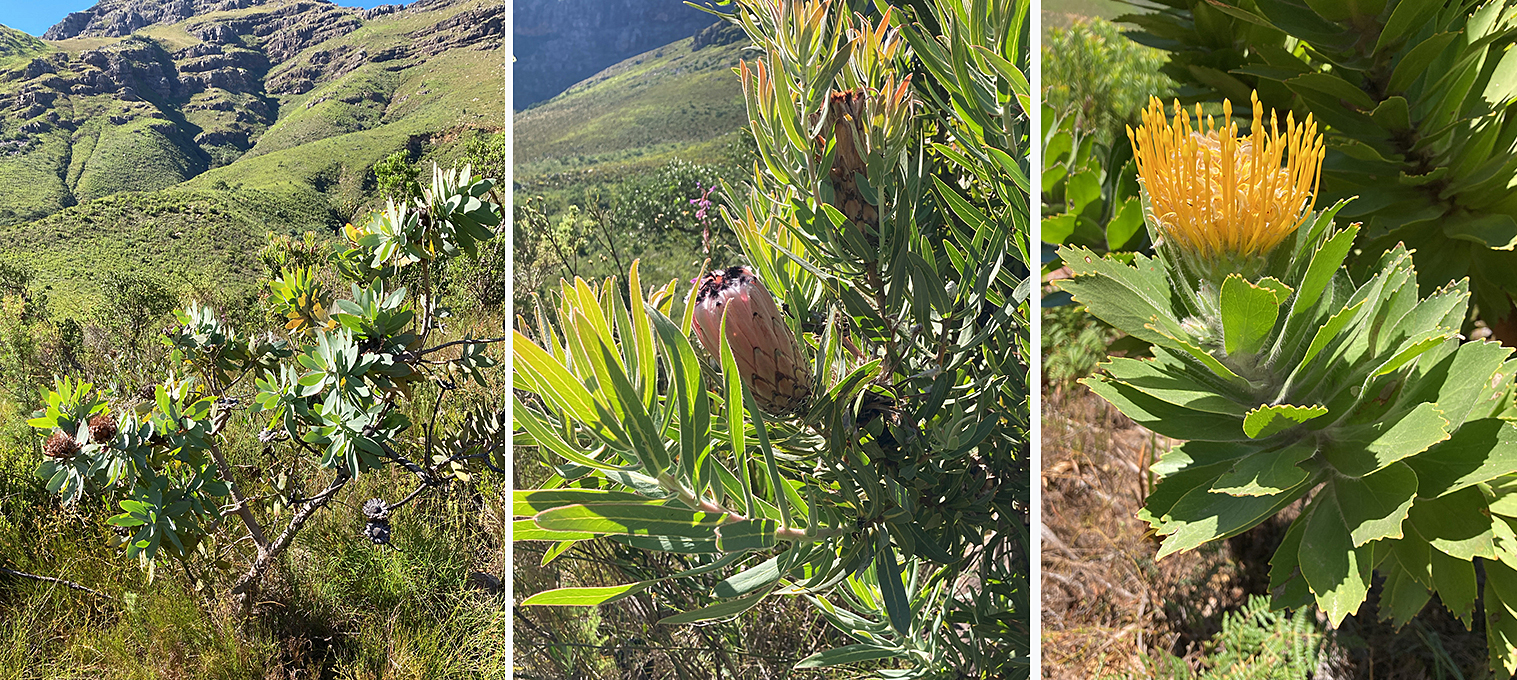
Jonkershoek has a high diversity of fynbos species, including several members of the Proteacea. Here are Waboom (Wagon Tree, Protea nitida), Bearded Protea (P. neriifolia) and Tree Pincushion (Leucospermum conocarpodendron).

Fynbos flowers in Jonkershoek (L to R): Spiky Summerpipe (Thereianthus spicatus), Crisp Plumeiris (Tritonia undulata) and Cape Hibiscus (Hibiscus aethiopicus).
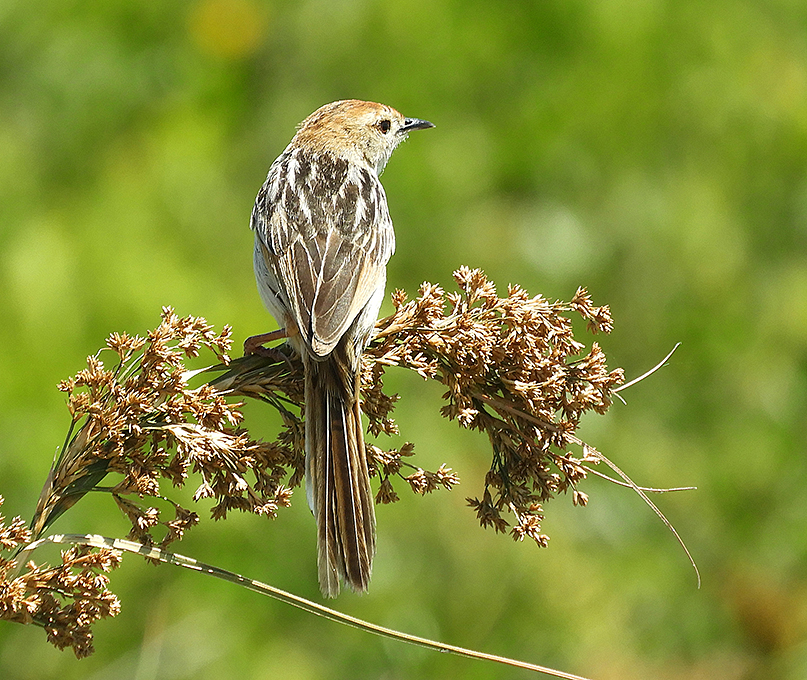
Le Vallaint’s Cisticola is probably the most widespread cisticola in the Western Cape, found in fynbos, grasslands and agricultural lands.
My last few days were back at Kalk Bay enjoying a few more of the Cape Peninsula delights and swimming in the Kalk Bay tidal pool. The Strandfontein sewage treatment site has a huge series of settling ponds which support very large populations of waterfowl and other birds. It is managed as a nature reserve and the public are free to explore. It is probably the best birding site in the Western Cape. In a couple of hours I saw 65 species.
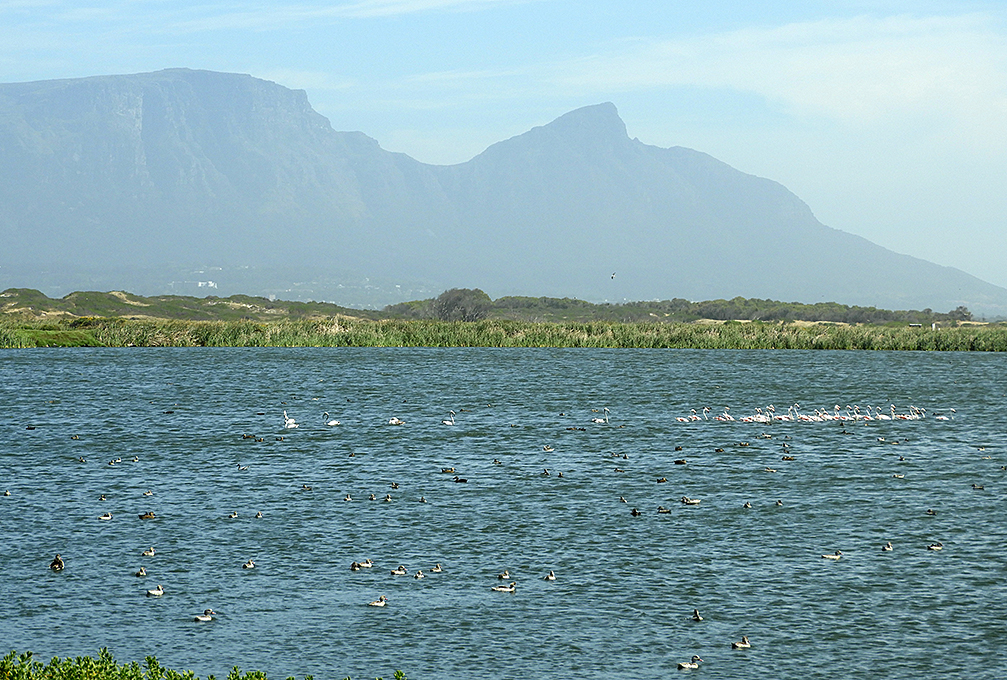
Table Mountain and Devil’s Peak seen from the Strandfontein sewage works with ducks and flamingos in the foreground.
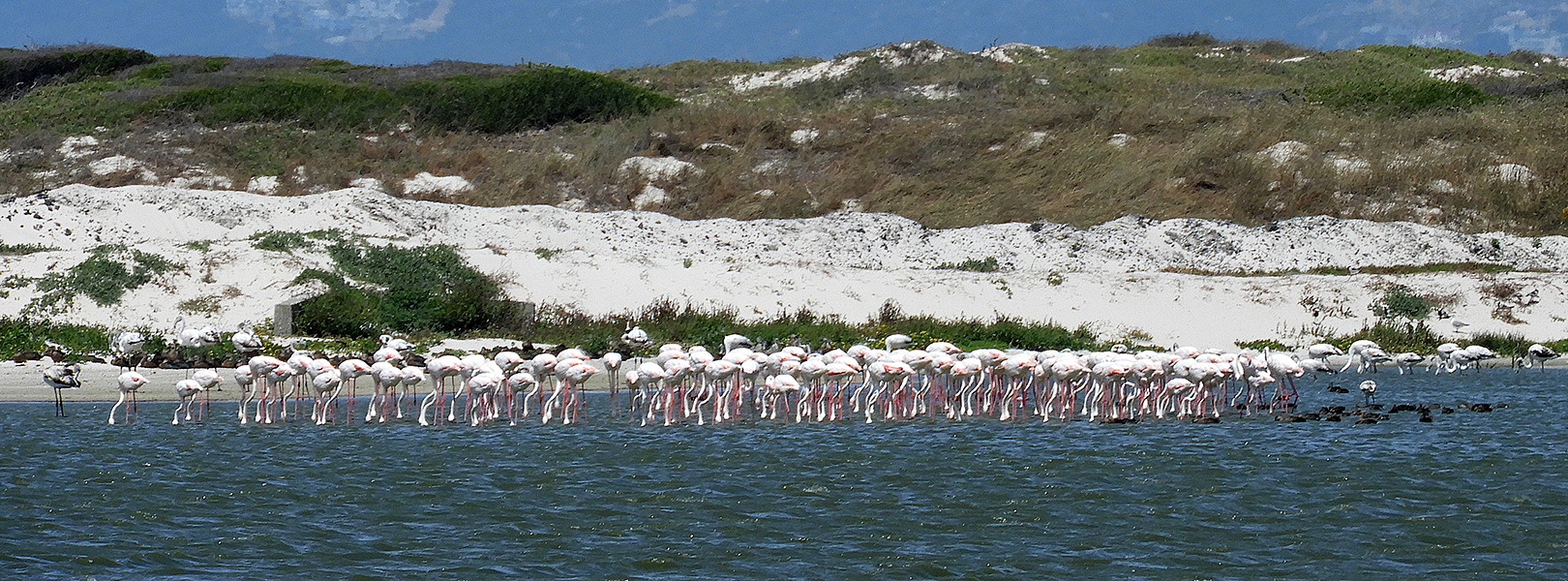
Greater Flamingos feeding.
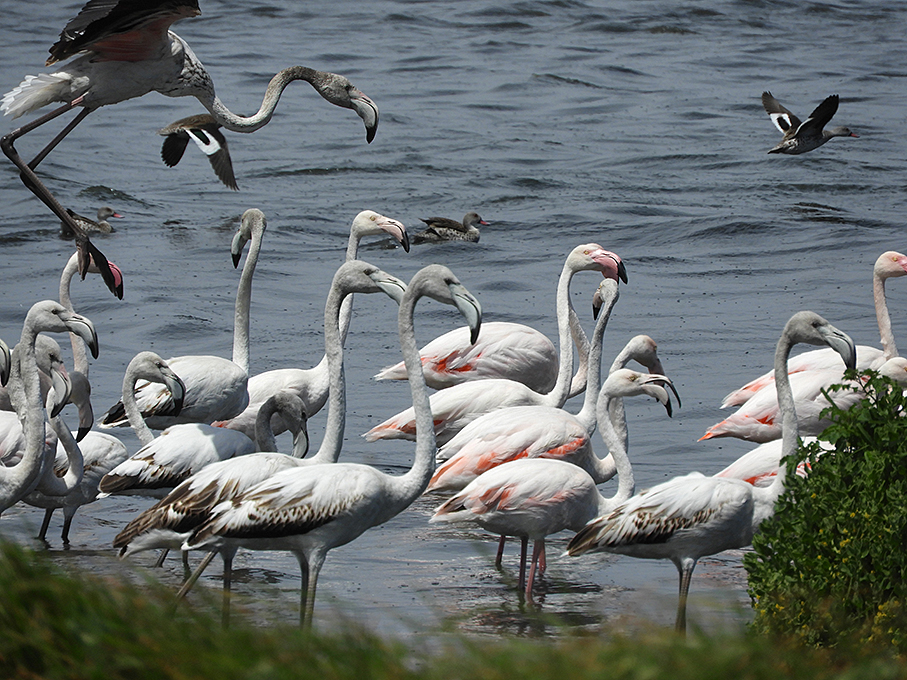
A closer view of Greater Flamingos. The pale grey birds are immature. Cape Teal in the back.

Some waterfowl species – Yellow-billed Ducks (left) and Cape Shoveler and Cape Teal on the right.
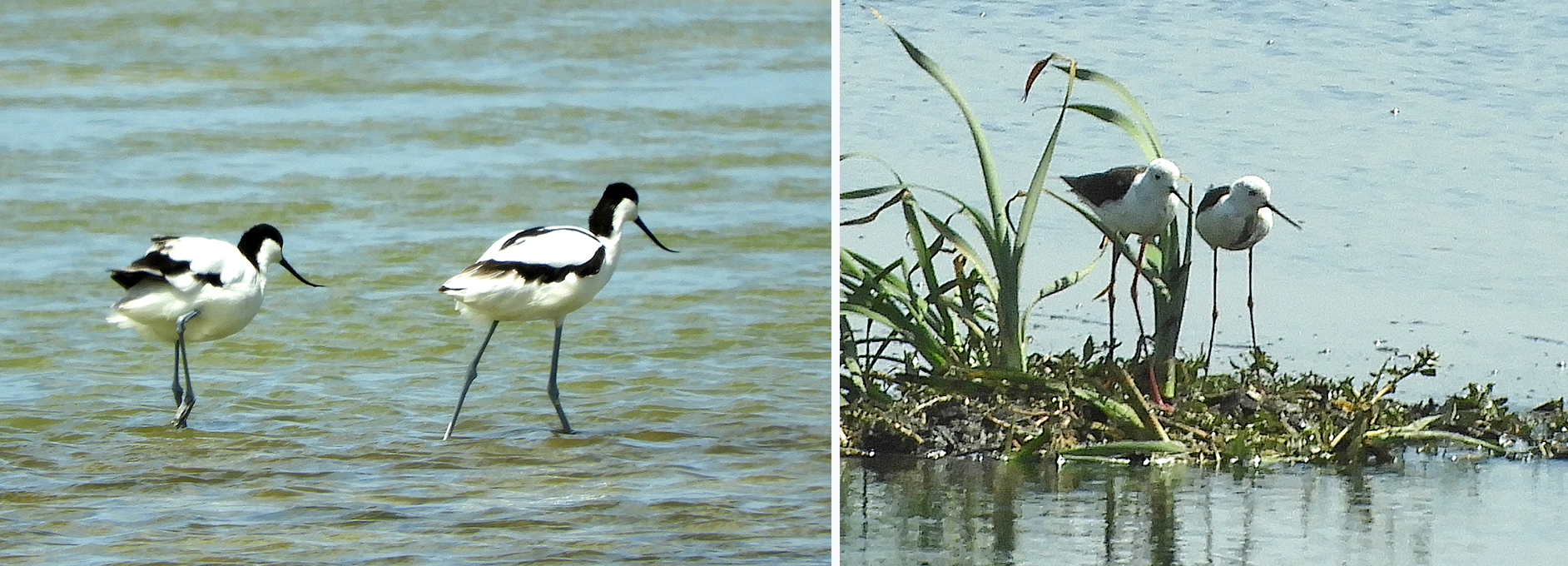
Pied Avocets (left) and a pair of nesting Black-winged Stilts at Strandfontein.
My final morning was spent at Kirstenbosch Botanical Gardens (“the most beautiful garden in Africa”). It is an amazing place in a spectacular setting with the huge garden blending into indigenous forest on the back slopes of Table Mountain.

Kirstenbosch Botanical Garden with the back slopes of Table Mountain behind.

Cape Sugarbird foraging on a Leucospermum bush and an African Dusky Flycatcher in the shady forest.

Cape Spurfowl at Kirstenbosch are habituated to people and relatively easy to photograph.

A sample of fynbos flowers (L to R): Table Mountain Watsonia (Watsonia tabularis), Long Rushiris (Bobartia indica) and Rose-scented Geranium (Pelargonium capitatum).

More indigenous fynbos specialties – Rocket Pincushion (Leucospermum reflexum) and Clusterleaf Brightfig (Lampranthus emarginatus)

A common sight in the fynbos along the Table Mountain trails.
Thanks to iNaturalist for online identification of the flowers and reptiles shown above.
~~~~~~~~~~~~~~~~~~~~~~~~~~~~~