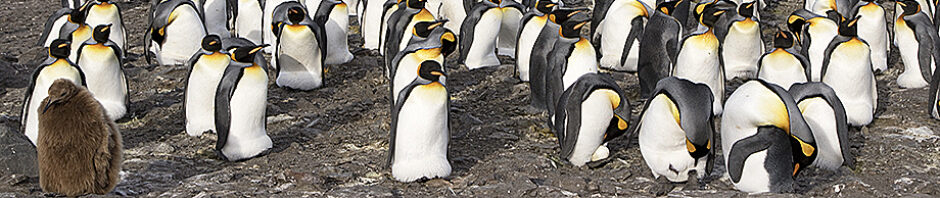
Here are some of my wildlife photos from 2025, mostly from my home in British Columbia, with links to some of my other posts featuring wildlife.
All photos © Alan Burger
Winter 2024-2025

I often begin the new year with a little expedition into the snowy back roads around Tunkwa Provincial Park. The roads can be tricky.

Hoar frost on the trees making an interesting winter scene – Tunkwa Provincial Park, New Year’s Day 2025.
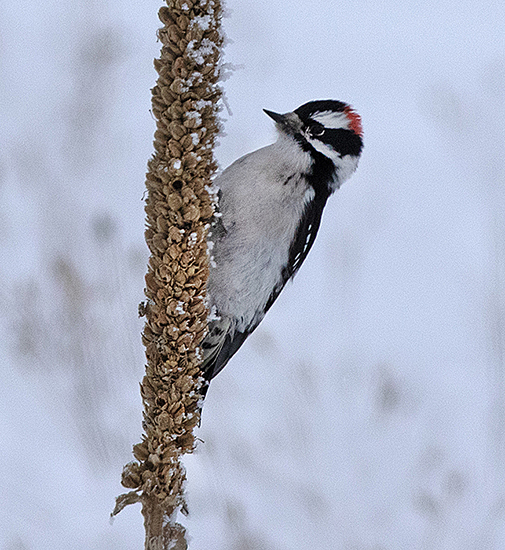
This male Downy Woodpecker is small enough to peck away at the seed head of a mullen. Larger birds would topple the stem. Tunkwa Provincial Park, New Years day 2025.

Northern Pygmy-owls were quite often found this winter. Unlike most owls, they are active in daylight. The one on the left was in our neighbour’s yard in Logan Lake on 4 January and the one on the right was near Nicola Lake on 11 January, 2025.
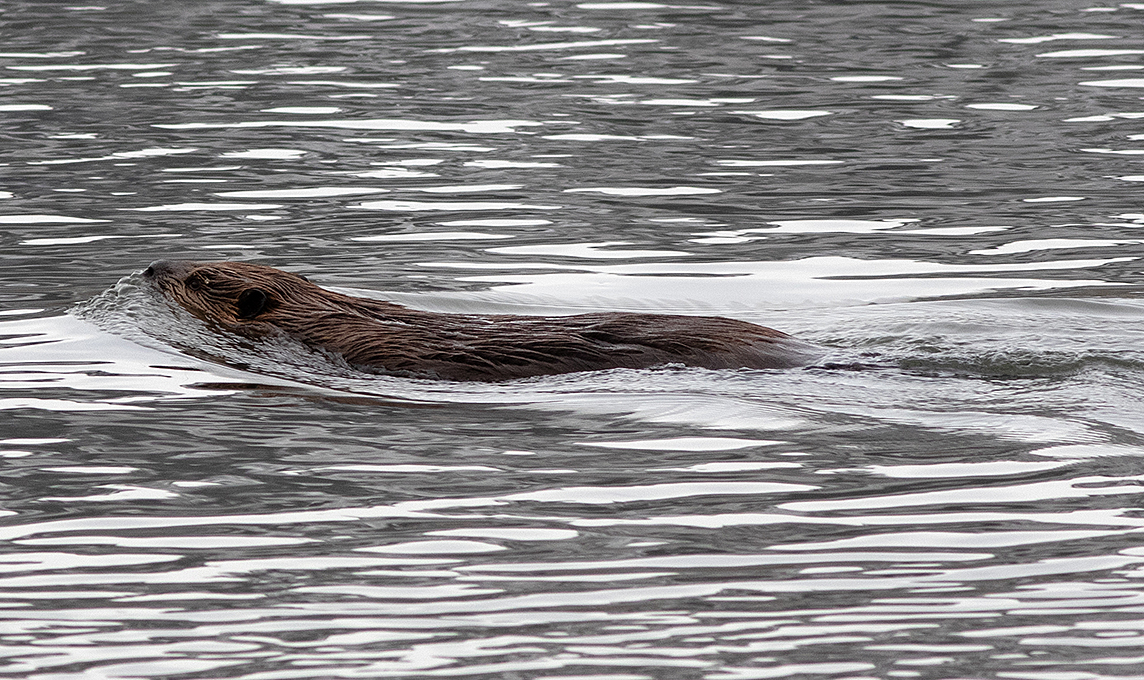
I was looking for waterfowl in the Thompson River at Kamloops, but discovered this large beaver in mid-river instead. 21 January 2025.

Two female Common Goldeneyes heading up the Nicola River near Merritt, 22 February 2025.

House Finches are regular visitors to our backyard feeder in Logan Lake. This one is a male.
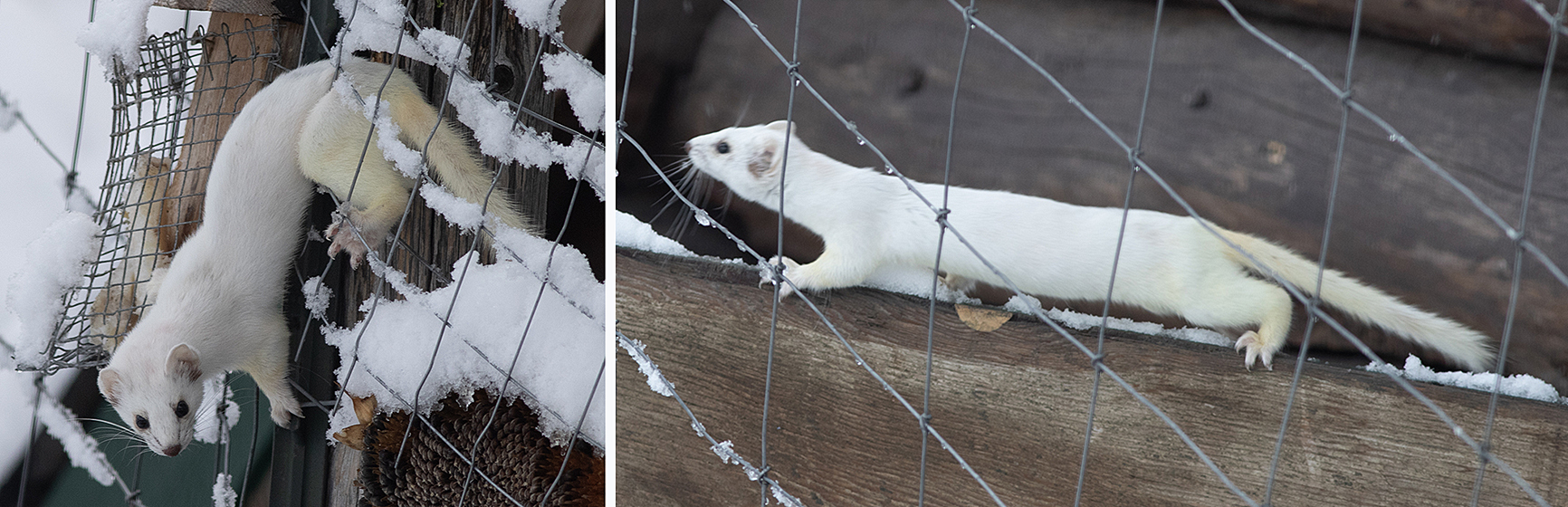
We were pleasantly surprised when this Long-tailed Weasel, in its winter white coat, came to check out the suet in our backyard feeder.

The high grasslands of the Douglas Lake Plateau are one of my favourite places in the southern B.C. Interior, in any season. Winter is especially scenic.

Two winter specialties on the Douglas Lake Plateau – Horned Larks (L) and Snow Buntings (R). Both on 23 February 2025.
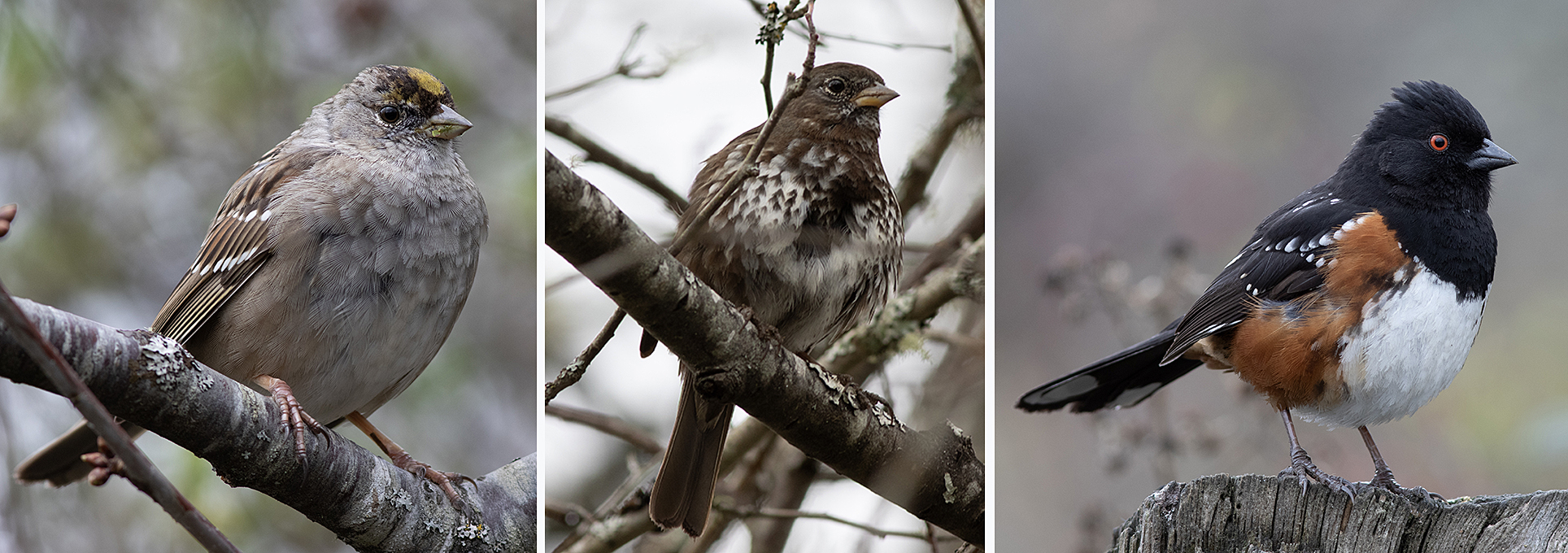
Sparrows found on Vancouver Island during a winter visit there: Golden-Crowned Sparrow, Fox Sparrow and Spotted Towhee.
Spring 2025
My favourite season – flowers emerge and migrant birds return. On the botanical side the first flowers are always the little Sagebrush Buttercups – they appear in bloom right next to the dwindling snowbanks.

Sagebrush Buttercups (Ranunculus glaberrimus). Their shiny yellow petals are known to focus sunlight and provide a little warmth to the hardy spring insects that visit them. Logan Lake in Early March 2025

Prairie Smoke (Geum triflorum) is another relatively early spring bloomer. Logan Lake – mid-April.
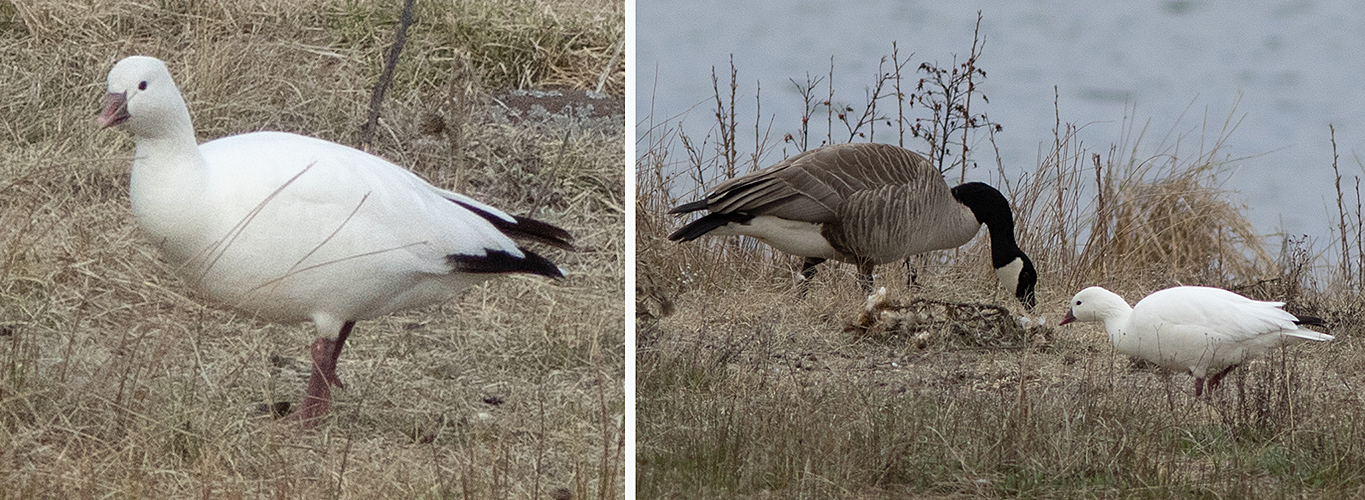
This lone Ross’s Goose showed up at Leighton Lake at Tunkwa Provincial Park in late April. It hung out with the larger Canada Geese that are regulars there.
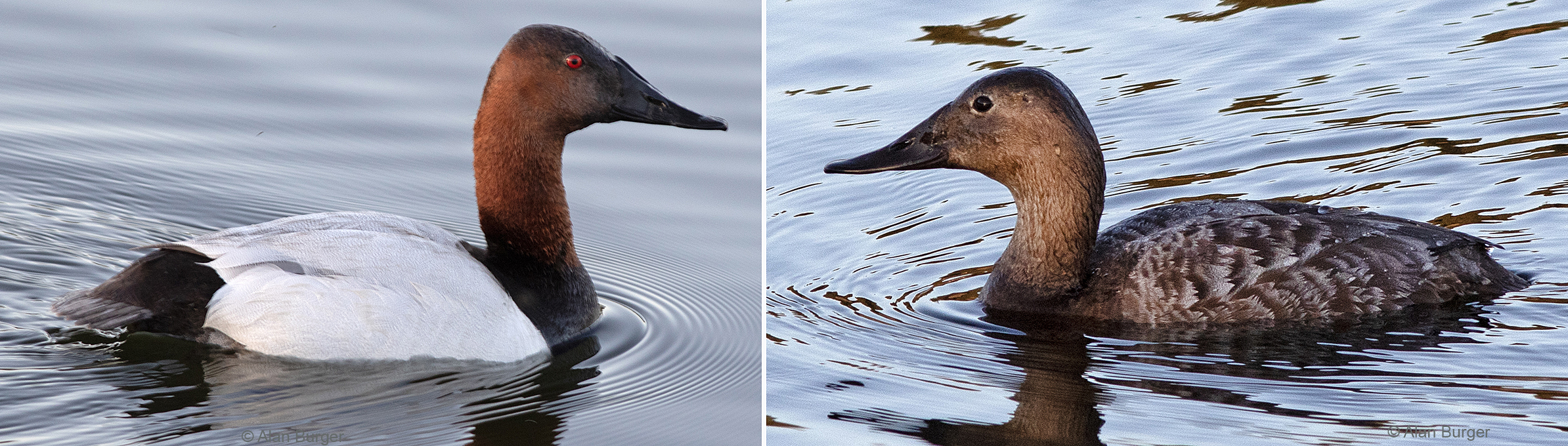
This pair of Canvasbacks was a prominent feature on Logan Lake in early May. The male (L) soon disappeared but the female (R) remained and raised ducklings on our local lake.

Also on Logan Lake were several pairs of Barrow’s Goldeneyes and a few weeks later females with tiny ducklings were paddling around the lake.

Out for a late walk around dusk, I spotted this Great Grey Owl on a post at the Logan Lake Golf Course. As I watched, it dropped down off its perch into the cat-tails and then emerged with a vole in its beak. A few seconds later it took off carrying the vole and headed into the nearby forest – probably to feed chicks at a nest. Unfortunately I had only my phone to capture this event. 4 May 2025

Another predator that lives mainly off small rodents like mice and voles – a Coyote on the Douglas Lake grasslands. 9 May 2025
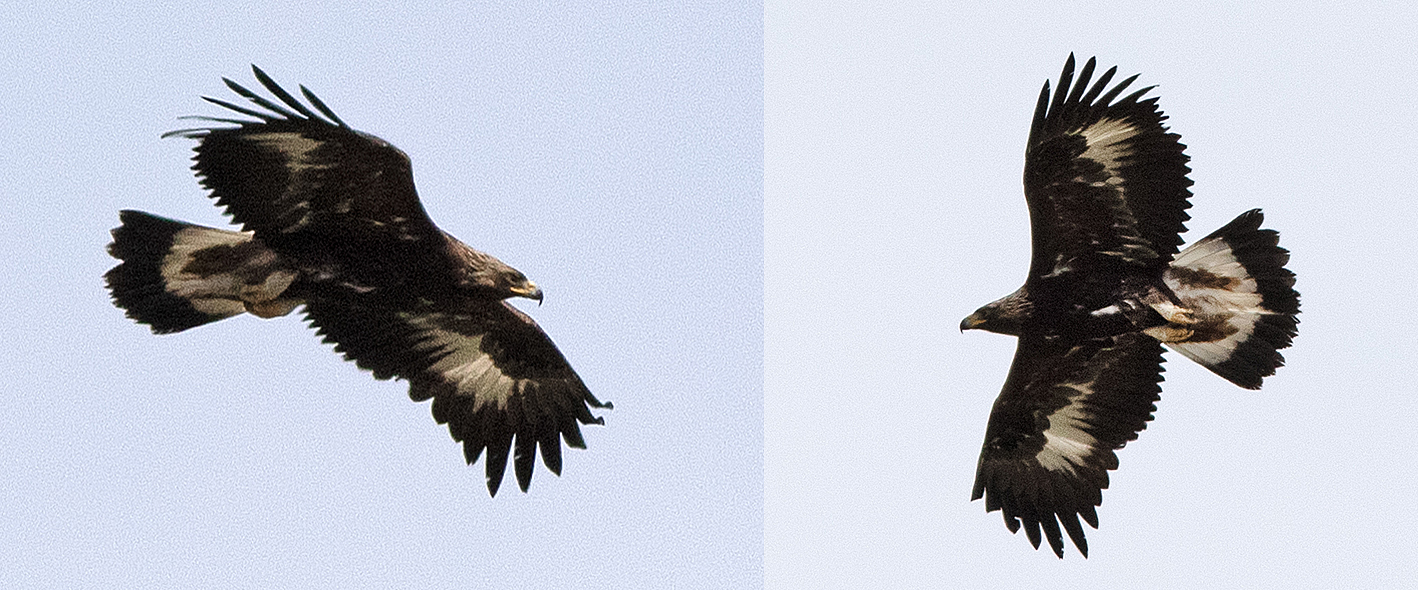
This immature Golden Eagle was feasting on a carcass (cow or deer) on the Douglas Lake Plateau as I arrived, leading a group of naturalists from the BC Nature annual conference in Merritt. It then gave us lovely views as it circled overhead. 23 May 2025.
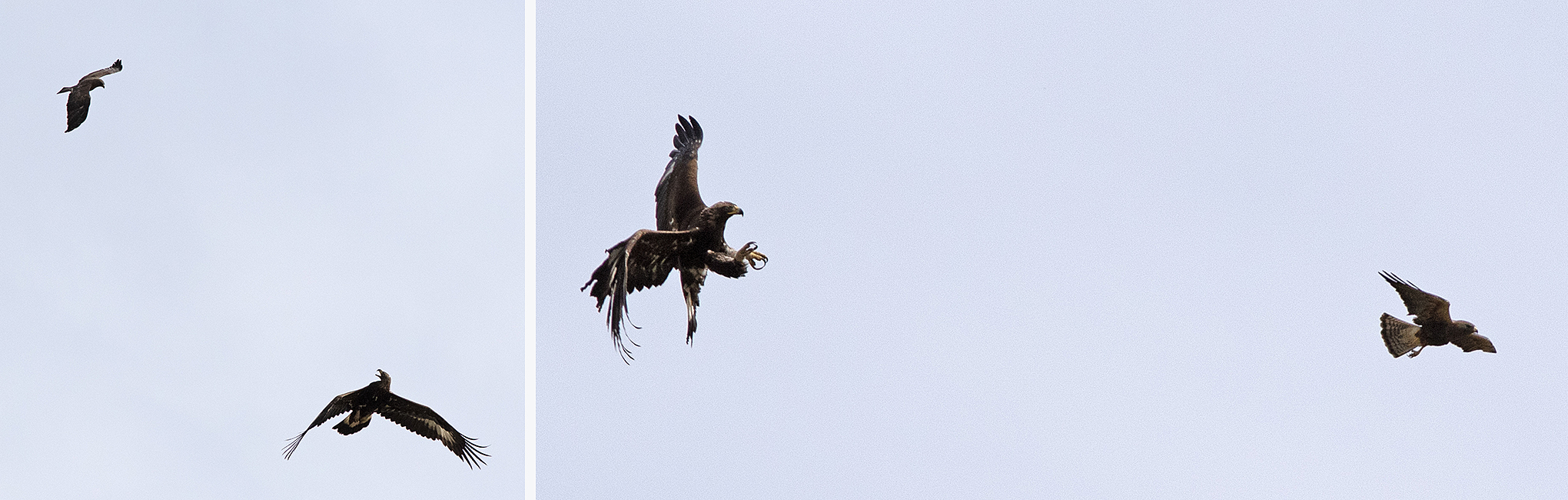
Suddenly, we had not one but two fairly rare raptors in view, as a Swainson’s Hawk appeared and began dive-bombing the Golden Eagle.

The return of the forest warblers in spring adds splashes of colour and lovely songs to the local forests – a male Yellow Warbler at the Lundbom Commonage near Merritt. 27 May 2025.
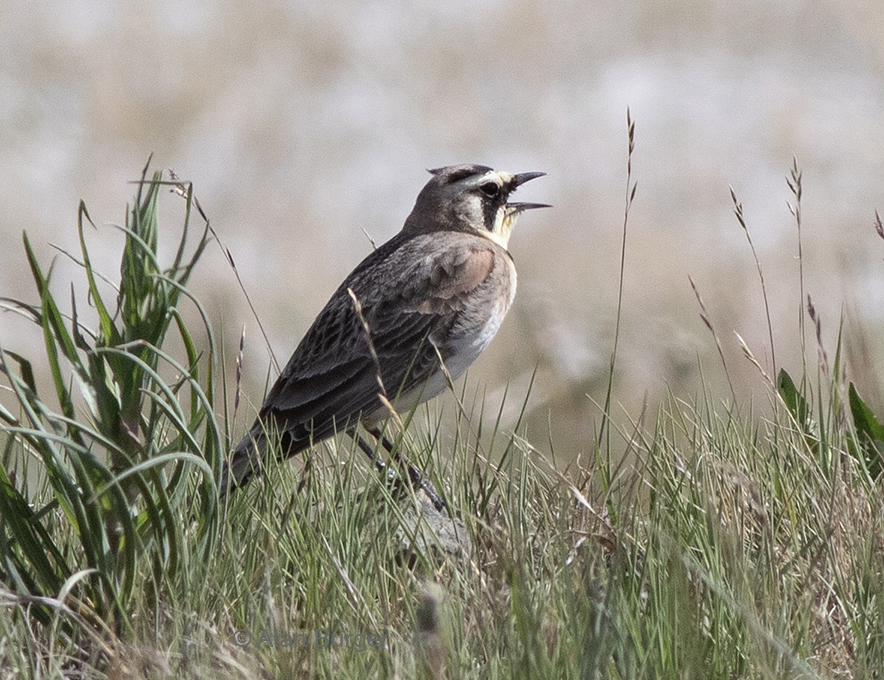
Horned Larks are uncommon breeders in our area, but they can be found in short-grass areas on the Douglas Lake Plateau. This is the only lark native to North America but like its Old-World lark cousins, it has a lovely complex song. 30 May 2025.

Yellow-headed Blackbirds are a fairly common marsh species in our area – Mamit Lake, 6 June 2025.
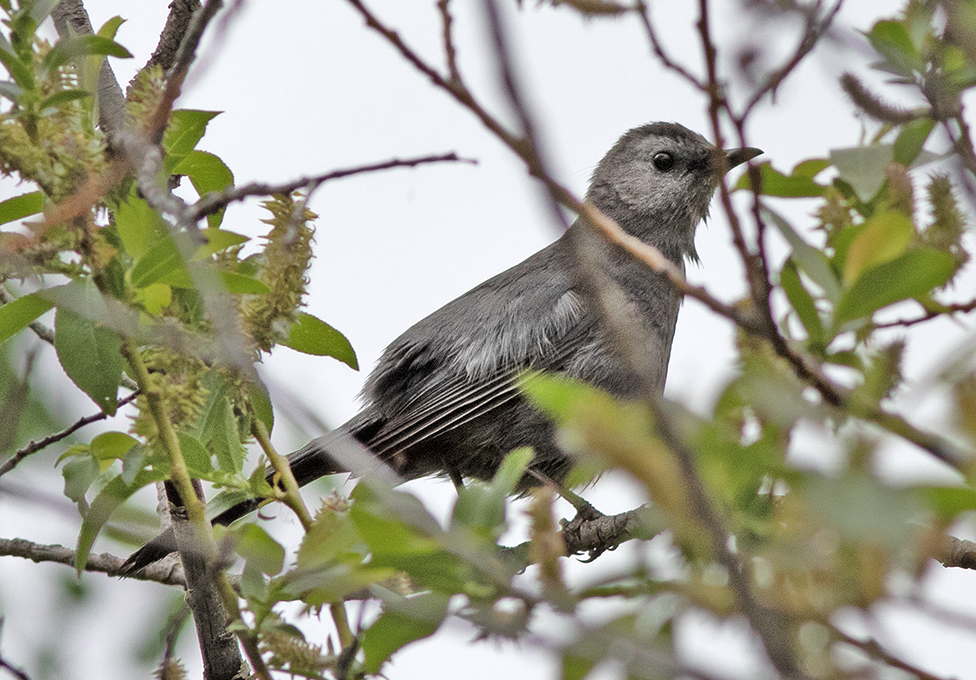
Grey Catbirds are usually easier to hear than see – they tend to lurk within the thick bushes – here on the edge of Mamit Lake near Logan Lake, 6 June 2025.

American Three-toed Woodpeckers are one of our less common woodpecker species. They are with us all year round, but become more conspicuous in spring when they drum and call. 6 June 2025.

A Barrow’s Goldeneye female leads her brood of newly-hatched ducklings on Paska Lake near Logan Lake. Even at this tender age the ducklings feed themselves – picking up insects on the water surface and diving below the surface for other tiny prey. 9 June 2025.

While kayaking on Paska Lake we found ourselves close to a Common Loon sitting on a nest. We quietly moved away and the loon remained on the nest. 9 June 2025.
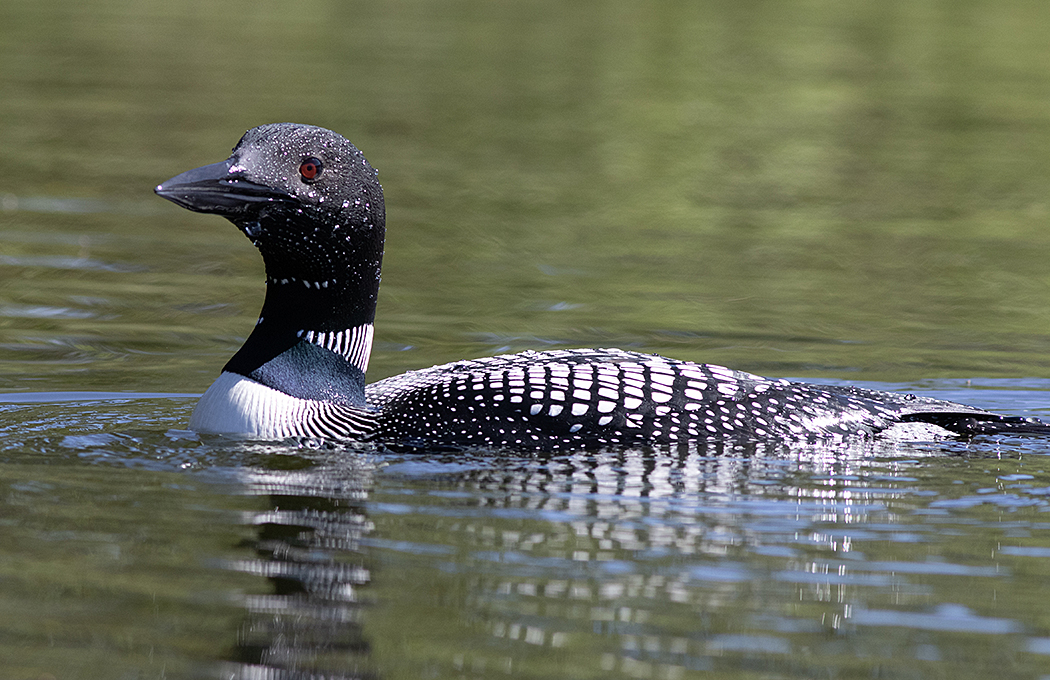
Meanwhile, the loon’s mate was nearby, watching anxiously. Paska Lake, 9 June 2025.
Summer 2025
Summer brings insects and the diversity just in our yard is astounding.
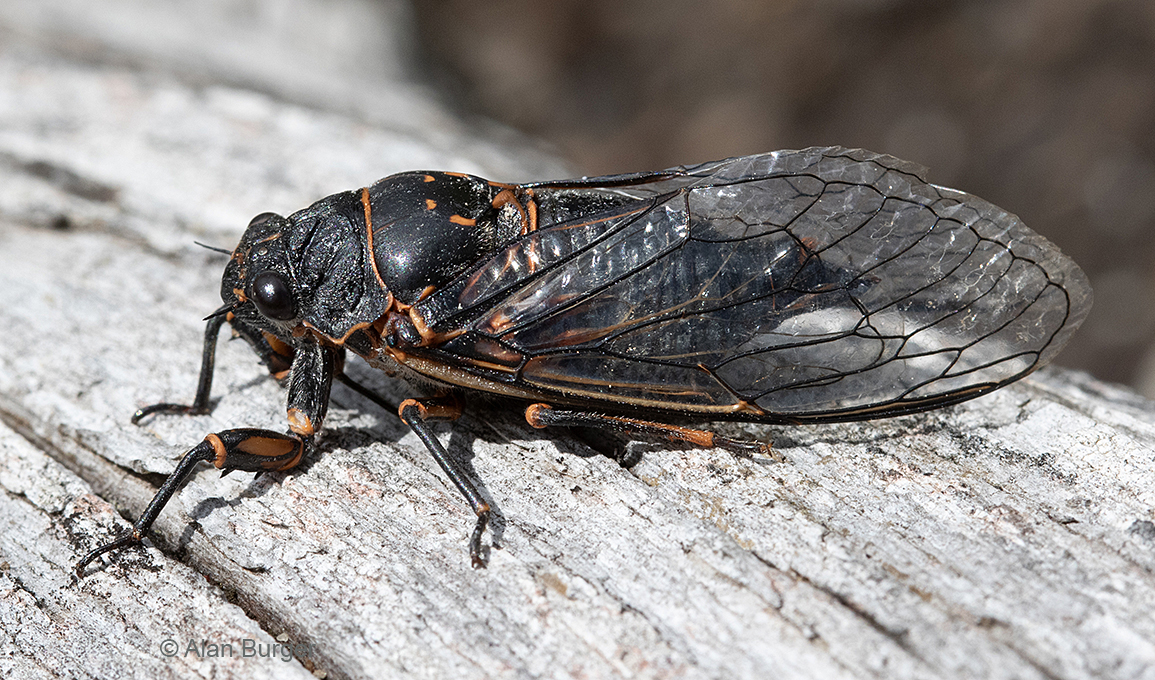
Cicadas tend to be rare except in the years that they emerge in large numbers. This is our common local species the Rocky Mountain Cicada (Okanagana occidentalis). Logan Lake, 9 July 2025.

Another fairly large insect in our backyard – a Giant Lacewing (Polystoechotes punctata)
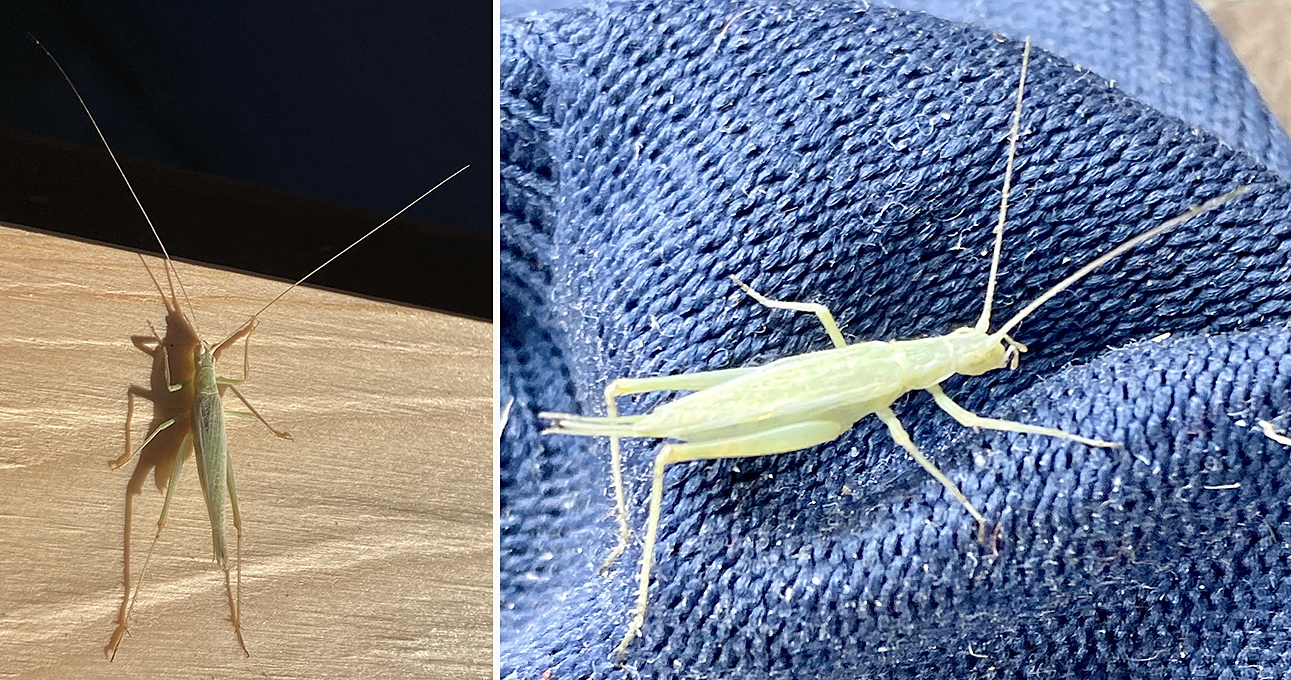
One of our most interesting backyard insects was this fragile-looking Four-spotted Tree Cricket (Oecanthus quadripunctatus). They are not very big – just 2.5 cm in length – but males produce a loud and shrill quavering sound by rubbing their forewings together. At night I went out and with some difficulty found a few amongst the foliage doing the wing-rubbing mating sounds.

Frogs are also a summer feature. This is a Columbia Spotted Frog (Rana luteiventris) on Clearwater Lake, Wells Gray Provincial Park. 4 July 2025
For more photos of kayaking on Clearwater Lake in July click here: Clearwater Kayaking 2025
I also regularly go kayaking on our local lakes near Logan Lake town. Here are some photos from those lakes …..

While kayaking on Mamit Lake near our home in Logan Lake I met this River Otter. It had just caught a large fish and it was obviously torn between its curiosity to check me out and getting on with eating the fish. Very soon, the latter became the priority and it disappeared. The fish was a Largescale Sucker (Catostomus macrocheilus) – quite common in the murky summer waters of this lake.

Also curious about this strange apparition on the lake (me in the kayak), these Mule Deer kept approaching to get a better look.
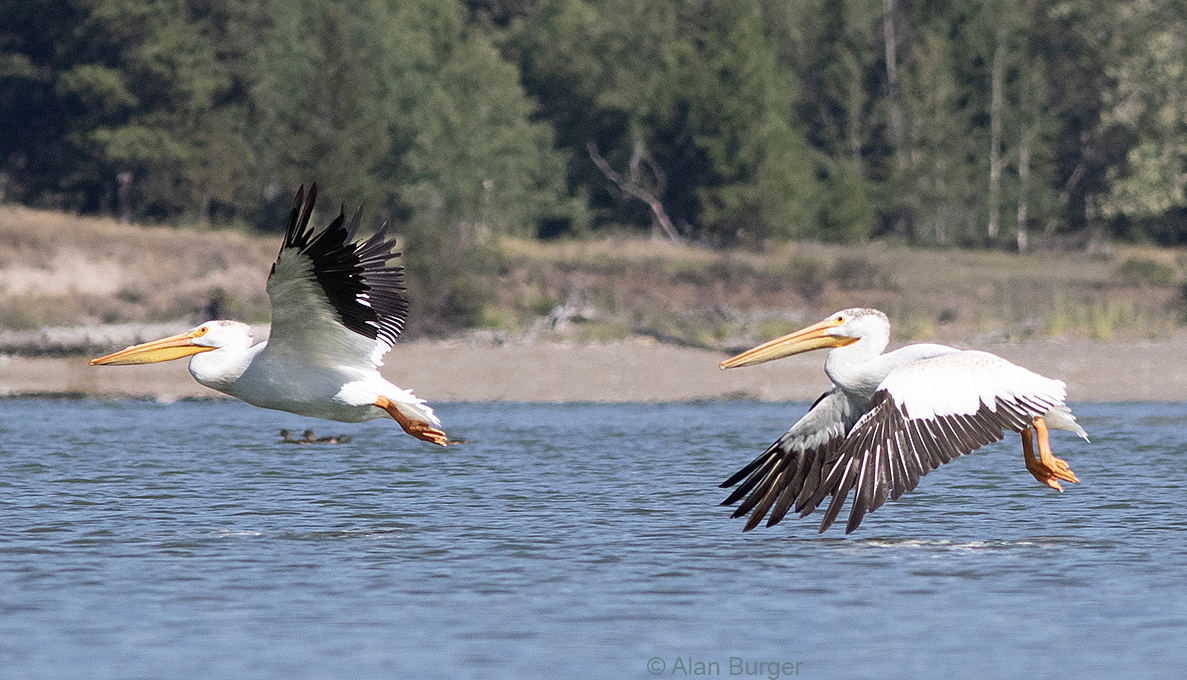
Every summer a handful of White Pelicans visits Mamit Lake, sometimes remaining for weeks at a time. Most are immature birds.
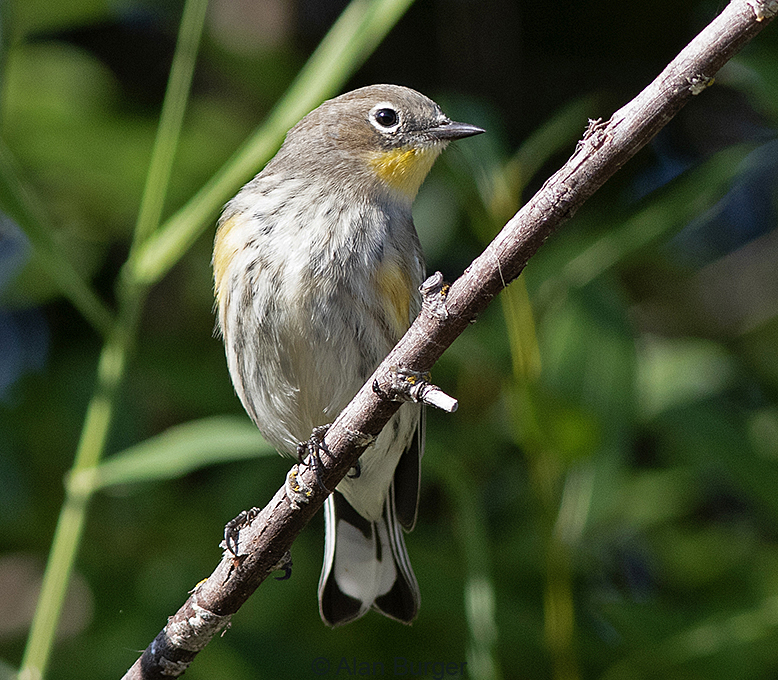
Being in a kayak is often a good way to see and photograph birds in the bushes bordering the lakes – a Yellow-rumped Warbler at Mamit Lake, 26 August 2025.
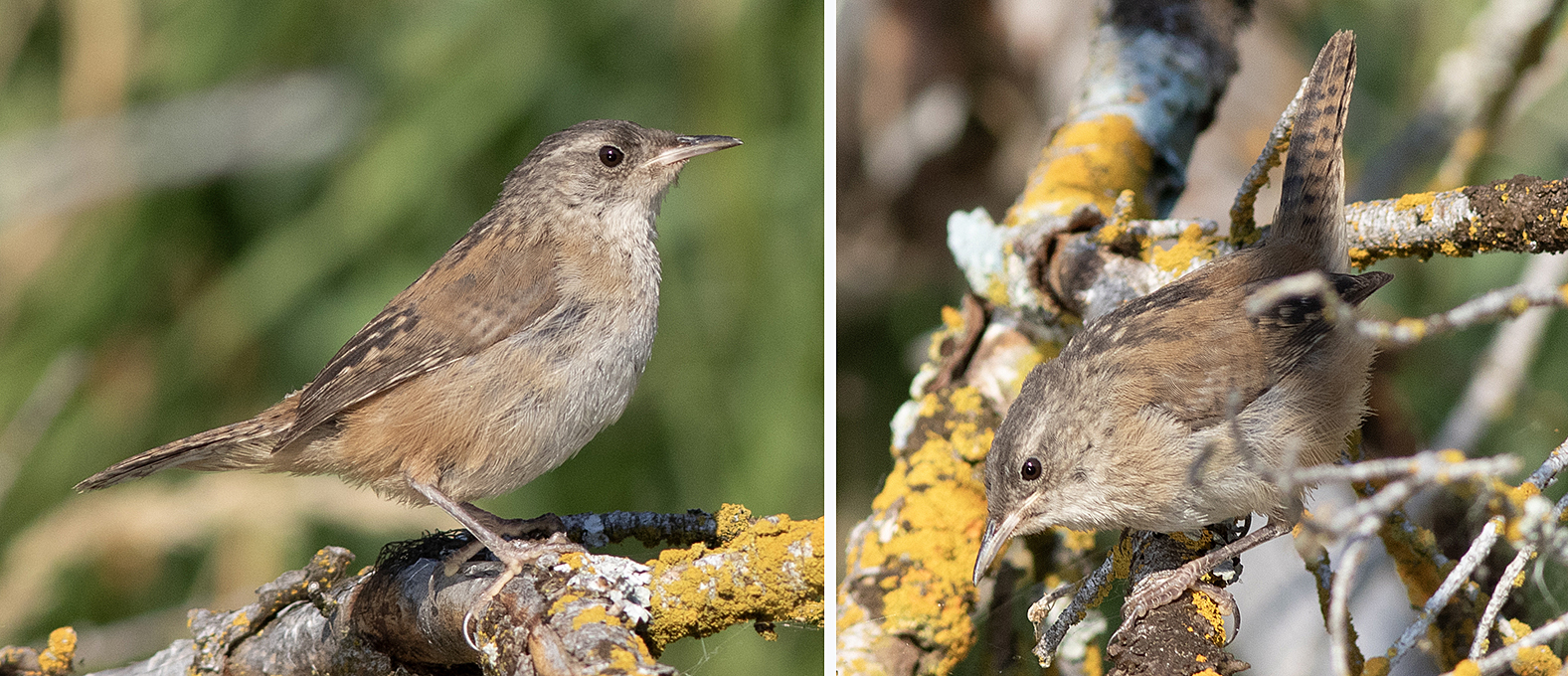
Marsh Wrens are common in the cat-tails and shrubbery bordering Mamit Lake. This is a newly-fledged juvenile. 26 August 2025.

Lesser Yellowlegs are one of my favourite shorebirds – they are so elegant and often allow one to get close enough for a photo. This one was on Tunkwa Lake, 30 July 2025.
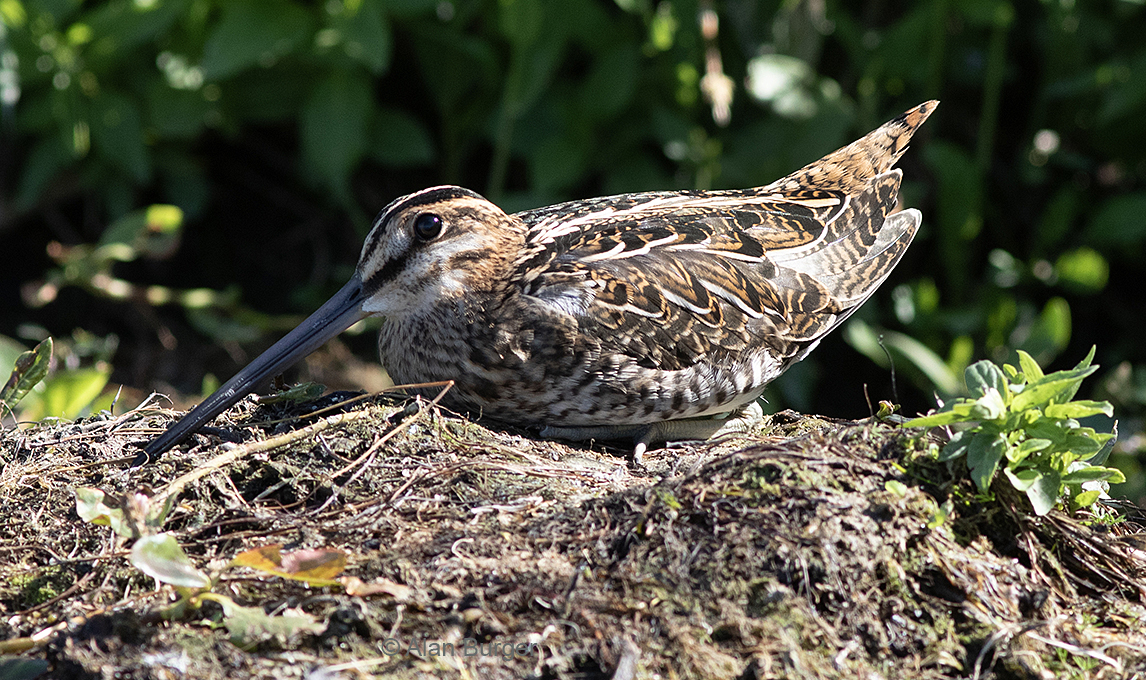
Wilson Snipes will sometimes crouch down as I approach in the kayak. Apparently they assume that they are sufficiently camouflaged. I was able to photograph this one and then move away without flushing it. Tunkwa Lake, 30 July 2025.
In August I did a little birding trip to Salmon Arm and the Okanagan Valley. At Shuswap Lake, Salmon Arm I was fortunate to witness a group of White Pelicans fishing quite close to the wharf where I was standing. The sequence below was repeated multiple times as they moved about the lake.
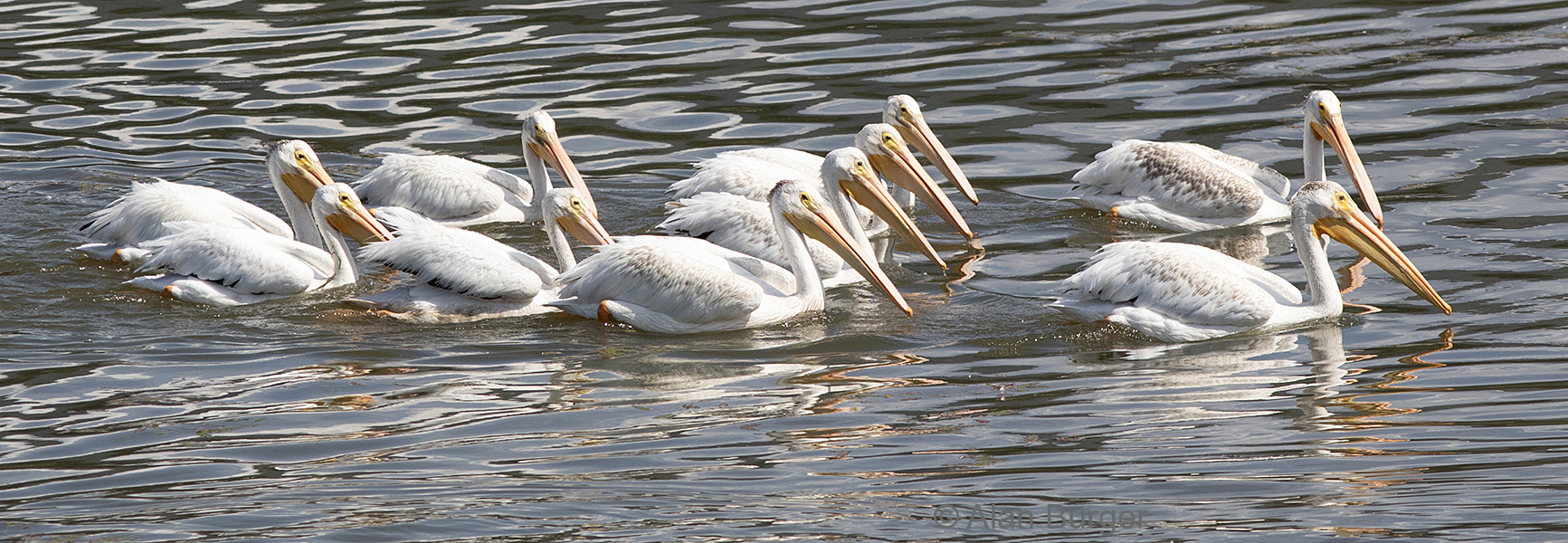
The squadron of pelicans swam with obvious intent …….
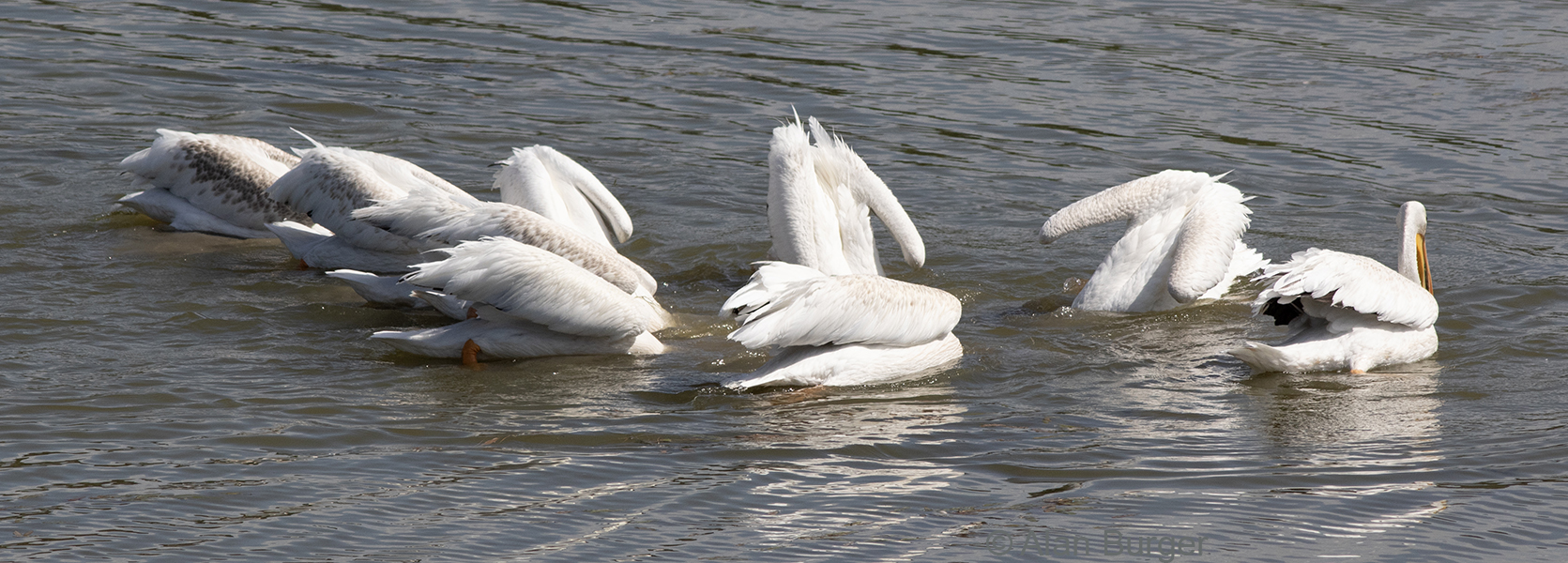
…. then, when they detected some fish, they all plunged their huge beaks down.
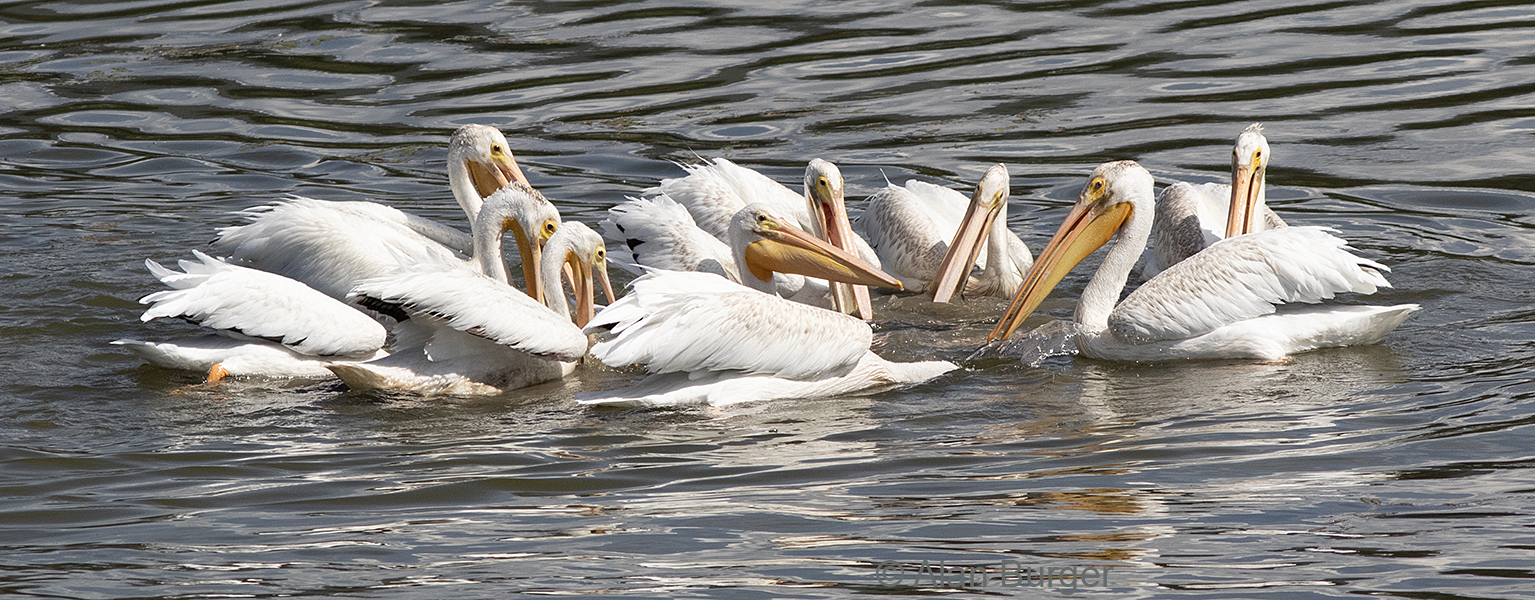
I could usually see which ones had been successful as they gulped down some fishy morsel.
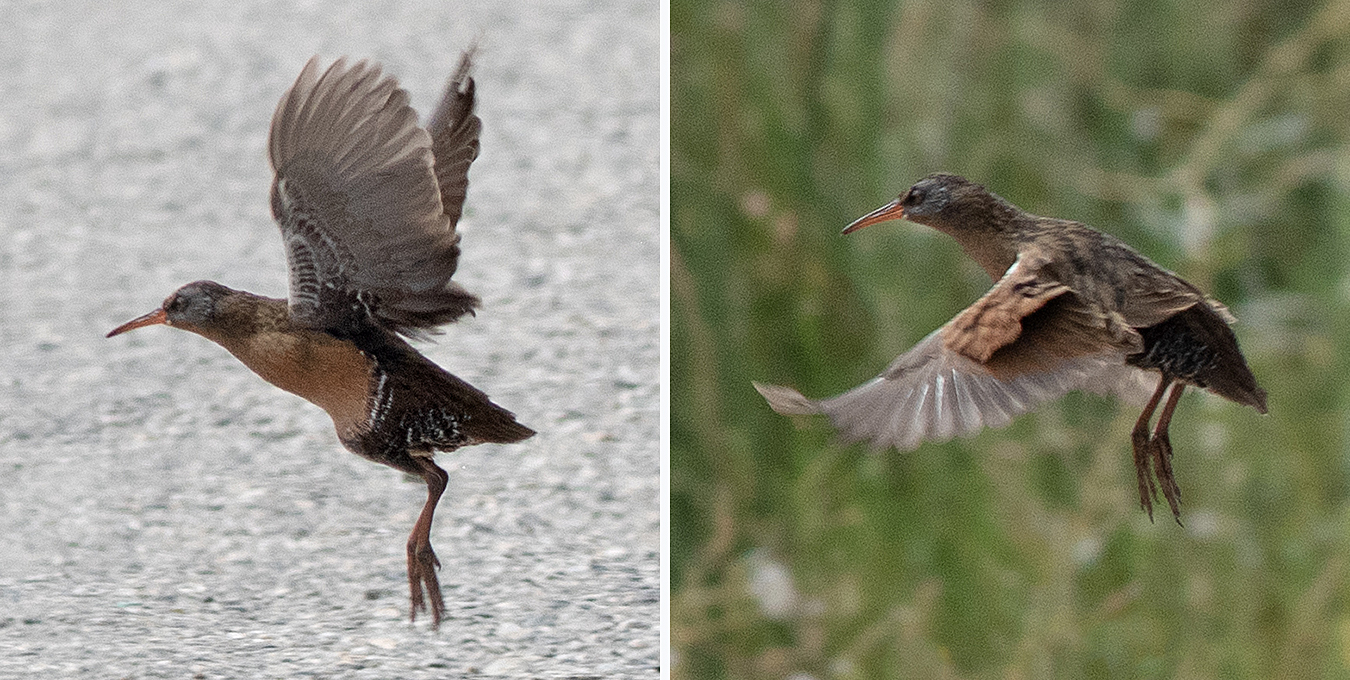
This is a sight one seldom sees – a Virginia Rail in flight. They are usually very secretive, lurking in the dense marsh vegetation. Robert Lake near Kelowna, BC, 19 August 2025.

Yellow-breasted Chat has long been a nemesis species for me, but I finally got to see one in B.C. at Vaseux Lake on 20 August 2025.
Autumn 2025

Early morning kayaking on Mamit Lake in fall often involves misty conditions, enhancing the scenery

Looking lovely on the misty waters – a Western Grebe. This species doesn’t breed on any of our local lakes but they do show up in the fall when they are moving down to the coast for the winter. Mamit Lake, 30 September 2025.

In mid-September I dodged the raging wildfires to visit the Chilcotin-Cariboo regions of central B.C. mainly to see the Grizzly Bears at the rivers where salmon were spawning. I was not disappointed – this is a yearling griz at the Atnarko River near Bella Coola, 13 September 2025.
For more photos from this trip to the Chilcotin and Central Coast click here: Chilcotin & Coast 2025
In late September we took our little truck camper and spent several days hiking in Wells Gray Provincial Park, enjoying the tall forest and lush vegetation.
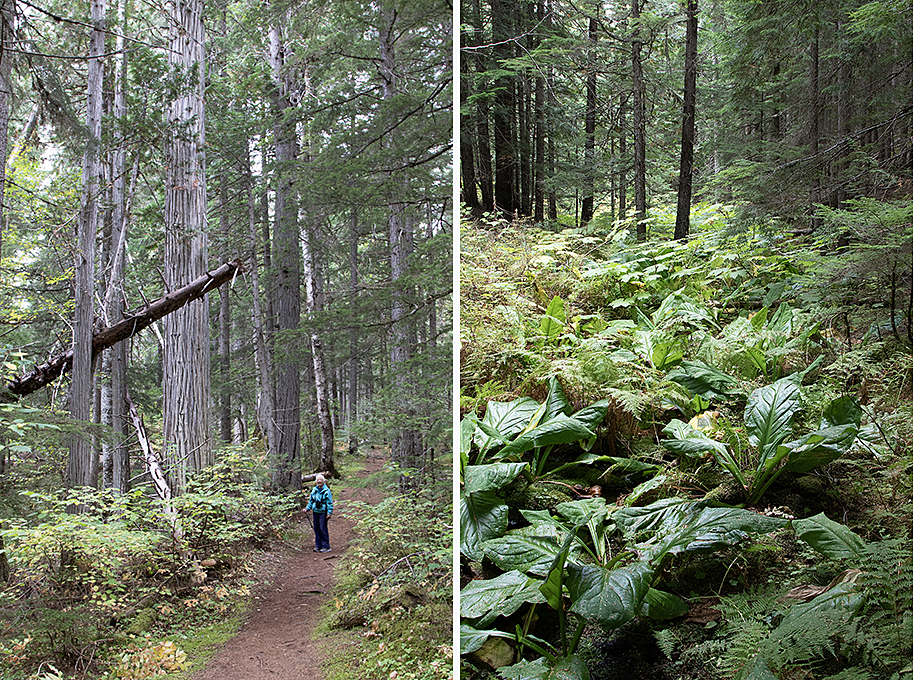
Tall forest along the Bailey’s Chute trail and lush skunk-cabbage undergrowth on the Chain Lake trail, Wells Gray Provincial park, September 2025.

Autumn is a good time for berries – Yew tree (L) and Mountain Ash (L) at Wells Gray Provincial Park, September 2025.
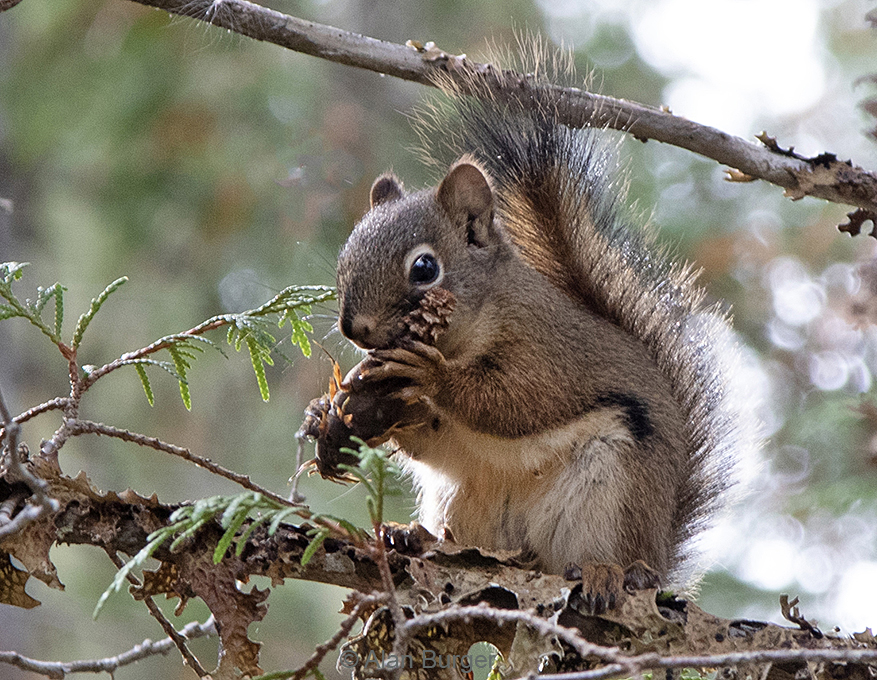
A Red Squirrel enjoying a cone, Wells Gray park.
Autumn is also the time to look out for flocks of migrating waterfowl and cranes passing by, often high overhead.

One of the large flocks of Sandhill Cranes passing over Logan Lake, 3 October 2025.

A few of the migrating Sandhill Cranes stop over on the fields near Logan Lake, 13 October 2025.
Winter again 2025
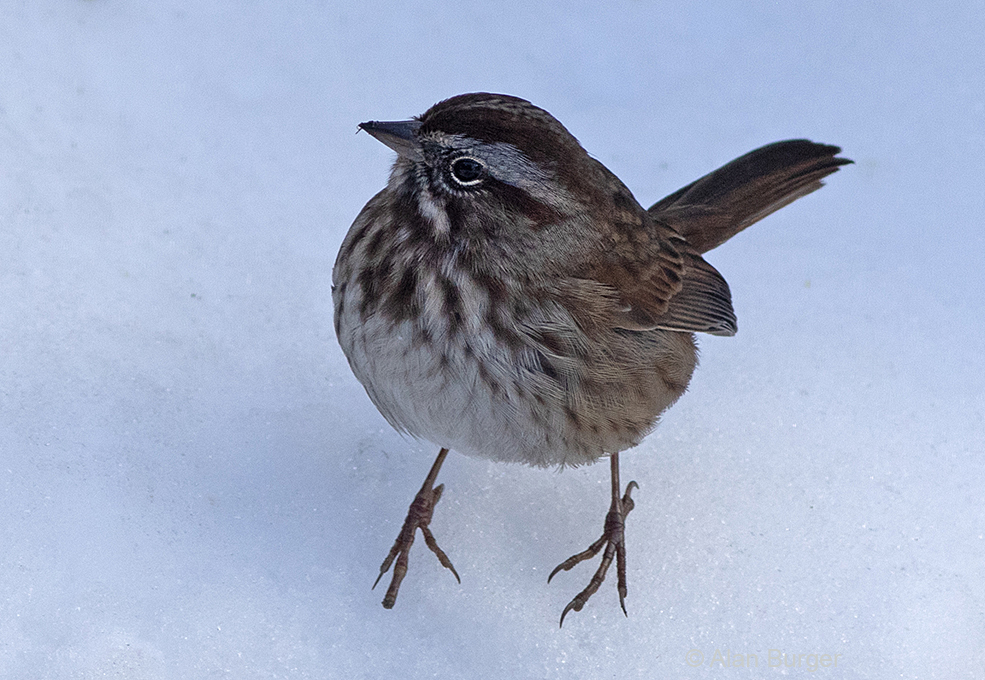
This Song Sparrow was picking up seeds in the fresh snow in our backyard, 3 December 2025.
Winter is a time of Christmas Bird Counts. I participated in four this year in our own town Logan Lake and three other nearby count circles.
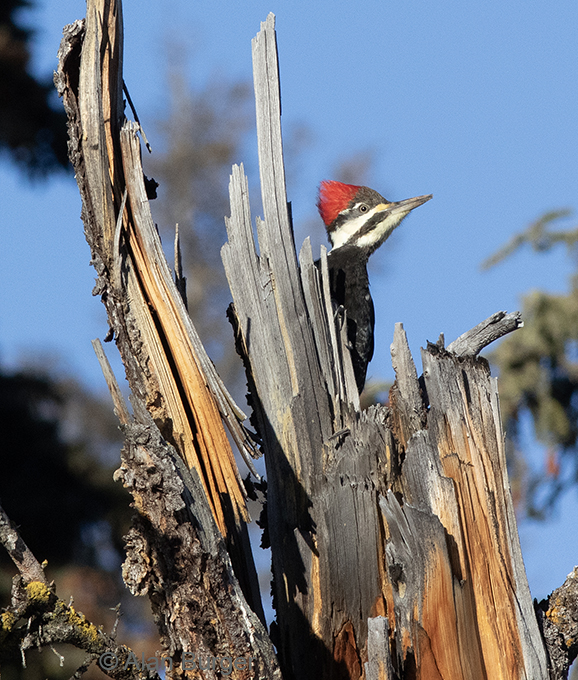
A Pileated Woodpecker peering out from a shattered snag near Inks Lake on the Kamloops Christmas Bird Count, 21 December 2025.
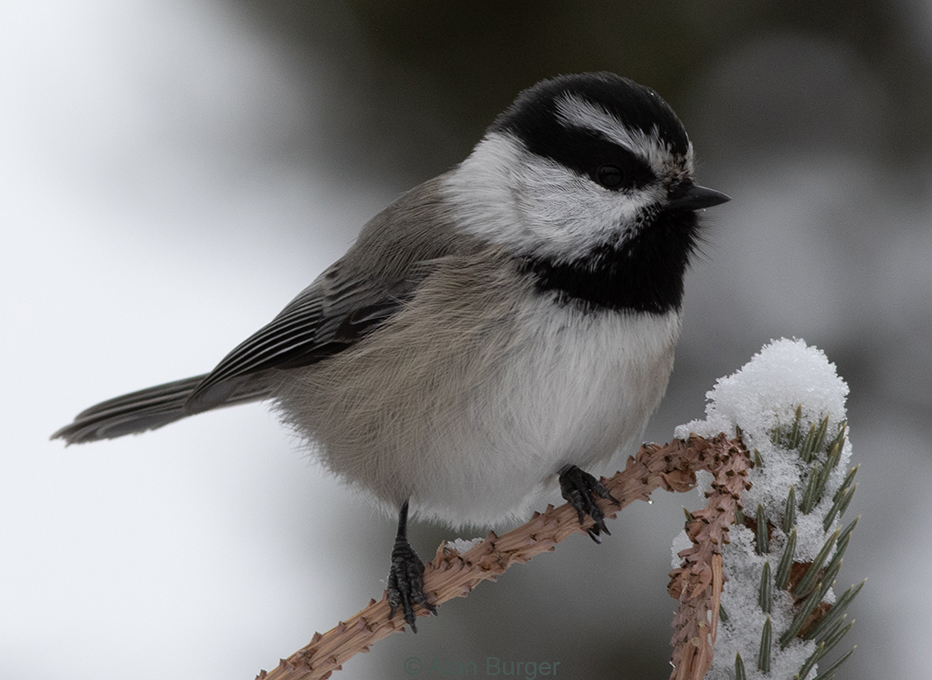
Mountain Chickadees are regulars at all of our local Christmas Bird Counts. This one was at Paska Lake on the Logan Lake CBC, 28 December 2025.
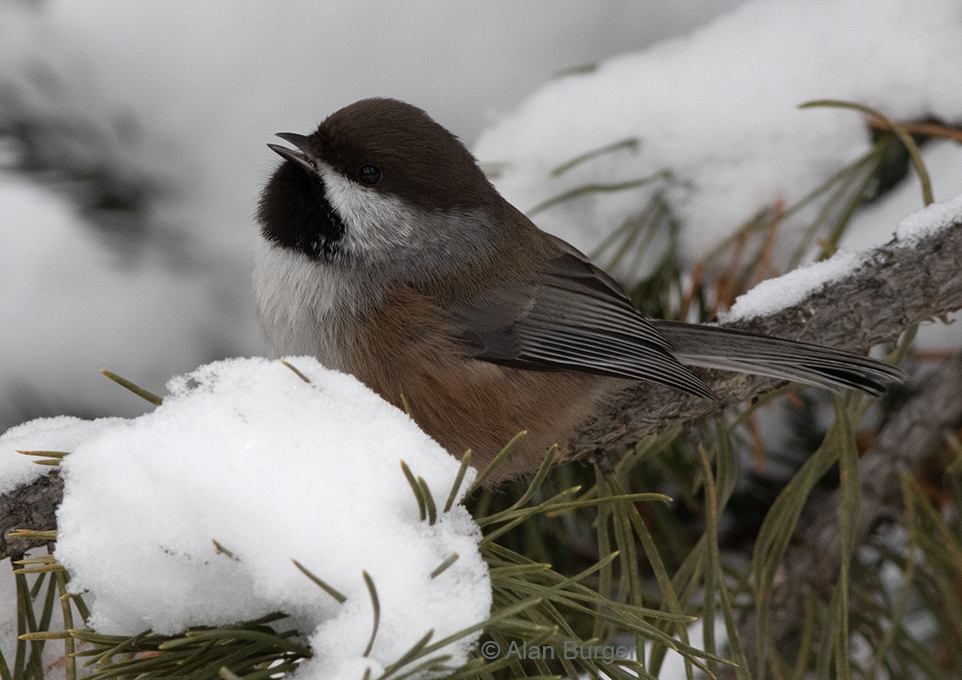
A far less common chickadee in our area – Boreal Chickadees are usually in the high elevation spruce forests. This one was near Paska Lake on the Logan Lake CBC, 28 December 2025.
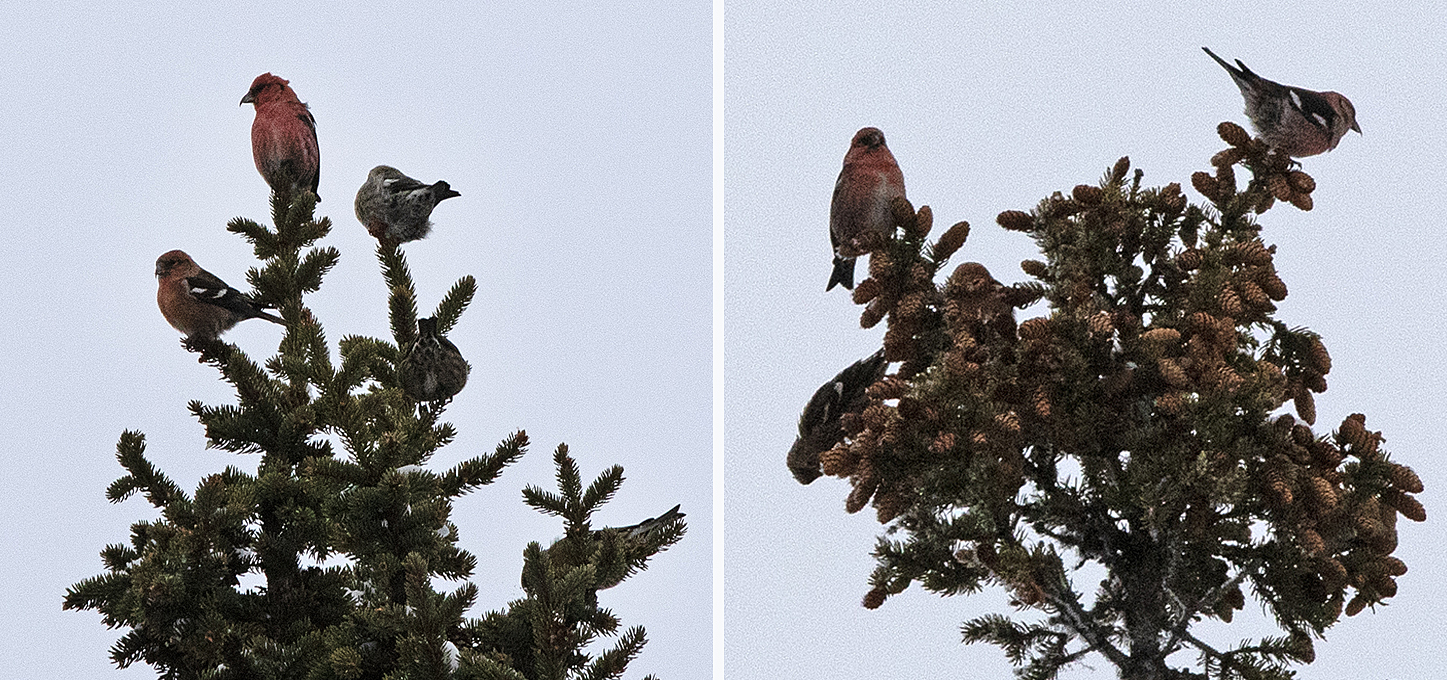
Another uncommon species in our area, these White-winged Crossbills were feasting on a bumper cone crop near Paska Lake, 28 December 2025.
Most photos were taken with a Canon 7D Mark II with a 300 mm Canon 300 mm 1:4 L lens. The insect photos used a 100 mm macro lens. Some landscape photos taken with my phone.
~~~~~~~~~~~~~~~~~~~~~~~~~~~~~~~~~~~~~~~~~~~